
Best Fencing for Pet Owners: Safe Yard Choices
Choosing the best fencing for pet owners means balancing safety, visibility, maintenance, and budget. Compare practical yard fence options here for homes.
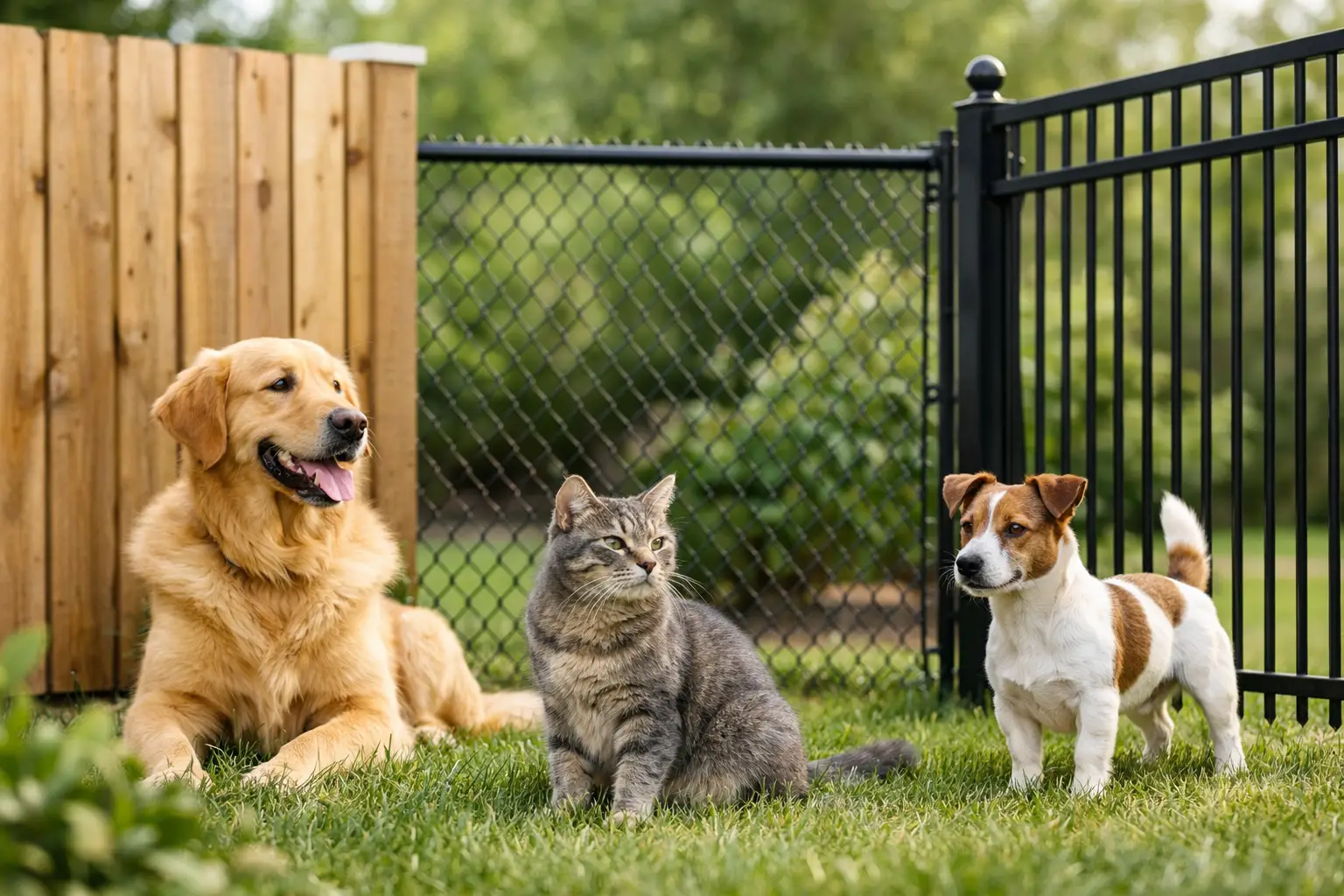
A fence that looks good from the street can still be the wrong fence for a dog that digs, jumps, squeezes through openings, or reacts to every passerby. The best fencing for pet owners starts with the animal's actual behavior, then matches the fence material, height, layout, and gate hardware to the yard.
For homeowners in Fort Smith, Northwest Arkansas, and the River Valley, the right choice also has to stand up to changing weather, uneven terrain, and daily use. A practical pet fence should keep animals safely contained without creating a maintenance problem that becomes expensive over time.
Start With Your Pet, Not the Fence Style
Breed and size matter, but behavior matters more. A small dog may fit through an opening that appears too narrow at first glance. A large, athletic dog may clear a standard-height fence if it has room to build momentum. Some dogs test the bottom edge, while others climb, chew, or push against gates.
Before selecting a material, consider where your pet spends time in the yard and what causes it to become excited or anxious. A dog that barks at pedestrians may be calmer behind a solid privacy fence. A dog that enjoys watching the neighborhood may do well with ornamental or chain link fencing, provided the fence is tall enough and the openings are appropriate.
Cats create a different set of challenges. Most standard residential fences will not reliably contain a determined outdoor cat without added height, a specialized top barrier, or a fully enclosed run. If containment is the main goal, discuss that early in the planning process rather than assuming any backyard fence will do the job.
Best Fencing for Pet Owners: Compare the Main Options
There is no single material that works for every property. The best choice depends on the level of privacy you want, your pet's habits, your budget, and how much upkeep you are willing to handle.
Wood fencing for privacy and reduced distractions
Wood privacy fencing remains a strong choice for many dog owners. Solid boards limit a dog's view beyond the yard, which can reduce barking and fence-running caused by people, vehicles, and neighboring animals. It also provides a defined, private outdoor space for the household.
A properly installed wood fence can be built in several heights and styles. For active dogs, height should be based on the dog's jumping ability rather than its shoulder height alone. Board placement near the ground also deserves attention. A small gap may be normal for drainage and terrain, but it should not become an escape route.
The trade-off is maintenance. Wood requires periodic inspection, especially around posts, lower boards, and gate areas that see moisture or repeated impact. Dogs that chew may damage wood, and Arkansas humidity can make routine maintenance more important. A well-built wood fence is a durable solution, but it is not maintenance-free.
Vinyl fencing for a clean, low-maintenance enclosure
Vinyl fencing is a practical option for homeowners who want privacy without the regular staining or painting associated with wood. Solid vinyl panels can block visual distractions and provide a clean, consistent appearance around a yard.
For pets, vinyl's smooth surface can be an advantage because it offers fewer footholds for climbing. It also does not splinter, which can be useful in areas where dogs run close to the fence line. However, quality installation matters. Panels, posts, and gates must be properly supported so the fence remains stable under wind, weather, and daily pressure from pets.
Vinyl may not be the best fit for every budget or every property layout. It is especially worth evaluating when low maintenance and privacy are priorities, but it should be selected with the same attention to height and gate security as any other fence.
Chain link fencing for dependable containment
Chain link fencing is one of the most common choices for pet containment because it is durable, cost-effective, and adaptable to many yard sizes. It is particularly useful on larger properties, sloped ground, and side or back yards where visibility is preferred over privacy.
The mesh opening and fence height should be selected for the pet. Smaller dogs may need a tighter mesh or an additional barrier at the bottom. Dogs that climb can use chain link as a ladder, so a taller fence alone may not solve the problem. In those cases, a different material, a top extension, or changes to the dog's access along the fence line may be needed.
Chain link does not block distractions. If your dog reacts strongly to activity outside the yard, seeing everything beyond the fence can lead to barking, pacing, or wear along one section of the perimeter. Privacy slats may help in some situations, but a solid wood, vinyl, or composite fence may be a better long-term answer for a highly reactive pet.
Ornamental fencing for visibility and curb appeal
Ornamental fencing can provide a more finished appearance while maintaining views across the property. It is often chosen for front yards, pool areas, and homes where a heavy privacy fence would not suit the architecture or neighborhood character.
For pet owners, spacing is the first concern. Pickets must be close enough that a small dog cannot pass through or get its head caught between them. The bottom rail and the grade below it should also be reviewed carefully. On a sloped yard, a decorative fence can leave openings underneath if the layout is not planned correctly.
Ornamental fencing is generally better for dogs that do not climb and are not overly reactive to outside movement. It is durable and attractive, but it offers little visual screening. A homeowner who wants both a decorative front boundary and a private dog area may choose different fence styles for different parts of the property.
Composite fencing for long-term privacy
Composite fencing gives homeowners another solid-panel option for privacy and low upkeep. It can be a good fit where the goal is a durable backyard enclosure with a more substantial finished appearance. Like vinyl and wood privacy fencing, it helps reduce outside visual triggers for dogs.
The key consideration is overall system design. A privacy panel is only as pet-secure as the posts, bottom clearance, corners, and gates around it. Composite can be a sensible long-term investment, particularly for homeowners who want privacy but prefer less routine surface maintenance than wood requires.
Height, Ground Clearance, and Gates Matter as Much as Material
A common mistake is focusing only on the fence panels. Most escapes happen at the bottom edge, at a loose gate, or where the fence meets an uneven section of ground. A fence needs to follow the property's grade closely enough to prevent gaps without creating unnecessary stress on the structure.
For dogs that dig, a deeper fence installation, a buried barrier, or a hardscape edge may be appropriate. The right approach depends on soil conditions and how persistent the dog is. Simply placing loose rocks along the fence may not hold up to a determined digger and can create a mowing or maintenance issue.
Gates deserve the same level of attention as the fence itself. Choose sturdy hinges, reliable latches, and hardware that cannot be easily bumped open. A self-closing or self-latching gate can add peace of mind for households with children, frequent visitors, or service crews entering the property. If a driveway gate is part of the enclosure, its operation and safety features should be planned around both vehicles and pets.
Plan for the Yard You Will Actually Use
A pet fence should support everyday life, not just create a boundary. Think about trash pickup, lawn equipment, pool access, gardening, deliveries, and the path between the house and the gate. A narrow side-yard gate may contain a dog well but become frustrating when you need to move equipment into the backyard.
It also helps to avoid creating a long, exposed run directly along a busy street or neighboring dog yard. If that layout cannot be avoided, a solid fence or landscaping plan may reduce the visual triggers that encourage barking and pacing. Fence placement can have as much effect on a pet's comfort as the material itself.
Local property rules, utility locations, and any neighborhood requirements should be addressed before installation begins. Height limits, setback expectations, and gate placement can affect the final design. A professional site review can identify grade changes and access issues that are easy to miss when looking at a yard from the back door.
Ace Fence Company Inc. has worked with residential property owners across the region since 1963, installing wood, vinyl, chain link, ornamental, and composite fence systems for real-world yards. A clear conversation about your pet, property, and daily needs is the best place to start.
The right fence gives your pet room to enjoy the yard and gives you confidence when the door opens. Choose a system built for the way your household actually lives, then make sure the details at the ground, corners, and gates are handled with equal care.
Ready to Talk to a Real Fence Professional?
Free on-site estimates from the River Valley's most trusted fence company since 1963.