
Wood Fence vs Vinyl Fence: Which Fits Best?
Comparing wood fence vs vinyl fence? Learn the real differences in cost, upkeep, durability, privacy, and curb appeal for Arkansas properties.
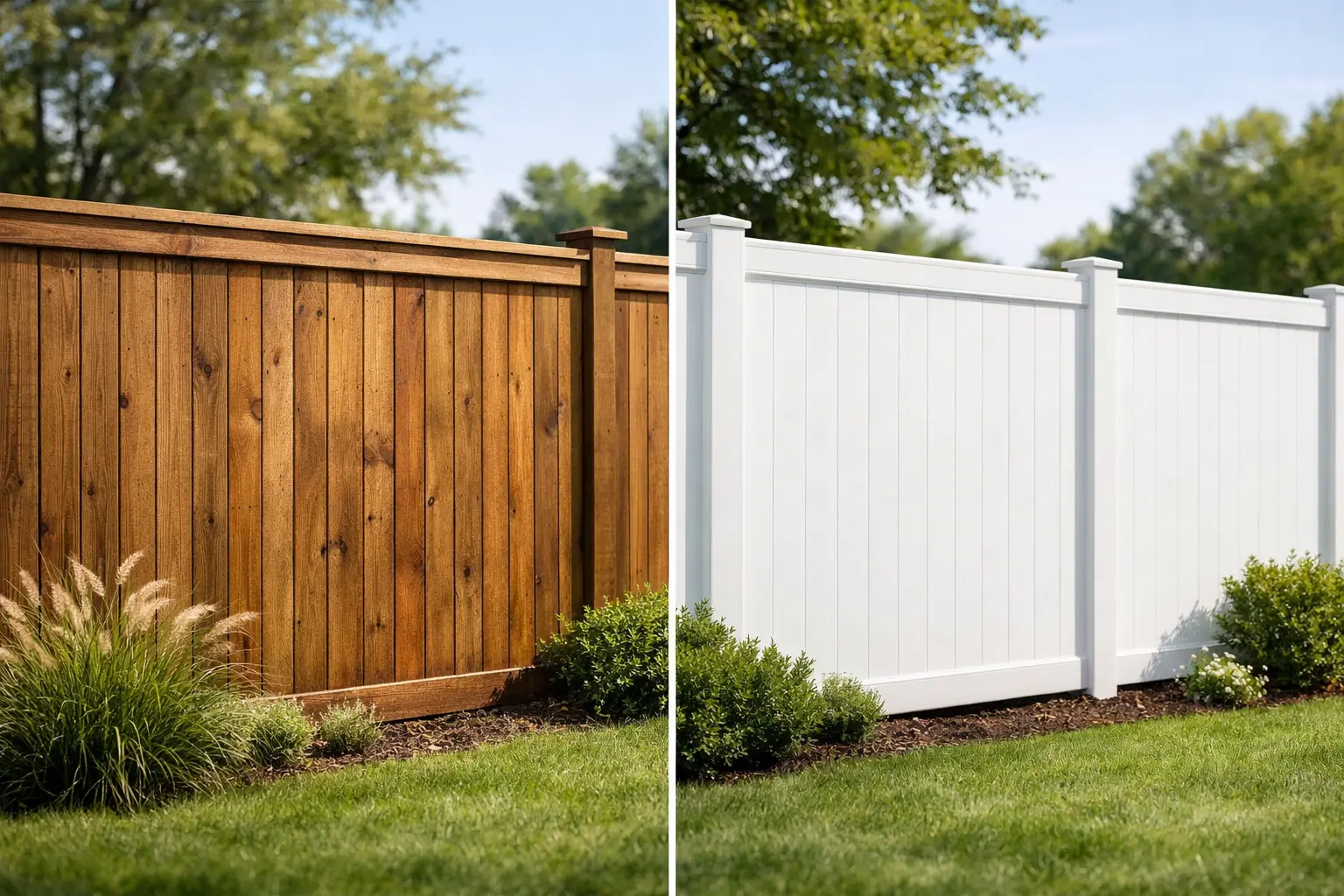
If you are weighing a wood fence vs vinyl fence decision, the right answer usually comes down to how you use the property, how much maintenance you want to take on, and how long you plan to stay put. Both materials can give you privacy, security, and a clean property line, but they perform differently once Arkansas heat, moisture, storms, and day-to-day wear get involved.
For some owners, wood is the obvious fit because it looks natural and can be built in a wide range of styles. For others, vinyl makes more sense because it stays clean-looking with far less upkeep. The best choice is not the one that sounds good on paper. It is the one that matches your budget, your expectations, and the demands of the site.
Wood fence vs vinyl fence: the biggest differences
At a glance, wood and vinyl can serve the same basic purpose. They can both create privacy, define boundaries, and improve curb appeal. The difference is in how they get there.
Wood is a traditional fencing material with a warmer, more natural appearance. It is often chosen for privacy fences, backyard enclosures, and neighborhoods where homeowners want a classic look. It can be stained or painted, repaired board by board, and customized without much trouble.
Vinyl is a manufactured material built for lower maintenance. It does not need painting, it will not rot like untreated wood, and it generally keeps a more uniform appearance over time. Many property owners choose it because they want a fence that looks neat without regular scraping, staining, or sealing.
That does not mean vinyl is always better. It usually costs more up front, and not every property owner likes the look of it. In the same way, wood is not automatically the budget winner forever, because maintenance and earlier replacement can change the long-term cost.
Up-front cost and long-term value
Price is often the first question, and it should be. In many cases, wood comes in at a lower initial installation cost than vinyl, especially for standard residential privacy fencing. If the goal is to enclose a yard at the lowest entry price, wood often gets serious consideration first.
But up-front price is only part of the equation. Wood usually needs ongoing maintenance to keep it looking good and performing well. Depending on the product, exposure, and finish, that may include staining, sealing, painting, replacing warped boards, and dealing with insect or moisture damage over time.
Vinyl typically costs more at installation, but it can save money in maintenance over the years. For owners who do not want to budget for repeated upkeep, that higher initial investment can make sense. This is especially true for rental properties, second homes, and busy households where fence maintenance tends to get pushed down the list.
If you are looking at value instead of just initial price, think in terms of ten years, not one. A lower quote today does not always mean the lower ownership cost.
Appearance and curb appeal
This is where preference matters. Wood has a character that vinyl cannot fully copy. It works well with traditional homes, mature landscaping, and properties where a natural finish feels more in place. A cedar privacy fence or a well-finished wood picket fence can add a lot of visual warmth.
Vinyl offers a cleaner, more uniform appearance. For some properties, that is a major advantage. It can look crisp and orderly, and it tends to stay that way with less work. If you want a polished fence line without dealing with fading stain or peeling paint, vinyl has a practical edge.
Still, appearance is not only about the material itself. The style, height, color, and layout matter too. A properly designed wood fence can look excellent. So can a well-installed vinyl fence. The material should fit the house, the lot, and the purpose of the fence.
Maintenance is where many decisions are made
A lot of fence comparisons start with style and end with maintenance.
Wood needs attention. Even pressure-treated products and durable species benefit from care if you want them to last and look good. In Arkansas, rain, humidity, and sun all work against exposed wood over time. Boards can shrink, swell, twist, or discolor. Fasteners can loosen. Ground contact areas are especially vulnerable.
Vinyl is easier to live with from a maintenance standpoint. It does not need stain or paint, and it can usually be cleaned with soap and water or a light wash. That appeals to property owners who want the fence installed and then mostly out of mind.
There is still some maintenance with vinyl. Dirt builds up. Mildew can show in shaded or damp areas. Panels can be damaged by impact. But overall, the upkeep is lighter and more predictable than with wood.
Durability in Arkansas weather
Weather matters more than brochures. In this region, fences have to deal with heat, heavy rain, humidity, wind, and shifting soil conditions.
Wood can hold up well when it is built correctly and maintained, but it is more vulnerable to moisture-related wear. Rot, warping, and insect issues are real concerns over time, especially if drainage is poor or the fence is neglected. Construction quality matters a lot here. Good post setting, proper spacing, and material selection can make a noticeable difference in how long a wood fence performs.
Vinyl resists moisture better and will not rot the way wood can. That is one of its strongest selling points. However, vinyl is not indestructible. In extreme temperatures or under impact, it can crack or become brittle depending on the product quality. Strong wind events also put stress on large solid panels, so installation quality remains just as important.
For either material, the fence is only as good as the design, installation, and site preparation behind it.
Privacy, security, and practical use
For backyard privacy, both wood and vinyl can do the job well. Solid-panel styles are available in both materials, and both can help create separation from neighbors, streets, and adjacent properties.
If security is part of the goal, the conversation gets more specific. Fence height, gate design, hardware, visibility, and site layout all matter. Material alone does not determine whether a fence is secure. A residential privacy fence may help control access, but commercial sites, multifamily properties, and facilities with asset protection concerns often need a broader perimeter plan.
That is one reason experience matters. A contractor that understands not just fence materials, but gates, access points, and site demands can help owners avoid making a material decision in isolation.
Repairs and replacements
Wood has one practical advantage that often gets overlooked. It is usually easier to repair in sections. If one picket, rail, or panel is damaged, it can often be replaced without changing large portions of the fence. That can be useful after storms or accidental impact.
Vinyl can also be repaired, but matching older material is not always simple. Depending on the system and the damage, replacing sections may be more involved. If the fence has aged or faded differently from new material, repairs can be more noticeable.
That does not make wood the better choice overall. It just means repair strategy should be part of the buying decision, especially for long fence runs or high-traffic areas.
Which fence makes more sense for your property?
A wood fence is often the better fit if you want a natural look, a lower initial cost, and more design flexibility. It also makes sense for owners who do not mind regular maintenance or who prefer a material that can be repaired board by board.
A vinyl fence is often the better fit if you want low maintenance, consistent appearance, and resistance to rot and moisture-related deterioration. It can be a smart option for homeowners who want privacy without the ongoing work, and for property managers who need cleaner long-term upkeep.
There are also cases where neither answer should be made quickly. A backyard privacy fence for a single-family home is one thing. A commercial perimeter, a multifamily property, or a site with controlled entry needs may call for a different type of material or a mixed solution. At that point, the right conversation is less about wood versus vinyl in the abstract and more about how the fence will actually be used.
For property owners in Fort Smith, Northwest Arkansas, and the River Valley, local conditions matter just as much as material specs. Soil, slope, drainage, wind exposure, neighborhood standards, and gate needs all affect the outcome. That is why a straightforward site review often tells you more than a generic online comparison.
If you are deciding between wood and vinyl, start with the real priorities: budget, appearance, maintenance tolerance, and expected lifespan. From there, a good estimate should help narrow the field quickly. The best fence is the one that still fits your property and your routine years after installation.
Ready to Talk to a Real Fence Professional?
Free on-site estimates from the River Valley's most trusted fence company since 1963.