
Wood Fence vs Vinyl: Which Makes Sense?
Comparing wood fence vs vinyl? See costs, upkeep, lifespan, privacy, and curb appeal to choose the right fence for your Arkansas property.
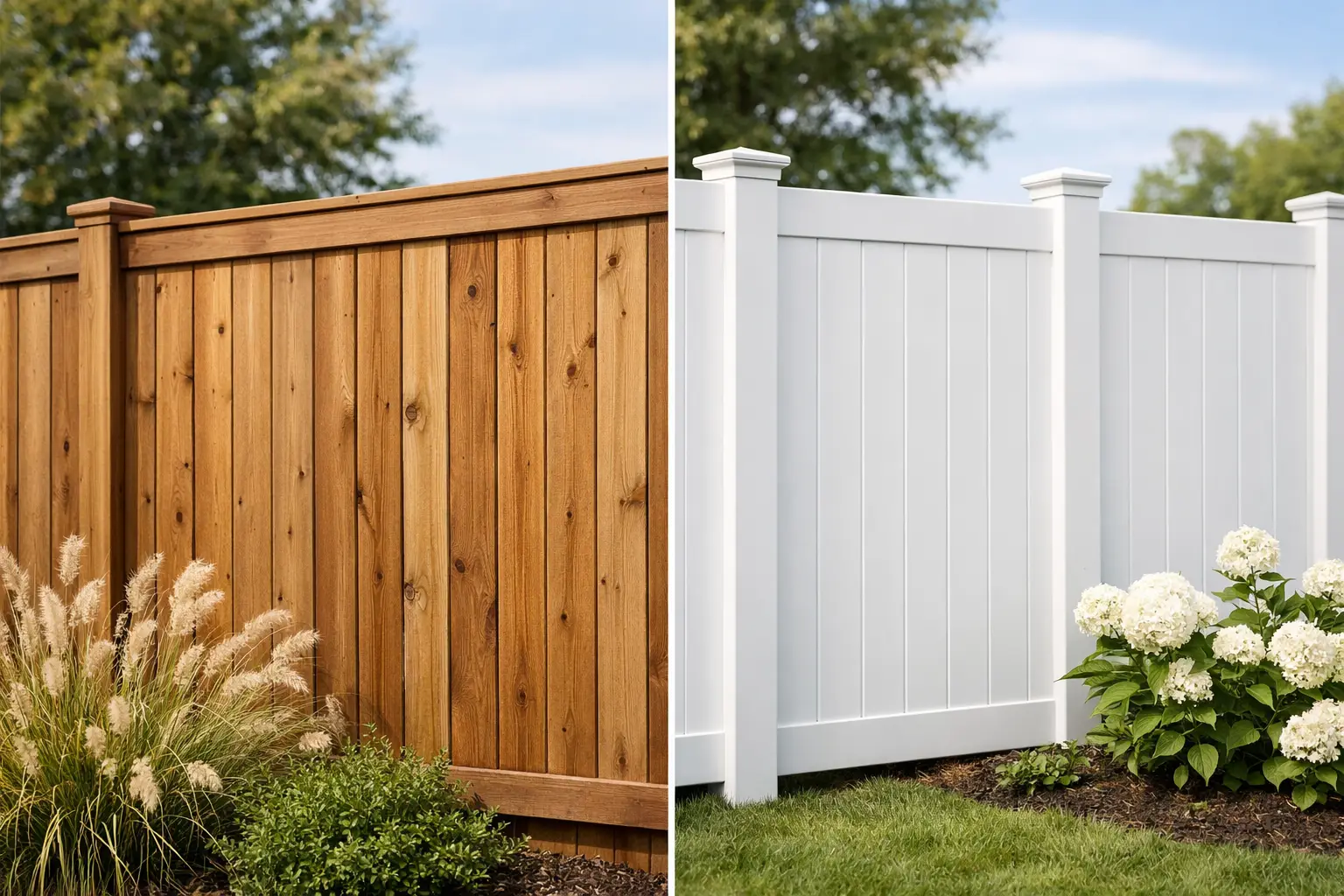
If you are weighing wood fence vs vinyl, the right answer usually comes down to how you use the property, how much upkeep you want, and what kind of look you expect to live with for years. Homeowners often start with appearance or price, but the better decision comes from looking at maintenance, weather exposure, privacy needs, and long-term value.
In Arkansas, those details matter. Heat, rain, humidity, and seasonal storms can all affect how a fence performs over time. A fence that looks good on install day is only part of the equation. What matters just as much is how it holds up after several summers, several rounds of moisture, and normal day-to-day wear.
Wood fence vs vinyl: the main difference
Wood and vinyl can both work well for residential privacy fencing, decorative boundaries, and some light commercial applications. The biggest difference is that wood gives you a more traditional, natural appearance with more customization, while vinyl is built around low maintenance and a more uniform finish.
Wood tends to appeal to property owners who want a classic look and more flexibility in style, height, stain color, and detail. Vinyl tends to appeal to people who want a clean appearance without the regular cycle of staining, sealing, or replacing weathered boards.
That does not mean one is always better. It means each material solves a different kind of problem.
Upfront cost and long-term value
For many property owners, budget is where the conversation starts. In most cases, a wood fence costs less upfront than a vinyl fence, especially for standard privacy installations. That lower initial price is one reason wood remains a popular choice.
Vinyl usually costs more at the beginning. The material itself is more expensive, and installation details can vary depending on layout, grade changes, and gate placement. For some buyers, that higher first investment is worth it because vinyl generally requires less maintenance over the life of the fence.
The long-term value depends on what you count as cost. If you are comfortable with routine upkeep and occasional board replacement, wood may still make strong financial sense. If you want to avoid ongoing staining, sealing, and more frequent repair work, vinyl may balance out better over time.
Appearance and curb appeal
Wood has a character vinyl cannot fully duplicate. Cedar and other wood options bring warmth, texture, and a natural look that works especially well around traditional homes, established neighborhoods, and properties where a softer appearance fits the setting.
Wood also gives you more room to customize. You can choose different picket styles, privacy layouts, top accents, and finishes. If your goal is a fence that feels less manufactured and more tied to the home itself, wood often wins that comparison.
Vinyl has its own appeal. It offers a crisp, clean, finished look that stays consistent from one panel to the next. For homeowners who want a bright, neat appearance and do not want to think much about future refinishing, that consistency is a major advantage.
The trade-off is that vinyl can look less natural. Some property owners like that polished look. Others feel it stands out too much depending on the house, landscaping, or surrounding fences.
Maintenance is where the decision often gets made
If you want the shortest path to an answer in the wood fence vs vinyl debate, ask yourself how much maintenance you are realistically willing to do.
Wood needs attention. Even a well-built wood fence benefits from staining or sealing on a regular schedule, depending on product choice and weather exposure. Boards can warp, crack, or discolor over time. Posts and fasteners may also need inspection and repair as the fence ages.
That does not make wood a poor choice. It just means wood rewards owners who stay ahead of maintenance.
Vinyl is much simpler to live with. It does not need staining or painting, and routine care is usually limited to washing off dirt, mildew, or debris. For busy homeowners, rental property owners, and anyone who wants a fence that asks very little after installation, vinyl is attractive for that reason alone.
Durability in Arkansas weather
Arkansas weather can be tough on exterior materials. Humidity, heavy rain, strong sun, and storms all matter when choosing fencing.
Wood can perform well for years when it is properly installed and maintained, but it is still a natural material. Moisture can lead to rot, swelling, or warping if the fence is neglected or if lower sections stay exposed to wet conditions for long periods. Sun exposure can also dry wood out and fade its finish.
Vinyl is not vulnerable to rot or insect damage the way wood can be. That is a major benefit in damp or humid conditions. It also holds its color and finish without needing repainting or resealing.
Still, vinyl is not indestructible. Lower-quality vinyl can become brittle with age, and hard impacts can crack panels or components. In areas with strong wind loads, installation quality matters just as much as material choice. A fence is only as good as its posts, layout, and construction.
Privacy and security
Both wood and vinyl can provide strong privacy when installed as full-panel fencing. If your goal is to block sightlines around a backyard, pool area, or side yard, either material can do the job.
Wood often feels more solid visually, especially in taller privacy designs. It can also be easier to customize on uneven ground or for a more enclosed appearance. For homeowners who want a substantial, traditional privacy fence, wood remains a dependable option.
Vinyl privacy fencing works well too, particularly when a clean, finished look is the priority. Many property owners prefer it in neighborhoods where uniform appearance matters.
For security, the discussion gets more specific. A residential privacy fence helps define boundaries and discourage casual entry, but true perimeter security depends on height, gate design, hardware, and access control. For commercial or industrial sites, the material choice is usually only one part of a larger planning conversation.
Repairs and replacement
Repairs are another place where wood and vinyl differ in practical terms.
With wood, individual pickets or boards can often be replaced without changing large sections of fence. That can make repairs more straightforward after storm damage or normal wear. The repaired area may need staining or finishing to match, but the flexibility is useful.
Vinyl can be easier to maintain overall, yet repairs may be less forgiving if a panel cracks or a specific profile is no longer readily available. Matching existing material can also become a factor years later, especially if the original style has changed.
This is one reason professional installation matters. Good layout, quality materials, and proper post setting reduce headaches no matter which fence you choose.
Which material is better for homeowners?
For most homeowners, wood is the better fit when natural appearance, design flexibility, and lower upfront cost matter most. It works well for privacy, backyard enclosure, and curb appeal, especially if you do not mind regular upkeep.
Vinyl is usually the better fit when low maintenance is the priority and you are willing to spend more initially for a fence that stays clean and consistent with less ongoing work. It is a practical choice for busy households, second homes, and owners who want a finished look without the maintenance schedule that comes with wood.
If you plan to stay in the home for a long time, the decision often comes down to whether you would rather invest more money now or more time later.
Wood fence vs vinyl for commercial properties
Commercial buyers usually approach this question differently. Appearance still matters, but maintenance planning, lifecycle cost, and site use often matter more.
For a small office, multifamily property, or customer-facing space, vinyl may make sense where a neat appearance and reduced upkeep are priorities. For certain commercial settings, wood may still be used where privacy or visual screening is more important than a uniform finish.
That said, many commercial and industrial properties need something beyond this comparison altogether. Chain link, ornamental steel, automated gates, or specialized access systems may be more appropriate depending on traffic, security, and code requirements. That is why a site-specific estimate matters more than a generic material debate.
The right choice depends on the job
There is no universal winner between wood and vinyl. A well-built wood fence can be the right answer on one property, while vinyl is clearly the better fit next door.
The best choice usually comes from a few practical questions. How much maintenance do you want to handle? How important is a natural look? What is the budget for installation today, and what will the fence need from you five years from now? What kind of weather exposure and daily use will it face?
For property owners in Fort Smith, Northwest Arkansas, and the River Valley, those answers are easier to sort out when you look at the actual site, not just product photos. Ace Fence Company Inc. works with homeowners and commercial clients who need fencing that fits the property, the budget, and the way the space is used.
If you are deciding between wood and vinyl, the most useful next step is not guessing from a brochure. It is getting a clear estimate, asking how each option will perform on your site, and choosing the fence you will still be comfortable with long after the install crew is gone.
Ready to Talk to a Real Fence Professional?
Free on-site estimates from the River Valley's most trusted fence company since 1963.