Why Install Access Controlled Gates on Your Property?
Why install access controlled gates? Control traffic, protect assets, and choose an entry system built for your Arkansas property and daily operations.
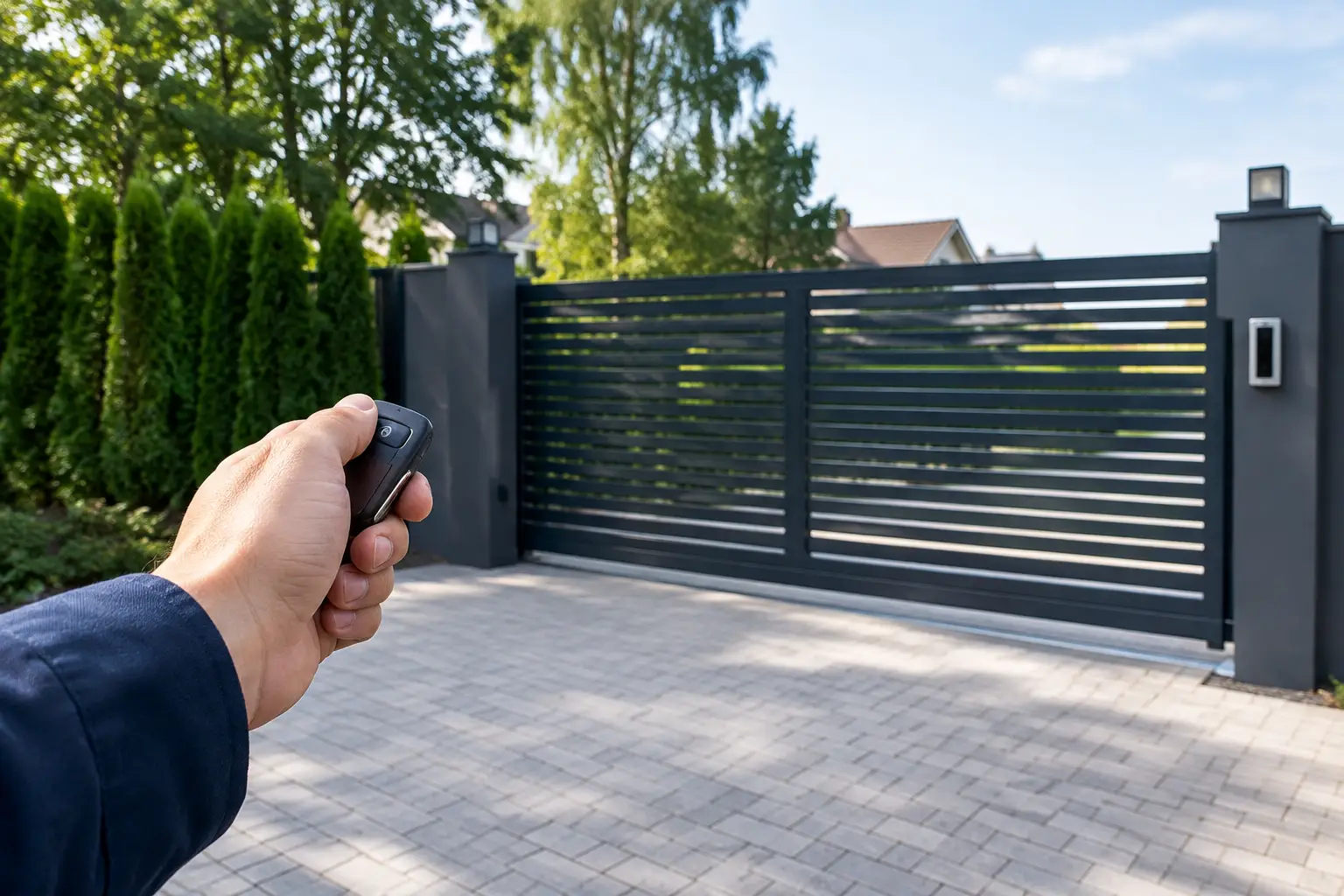
A gate at the driveway or service entrance does more than close an opening. It determines who can enter, when they can enter, and how well your property stays protected after hours. That is the practical answer to the question, why install access controlled gates: they give property owners a dependable way to manage entry without requiring someone to stand at the gate all day.
For a home, that may mean keeping uninvited vehicles out of a private drive. For a business, apartment community, industrial yard, or construction site, it can mean protecting equipment, directing deliveries, and creating a clear boundary between public areas and restricted space. The right system is not one-size-fits-all. Gate type, access method, traffic volume, and the surrounding fence all need to work together.
Why Install Access Controlled Gates Instead of a Standard Gate?
A manual gate can mark a boundary, but it depends on someone being available to open and close it. An access-controlled gate adds an operator and a method for authorizing entry, such as a keypad, card reader, remote transmitter, telephone entry system, or mobile credential. The result is more consistent control over the main point of access.
This matters because most security issues occur at openings, not along the middle of a fence line. A well-built perimeter loses much of its value if a gate is routinely left open, if keys are widely shared, or if employees and visitors can enter without direction. Automated access control helps establish a process: approved people enter, visitors use the proper entry point, and the gate closes behind them.
It also reduces daily inconvenience. Residents do not need to get out of their vehicle in bad weather. Employees can enter a secured lot at scheduled times. Property managers can provide access to authorized vendors without handing out physical keys that may never be returned.
Better Control of Vehicles and Visitors
Every property has a different traffic pattern. A homeowner may have a few vehicles per day, while a commercial site may handle employees, freight trucks, vendors, service technicians, and customers. Access-controlled gates help organize that traffic rather than leaving the entrance open to anyone who pulls in.
For commercial properties, a keypad or card-access system can limit entry to staff and approved contractors. Telephone entry systems allow a visitor to contact a resident, office, or gate manager before being admitted. Some operations need separate entrance and exit lanes to prevent bottlenecks during shift changes.
A controlled entrance can also improve accountability. Depending on the equipment selected, a property owner may be able to change access codes, remove a former employee's credential, or set access schedules for certain users. That is far more manageable than rekeying locks or wondering how many copies of a gate key are in circulation.
Access Control Is Not Just for High-Security Sites
Many customers assume automated gates are only necessary for large industrial facilities. In reality, they can make sense for private homes on acreage, gated neighborhoods, storage yards, equipment lots, multi-family properties, farms, and small businesses with valuable inventory.
The goal does not have to be turning a property into a fortress. Often, the objective is simply to discourage casual trespassing, keep vehicles where they belong, and give the owner more control over a busy entrance. A visible, properly operating gate sends a clear message that access is managed.
Protect Equipment, Materials, and Property
Construction materials, trailers, tools, vehicles, agricultural equipment, and outdoor inventory are difficult to protect once they are left in an open yard. Fencing establishes the perimeter, but an access-controlled gate strengthens the part of the fence most likely to be used for entry.
For businesses across the River Valley and Northwest Arkansas, this can be especially useful where equipment is stored outside or where crews arrive before the office opens. Rather than leaving the gate unsecured for early arrivals, an operator can provide access to authorized personnel while keeping the site closed to the public.
The gate itself should match the level of use. A light residential swing gate may be appropriate for a private driveway, but a high-traffic commercial entrance may need a heavier sliding, cantilever, or pivot lift gate. Choosing a gate that is undersized for its opening or traffic volume can lead to unnecessary repairs, slow operation, and downtime.
Safety Has to Be Part of the Design
An automatic gate is a moving piece of equipment, not just a convenience feature. Proper installation includes more than setting posts and mounting an operator. The gate needs suitable safety devices, properly placed controls, a stable foundation, and enough clearance to operate without creating hazards.
Photo eyes, monitored safety edges, vehicle detection loops, warning signs, and emergency release features may be needed depending on the system and application. The best setup considers how vehicles, pedestrians, children, delivery drivers, and employees will use the entrance every day.
Gate location matters as well. If vehicles must stop in the road while waiting for a gate to open, the layout may need to be reconsidered. A driveway should provide enough room for vehicles to pull off the street and wait safely. For commercial locations, truck turning space, lane width, and fire department access can affect the final design.
Plan for Outages and Emergencies
Access control should make a property easier to manage, not create a problem when power is interrupted. Most automated systems include a manual release so the gate can be operated during an outage. Battery backup may also be a good fit for properties where continued access is critical.
Emergency access is another planning point. Fire, police, and medical responders may need a designated way to enter. The right solution depends on local requirements and the property's use, but it should be addressed before installation rather than after an emergency occurs.
Choosing the Right Gate and Entry Method
The best access-controlled gate begins with a practical assessment of the entrance. Width, grade, available space, fence material, traffic volume, vehicle types, and power availability all affect the recommendation.
Swing gates are often a good choice where there is room for the gate leaves to open inward. They can provide a traditional appearance for homes, ranches, and certain commercial entrances. Sliding gates work well when a swing gate would interfere with parking, slopes, or vehicle movement. Cantilever gates are especially useful for commercial and industrial sites because they slide without a ground track across the driveway. Pivot lift gates can be a strong option where space is limited and fast operation is needed.
The access device should fit the people using it. A remote control may be sufficient for a private residence with a small number of regular users. A keypad can work well for service access, but codes should be changed when needed. Card readers, fobs, and managed credentials provide stronger control for employee entrances. Telephone or video entry systems can be useful where visitors need to request access from a resident or office.
There are trade-offs. More advanced equipment can provide more control and reporting, but it also adds cost and may require more ongoing management. A simple, durable system is often the better choice when the property has limited traffic and straightforward access needs. The important thing is matching the system to the real operation of the site, not adding features that will go unused.
Installation Quality Affects Long-Term Performance
An automated gate system is only as dependable as its foundation, hardware, operator, controls, and installation. Posts must be properly set, gate frames need to remain aligned, and the operator must be sized for the gate's weight and expected cycles. Electrical work, trenching, and control placement should be planned before the project begins, not treated as an afterthought.
Ongoing maintenance also matters. Gate hinges, rollers, tracks, chains, safety devices, and operators need periodic inspection. Debris, storm damage, vehicle impacts, and normal wear can affect operation over time. Addressing small issues early helps avoid a failed gate when the entrance is needed most.
Ace Fence Company Inc. helps property owners evaluate fencing, custom gate fabrication, operators, and access-control components as part of one coordinated project. That approach helps ensure the gate works with the perimeter instead of becoming a weak point in it.
A controlled gate should solve a daily problem: unwanted traffic, unsecured equipment, difficult visitor management, or an entrance that no longer fits the property. Start with how people and vehicles actually move through the site, then build a gate system that provides the right level of control without making access harder than it needs to be.
Ready to Talk to a Real Fence Professional?
Free on-site estimates from the River Valley's most trusted fence company since 1963.