Vinyl Versus Composite Fencing Compared
Compare vinyl versus composite fencing for Arkansas homes and properties. See differences in cost, privacy, upkeep, durability, and installation needs.
A fence may look simple from the street, but the material choice affects how it handles Arkansas heat, rain, yard activity, and years of use. When comparing vinyl versus composite fencing, property owners are usually weighing the same practical questions: Which one will look good longest, require less upkeep, and make sense for the budget?
Both materials offer a clean, low-maintenance alternative to painted wood. They are also very different products, with different strengths, installation requirements, and price points. The best choice depends on the property, the purpose of the fence, and how much variation in color and texture you want to see over time.
Vinyl Versus Composite Fencing: The Core Difference
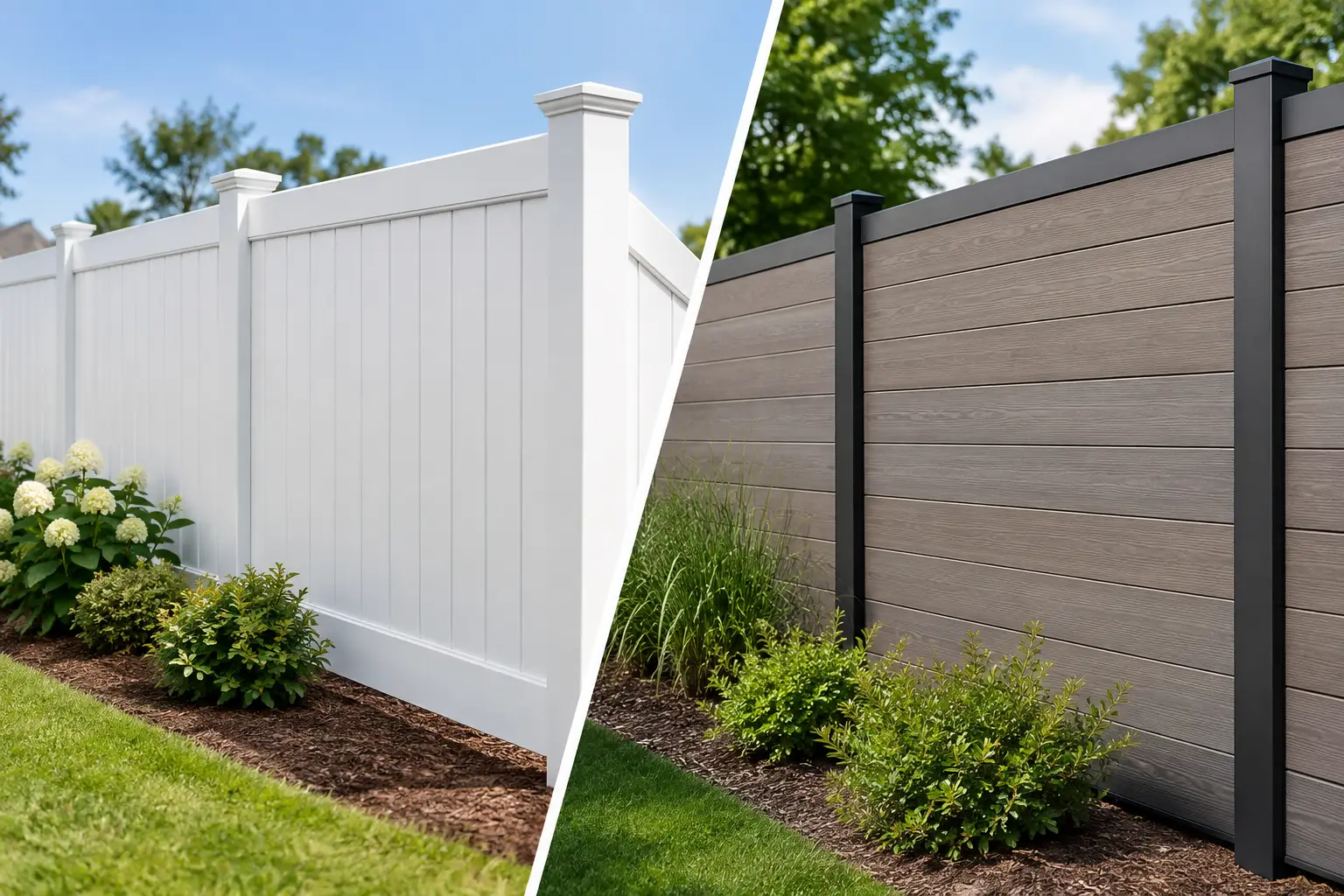
Vinyl fencing is typically made from PVC. It is manufactured in consistent panels, rails, posts, and pickets that create a crisp, uniform appearance. White privacy fencing is a familiar example, but vinyl also comes in selected neutral colors and decorative styles.
Composite fencing combines recycled or new plastic with wood fibers or similar reinforcing materials. The result is a denser board that is often designed to resemble painted, stained, or weathered wood. Product construction varies by manufacturer, so the board profile, reinforcement, and fastening method can differ from one composite system to the next.
That difference in construction shapes nearly every comparison. Vinyl is generally lighter, smoother, and more uniform. Composite usually has more visual texture, more weight, and a look that feels closer to wood without the routine painting and staining wood requires.
Appearance and Privacy
For a homeowner who wants a bright, orderly boundary around a pool, patio, or backyard, vinyl has a clear appeal. Its clean lines fit traditional homes, newer subdivisions, and properties where a consistent white or tan finish is the goal. There are no knots, grain variations, or boards that need to be selected for appearance.
Composite gives property owners more design flexibility when they want a warmer, more natural look. Many composite products offer earth-tone colors, wood-grain patterns, and darker finishes that can complement brick, stone, or modern exterior finishes. A composite privacy fence may be a better fit when a white vinyl fence would feel too formal or too visually bright against the home.
Both can provide full privacy when installed with solid panels or close-fitting boards. The available heights, decorative top treatments, and local requirements should be reviewed before selecting a layout. Corner lots, pools, utility access, drainage paths, and neighborhood restrictions can all affect the final design.
Durability in Arkansas Weather
Northwest Arkansas and the River Valley put fencing through changing conditions. Summer heat, humidity, heavy rain, wind, and occasional hard freezes all matter. Neither vinyl nor composite is maintenance-free in the literal sense, but both avoid many of the common problems associated with untreated or neglected wood.
Vinyl does not absorb moisture, so it will not rot, splinter, or attract termites. Its smooth surface is easy to wash when dirt, grass clippings, or mildew build up. Quality vinyl fencing can hold up well for residential privacy and decorative applications when it is properly installed and supported.
The trade-off is that vinyl can be affected by significant temperature changes. It expands and contracts, which is why installation details matter. Posts, rails, and panels need the right amount of room to move as designed. Vinyl can also crack from a hard direct impact, particularly in colder weather or where a lawn mower, vehicle, or livestock pressure is a concern.
Composite boards are generally denser and can offer better resistance to everyday bumps and surface wear. They will not rot like wood, and they are not vulnerable to termites. However, composite is not immune to weather-related movement. Boards can expand and contract with heat, and darker colors may show heat effects more readily in direct sun. Following the specific manufacturer requirements for spacing, fasteners, framing, and rails is critical.
For either material, the strength of the finished fence begins below ground. Proper post setting, sound layout, drainage awareness, and correctly built gates matter as much as the fence boards themselves.
Maintenance Requirements
Vinyl is often the lower-effort option for routine care. Most fences need only occasional washing with water and a mild cleaner. Homeowners do not need to stain, seal, or repaint the surface. Light-colored vinyl may show mud splash, algae, or irrigation stains more clearly, especially in shaded areas, but cleaning is usually straightforward.
Composite fencing also avoids painting and staining, but its textured surface may hold more dust or pollen than smooth vinyl. Periodic rinsing and manufacturer-approved cleaning methods help keep the finish looking its best. Some products have protective caps or surface technology that improves stain and fade resistance, while others may require more careful cleaning.
Neither material should be treated as a place to hang heavy objects without checking the fence design. Planters, signs, sports equipment, lighting, and gates add weight and stress. A well-built gate should have the right posts, hardware, and reinforcement from the start rather than relying on a standard fence section to carry a heavy load.
Cost: Look Beyond the Initial Number
In many projects, vinyl fencing has a lower initial installed cost than composite fencing, particularly for straightforward privacy layouts. Its lighter components and standardized systems can make it an efficient choice for a typical residential yard.
Composite is often the higher-cost material upfront. The boards and structural components can be heavier, and installation may require more precise spacing or specialized system components. That added investment may be worthwhile for a property owner who strongly prefers the look of wood grain, darker colors, or a more substantial board feel.
Material price alone does not tell the full story. Fence height, terrain, demolition of an existing fence, gate openings, retaining conditions, access to the work area, and local permit requirements all affect the project cost. A level backyard with one walk gate is very different from a sloped commercial property with multiple access points.
Long-term value also depends on expectations. If avoiding paint and stain work is the priority, either vinyl or composite can reduce ongoing labor compared with wood. If a property owner expects to change colors in several years, wood may offer more flexibility because vinyl and composite are finished materials rather than surfaces intended for routine repainting.
Gates, Security, and Commercial Applications
A privacy fence and a security perimeter are not the same project. Vinyl and composite can work well for residential boundaries, screening equipment, enclosing outdoor living areas, or creating an attractive edge around a commercial property. For higher-security needs, they may need to be paired with stronger gate systems, access controls, chain link, ornamental steel, or other purpose-built perimeter materials.
Gates deserve special attention in any fence plan. A pedestrian gate may be simple, but driveway gates, double gates, and automated entries create greater demands on posts, hinges, latches, operators, and clearance. Composite or vinyl infill does not automatically make a gate structure strong enough for frequent commercial traffic or automated operation.
Businesses, industrial sites, and property managers should start by defining the real need. Is the goal privacy, pedestrian control, vehicle access, asset protection, or a combination of all four? That answer helps determine whether vinyl or composite belongs in the project at all, and where a more security-focused fence or gate system is needed.
How to Choose the Right Material
Vinyl is often a strong fit for homeowners who want a clean, classic privacy fence with simple upkeep and a predictable appearance. It is especially practical for level or moderately sloped residential yards where white or neutral colors fit the property.
Composite is often the better fit for property owners who want a wood-like appearance without committing to staining and sealing. It can be a good choice for visible front or side boundaries, upscale outdoor spaces, and projects where color and texture carry more weight in the decision.
Before selecting either one, consider sunlight, drainage, grade changes, gate locations, and the likely use of the space five or ten years from now. A fence that looks right on a small backyard may not be the right system for a busy service entrance, a large dog run, or a property with frequent vehicle access.
Ace Fence Company Inc. can help property owners compare material options, plan gate locations, and build a fence around the actual conditions of the site. The right fence is the one that continues doing its job after the first season of rain, heat, and everyday use.
Ready to Talk to a Real Fence Professional?
Free on-site estimates from the River Valley's most trusted fence company since 1963.