
Vinyl Fence Pros Cons for Arkansas Properties
Weigh vinyl fence pros cons for your Arkansas property, from low maintenance and privacy to cost, repair limits, and weather-related planning needs ahead.
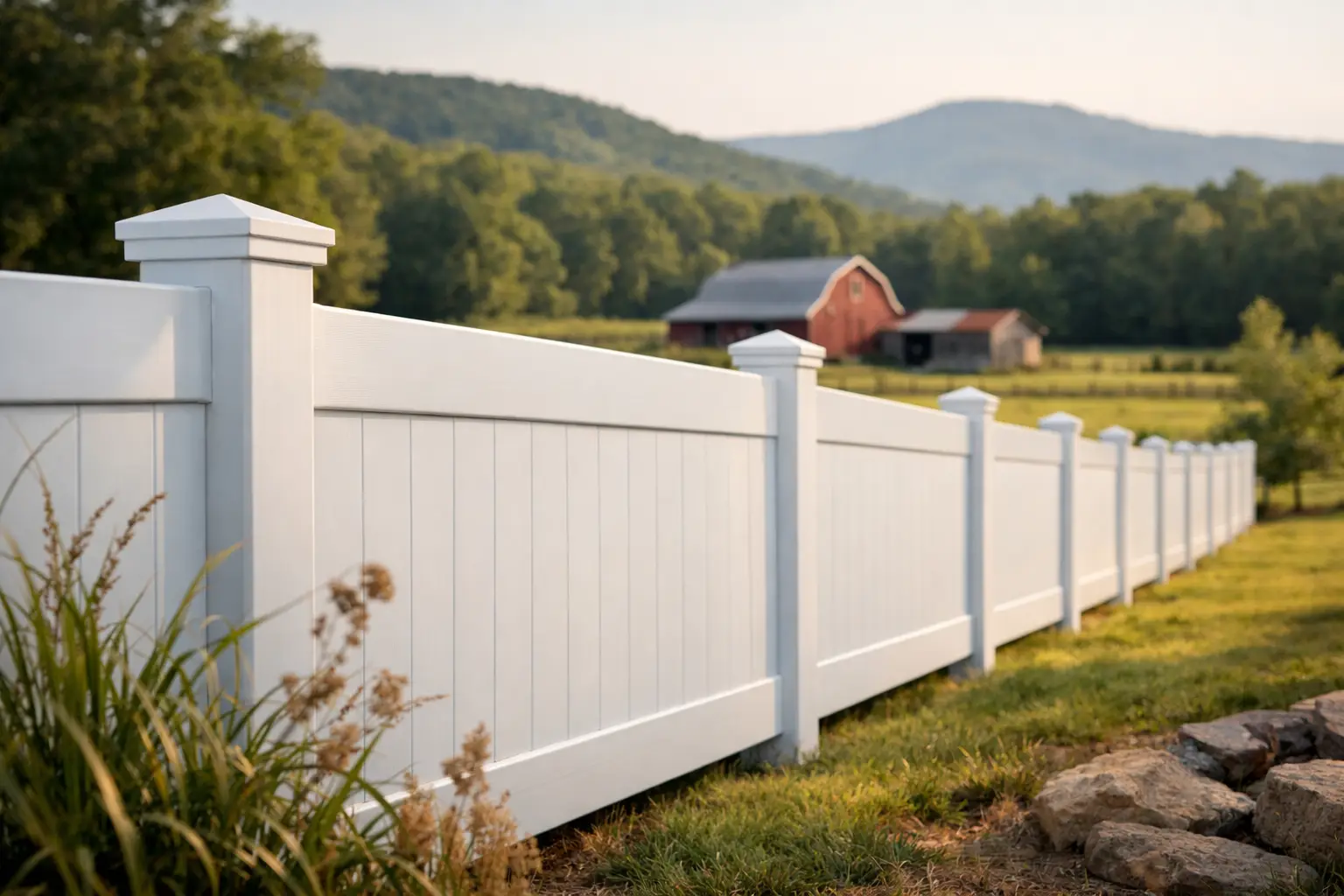
A vinyl fence can give a yard a clean, finished boundary without the regular staining, painting, or board replacement that comes with many wood fences. Still, vinyl fence pros cons should be weighed against the property, the intended use, and Arkansas weather before selecting a material. What works well around a backyard pool or subdivision lot may not be the best answer for a commercial yard, livestock area, or high-security entrance.
For homeowners and property managers in Fort Smith, Northwest Arkansas, and the River Valley, the right choice usually comes down to four questions: How much privacy is needed? How much maintenance is acceptable? What conditions will the fence face? And does the project require a gate, access control, or security level beyond a standard residential enclosure?
Vinyl Fence Pros Cons at a Glance
Vinyl fencing is a popular option for privacy, decorative boundaries, pool enclosures, and low-maintenance residential applications. It is commonly available in solid privacy panels, picket styles, ranch rail designs, and semi-private configurations. The material does not rot like wood or rust like untreated steel, which is a meaningful benefit in areas that see humid summers and frequent rain.
The trade-off is that vinyl is not the strongest choice for every situation. It can be more expensive upfront than basic wood fencing, and repairing a damaged panel is often less straightforward than replacing an individual wood picket. Its performance also depends heavily on proper installation. Posts, rails, reinforcement, gate hardware, and the condition of the soil all matter.
The Main Benefits of Vinyl Fencing
Low ongoing maintenance
Vinyl's biggest advantage is the amount of routine work it avoids. It does not need to be painted, stained, or sealed. A periodic rinse with a garden hose and mild soap is generally enough to remove normal dirt, pollen, and lawn residue. For busy homeowners, rental-property owners, and facilities with multiple fence lines to maintain, that can be a practical long-term benefit.
Wood fencing can look excellent, but it requires attention over time. Sun, rain, insects, and ground moisture can lead to warping, splitting, fading, or decay. Vinyl eliminates many of those concerns. It is especially appealing when the goal is a consistent appearance with less annual upkeep.
Clean appearance and privacy options
A solid vinyl privacy fence creates a uniform screen around a backyard, patio, pool area, or side yard. Unlike wood, where board gaps can develop as material dries and moves, vinyl panels are manufactured to fit together in a consistent pattern. Many property owners prefer the bright, orderly look of white vinyl, while tan, almond, and other color options may better suit the home or landscape.
Picket and rail styles can also provide a clearly defined property line without closing off the view. That makes vinyl a useful option when appearance matters as much as containment.
Resistance to moisture, insects, and rot
Arkansas weather can be hard on exterior materials. Heavy rain, warm temperatures, humidity, and shaded ground can accelerate deterioration in untreated or poorly maintained wood. Vinyl does not absorb moisture the way wood does, and insects do not damage it. It will not rust, making it a sensible alternative to metal fencing where corrosion is a concern.
That does not mean vinyl is maintenance-free or indestructible. It means the material itself is less vulnerable to several common causes of fence deterioration.
Predictable long-term appearance
Quality vinyl products are designed with UV protection to help resist sun fading and chalking. While no outdoor material looks brand new forever, a properly selected vinyl fence generally keeps its color and shape more consistently than an unmaintained wood fence. This can be valuable for homeowners who want a finished look without scheduling periodic refinishing work.
Where Vinyl Has Limitations
Higher initial cost than basic wood
Vinyl fencing often costs more at the start than a standard pressure-treated wood fence. The total price depends on height, style, terrain, post spacing, gate openings, demolition of an existing fence, and local installation conditions. A long privacy fence with multiple gates can represent a significant investment.
The value question is not simply which material costs less on installation day. It is whether the lower-maintenance benefit offsets the upfront difference over the time the owner plans to keep the property. For a short-term project or a large area with a limited budget, wood or chain link may be the better fit. For a homeowner planning to stay for years, vinyl may justify its cost through reduced maintenance and a consistent appearance.
Repairs can require matching components
A broken wood picket can often be replaced individually using readily available lumber. With vinyl, repair parts need to match the specific fence style, color, rail dimensions, and manufacturer system. If a panel is struck by equipment, a vehicle, or a falling tree limb, the repair may involve removing rails or replacing a larger section.
This is one reason to keep product information after installation. Knowing the manufacturer and style makes future repairs much easier. It is also wise to discuss replacement availability before choosing a fence system, particularly for commercial properties or developments where consistent appearance matters across multiple lots.
Extreme impact and wind deserve attention
Vinyl is durable, but it is not intended to absorb heavy impacts like industrial steel fencing. A riding mower, trailer, vehicle, or falling branch can crack vinyl components. In cold weather, vinyl can become less flexible and more susceptible to impact damage, although Arkansas winters are generally not as severe as those in northern climates.
Wind is another installation consideration. A tall solid privacy fence acts like a sail. Posts need proper depth, concrete support where appropriate, and spacing that follows the manufacturer's requirements. Sloped yards, soft or wet soil, and exposed locations may call for additional planning. A fence that looks good on a level backyard can fail prematurely if the foundation work is treated as an afterthought.
Gates need the right reinforcement
Gates are the moving parts of a fence system, and they deserve more attention than the fence panels themselves. Vinyl gates can work very well for pedestrian access, pool entries, and typical residential drive openings when they are properly framed and supported. Wide vehicle gates, frequently used commercial entrances, or automated gates often require reinforced posts, steel framing, or a different gate design altogether.
For properties that need controlled entry, higher traffic capacity, or security, a custom fabricated gate with an appropriate operator may be a better solution than trying to make a standard vinyl gate do more than it was designed to do.
Is Vinyl Right for a Residential Property?
Vinyl is often a strong choice for homeowners who want privacy, a polished appearance, and less routine maintenance. It works particularly well around backyards, pools, gardens, patios, and neighborhood property lines. Before selecting it, confirm local setback rules, homeowners association requirements, utility locations, and the actual property line. A new fence is only as useful as its placement is accurate.
Think about the purpose of the enclosure as well. If the primary goal is to contain a dog, a solid vinyl privacy fence may be ideal. If the goal is to protect a large rural property, hold livestock, or secure expensive equipment, another material may provide better performance for the budget. Chain link, ornamental fencing, wood, composite, and specialty security systems each solve different problems.
When Commercial and Industrial Sites Need Another Approach
A vinyl fence can provide an attractive boundary at an office, multifamily property, church, school, or customer-facing business area. It can screen dumpsters, define outdoor spaces, and separate pedestrian areas. However, it is usually not the primary choice for industrial perimeters, equipment yards, construction sites, or locations requiring serious access control.
Those projects may call for commercial chain link, ornamental steel, security fencing, temporary fence panels, cantilever gates, sliding gates, or automated access systems. The right perimeter solution should match the risk, traffic pattern, visibility needs, and site operations. A decorative fence and a security fence are not interchangeable, even when both create a boundary.
Installation Details That Protect the Investment
The best vinyl material cannot compensate for poor layout or weak posts. A professional installation begins with an accurate plan for corners, elevations, gate locations, drainage, utilities, and grade changes. Posts must be set to the correct depth and alignment, and rails should have room for normal expansion and contraction as temperatures change.
Drainage deserves particular attention in low-lying areas. Standing water around posts can create movement in the surrounding soil over time. On steep or uneven terrain, the installer must determine whether the fence should follow the slope or step down in sections. Both methods can work, but the finished result and privacy coverage will be different.
Ask for clear details on fence height, gate width, post reinforcement, hardware, and how the crew will handle an existing fence. A good estimate should reflect the actual site rather than treating every yard as a flat, open lot.
Make the Choice Around the Job, Not the Trend
Vinyl is a practical, attractive fencing material when low maintenance and privacy are the priorities. It is less suited to situations that involve heavy impact, demanding commercial traffic, wide automated openings, or high-security requirements. The best decision is not the material that is most popular in a neighborhood. It is the one that fits the property, budget, and the work the fence needs to do for years to come.
For a clear recommendation, bring the site conditions and goals to the estimate conversation. Ace Fence Company Inc. can help compare vinyl with wood, chain link, ornamental, composite, and specialized gate options so the finished perimeter is built for the way the property is actually used.
Ready to Talk to a Real Fence Professional?
Free on-site estimates from the River Valley's most trusted fence company since 1963.