Sliding Gate vs Cantilever: Which Fits Your Site?
Compare sliding gate vs cantilever systems for Arkansas properties. Learn how space, terrain, traffic, security, and maintenance affect the right gate choice.
A gate that works well at a level warehouse entrance may be the wrong choice for a sloped driveway, gravel lot, or high-traffic commercial site. When comparing a sliding gate vs cantilever gate, the main question is not which style looks better. It is which system can operate reliably with your available space, site conditions, traffic volume, and security needs.
Both options create a controlled vehicle entrance without the large swing area required by a traditional swing gate. They can be manually operated or paired with access-control equipment, including keypad entry, card readers, remote controls, telephone entry systems, and automatic operators. The difference is in how the gate travels and what the site must provide for it.
Sliding Gate vs Cantilever: The Basic Difference
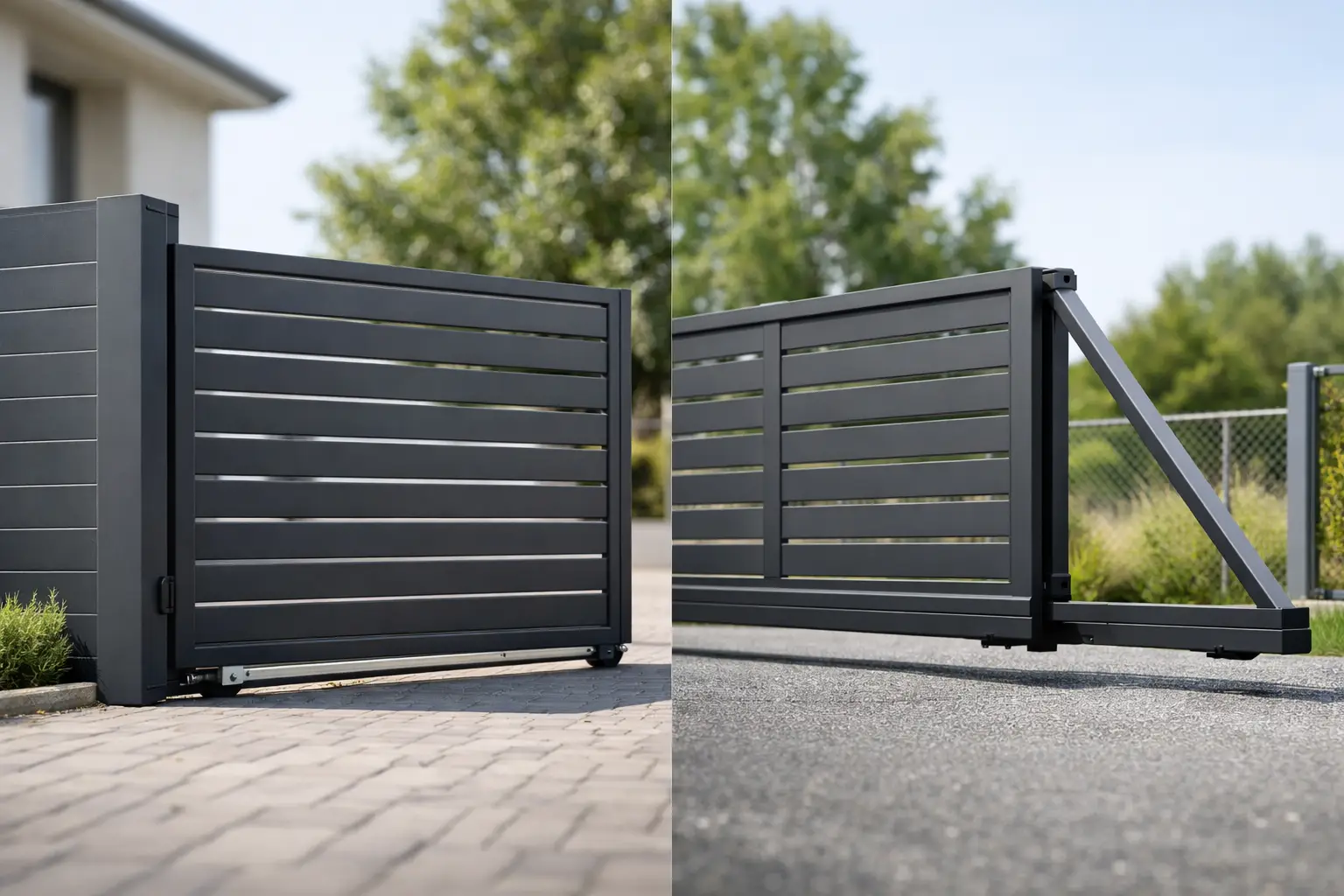
A conventional sliding gate, often called a tracked sliding gate, rolls along the ground on wheels. A steel track is installed across the driveway opening, and the gate moves sideways along that track to open and close. This design is practical, familiar, and often a good fit where the driveway surface is paved, level, and kept clear.
A cantilever gate also slides sideways, but it does not roll across the opening on a ground track. Instead, the gate is supported by cantilever rollers mounted on posts beside the opening. The gate has an extended counterbalance section, allowing it to float above the driveway surface as it moves.
That distinction matters on real job sites. A tracked gate depends on a clean, properly aligned track. A cantilever gate needs more clear space beside the opening because of its counterbalance, but it avoids problems caused by debris, mud, ice, gravel, or uneven pavement in the travel path.
When a Tracked Sliding Gate Makes Sense
A standard sliding gate is often the more straightforward choice for residential driveways and commercial entrances with good ground conditions. It can provide dependable access control without requiring the longer gate run of a cantilever design.
The biggest advantage is usually space. A tracked sliding gate generally needs clear room to the side of the opening that is close to the gate's actual width. For example, a 16-foot opening typically requires roughly 16 feet of open fence line or property space for the gate to slide into. This can be helpful on sites where the gate must fit between buildings, landscaping, utility equipment, or property lines.
Tracked systems can also be a sensible solution when the gate opening is moderate in width and the driveway is smooth, level, and paved. If the surface drains well and routine cleaning is realistic, a properly installed track can perform well for many years.
There are trade-offs. The track has to stay free of gravel, leaves, sticks, packed mud, and other material that can interfere with the wheels. In Arkansas, heavy rain can move soil and debris onto a driveway, while loose aggregate on rural or industrial sites can create extra maintenance. A track can also become a concern where trucks frequently cross the entrance, especially if the pavement is failing or the site sees heavy loads.
For a homeowner with a clean concrete driveway and limited side room, those maintenance needs may be minor. For an active facility with frequent truck traffic, a ground track deserves closer consideration.
Best Conditions for a Tracked Gate
Tracked sliding gates are usually a strong fit when the driveway is level, the travel path can stay clean, side space is limited, and the entrance does not face constant heavy commercial traffic. They are commonly used with chain link, ornamental steel, wood, vinyl, or custom fabricated gate frames, depending on the security level and appearance the property needs.
Why Cantilever Gates Are Common at Commercial Sites
Cantilever gates are widely used at commercial, industrial, municipal, and higher-security properties because they travel above the ground. There is no track running across the driveway to clog, bend, or create an obstruction for vehicle tires.
This design is especially useful at entrances with gravel, rough pavement, uneven surfaces, drainage crossings, or frequent truck movement. The clear opening remains free of ground hardware, which can make a cantilever system more dependable in demanding conditions. It is also a practical choice when snow, ice, mud, or seasonal debris are likely to collect near the gate opening.
Cantilever gates can be fabricated for wide openings and configured with chain link infill, ornamental steel panels, privacy materials, or security enhancements. They are often paired with automatic operators and access-control systems for warehouses, equipment yards, apartment communities, utility sites, construction entrances, and restricted-access facilities.
The trade-off is the amount of room required along the fence line. Because the gate needs a counterbalance section, a cantilever gate is longer than the clear opening it covers. A 20-foot opening may require approximately 30 feet or more of clear run-back space, depending on the gate design, hardware, and weight. Posts and roller assemblies must also be engineered and installed to support the gate properly.
That added length can affect layout, especially on smaller residential lots. It may also increase the initial project cost compared with a basic tracked gate. However, for a site where track maintenance would be frequent or where dependable operation is critical, the higher upfront investment can be justified.
Best Conditions for a Cantilever Gate
Cantilever gates are often the better choice for uneven, unpaved, debris-prone, or high-traffic entrances. They are also a strong option for properties that need a clean driveway opening for delivery trucks, employee traffic, emergency access, or automated entry control.
Space and Layout Can Decide the Question
Before selecting either system, measure more than the driveway width. The gate needs a clear area to travel when open. That space must remain free of trees, parked vehicles, retaining walls, signs, utility boxes, drainage structures, and changes in grade.
For a tracked sliding gate, the run-back distance is generally close to the width of the opening. For a cantilever gate, plan for additional length beyond the opening because of the counterbalance. The exact requirement depends on the gate's width, height, material, weight, wind load, and hardware arrangement.
Also consider where vehicles wait while the gate opens. A gate should be positioned so a vehicle does not have to stop in the road or block a public lane while using a keypad or access device. At commercial sites, adequate stacking distance inside the property can prevent delivery trucks from backing up into the entrance.
A professional site visit is useful because the visible opening is only part of the design. Grade changes, drainage, soil conditions, fencing transitions, electrical access, and operator location all affect the final installation.
Automation, Safety, and Daily Use
Both gate types can be automated, but the operator must be matched to the size, weight, and expected use of the gate. A light residential gate that opens a few times each day has different requirements than a commercial entrance operating through multiple shifts.
An automatic gate system should include the appropriate safety devices. Depending on the application, this may include photo eyes, monitored edge sensors, vehicle loops, exit devices, manual release hardware, warning signs, and controls that meet current gate safety standards. The gate should never be treated as a substitute for a safe pedestrian entrance. Separate walk gates are often the better solution for foot traffic.
Access control should be chosen around who needs entry and how often. Remote transmitters may be suitable for a private residence. A staffed facility, apartment property, or equipment yard may need keypads, card access, telephone entry, scheduled access, or audit-capable controls. Planning the gate and access system together avoids costly changes later.
Maintenance Expectations
No gate is maintenance-free. A tracked sliding gate needs periodic inspection and cleaning of the ground track, wheels, guide rollers, and operator area. Keeping the track clear is the most important day-to-day task.
A cantilever gate eliminates track cleaning, but its rollers, posts, gate frame, and hardware still need inspection. Because cantilever gates can be long and heavy, alignment matters. Damage from a vehicle strike, settling posts, loose hardware, or a failing operator should be addressed promptly rather than forcing the system to keep running.
For either type, regular service helps catch worn rollers, loose fasteners, damaged safety devices, and operator issues before they interrupt access. This is particularly valuable for commercial properties where a nonworking gate can affect deliveries, employee entry, and site security.
Choose for the Site You Have
A tracked sliding gate can be an efficient answer for a clean, level entrance with limited run-back space. A cantilever gate is usually better suited to rougher ground conditions, high traffic, wider openings, and properties where uninterrupted vehicle access matters more than minimizing the gate's footprint.
Ace Fence Company Inc. evaluates the fence line, driveway, traffic pattern, security goals, and access-control needs before recommending a gate system. The right design starts with an honest look at how the entrance will be used every day. A well-planned gate should make access easier for authorized vehicles while giving the property owner fewer problems to manage after installation.
Ready to Talk to a Real Fence Professional?
Free on-site estimates from the River Valley's most trusted fence company since 1963.