Sliding Gate Installation Done Right
Sliding gate installation improves access, security, and durability. Learn how site conditions, design, and operators affect long-term performance.
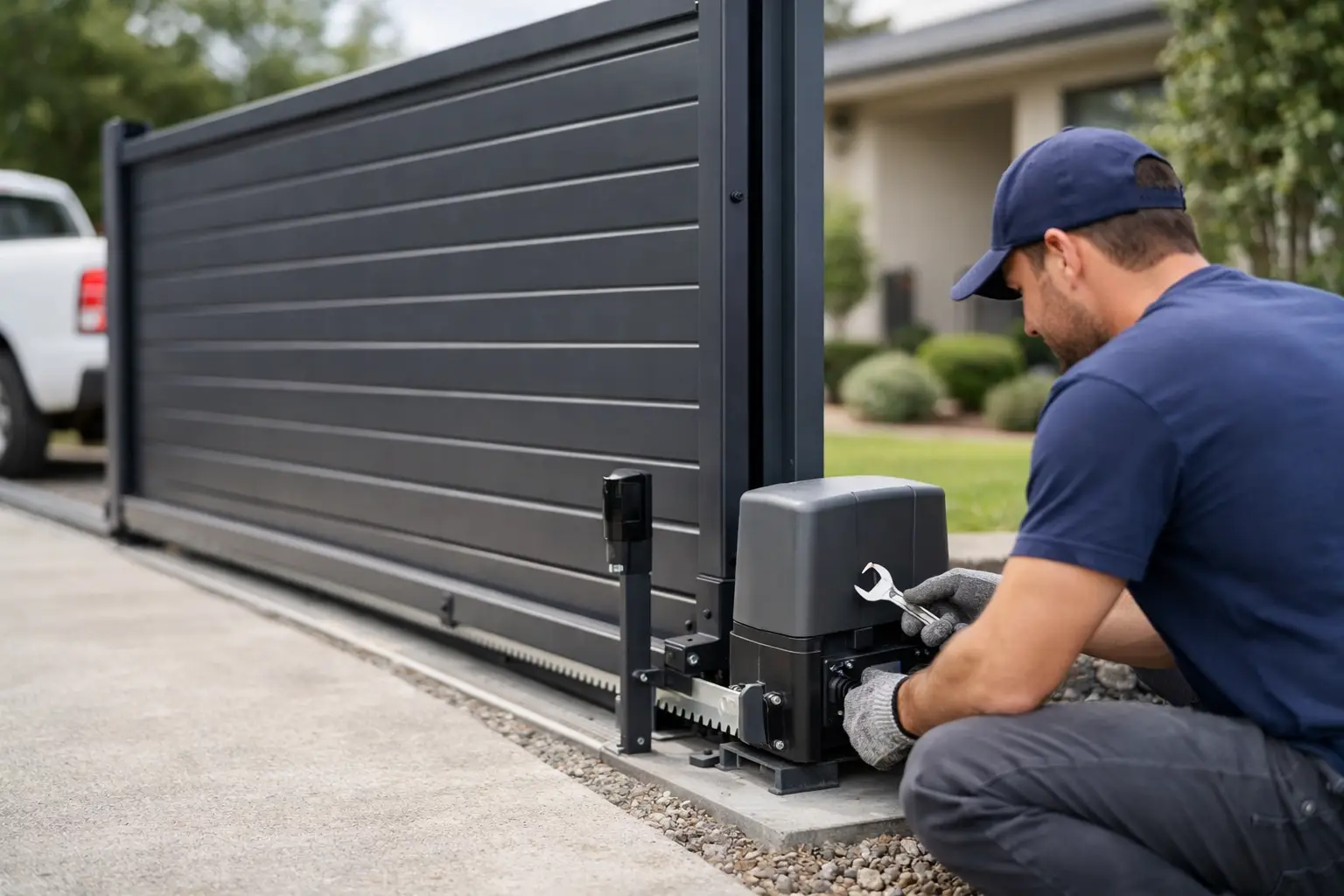
A sliding gate that drags, binds, or stops short is usually not a gate problem first - it is an installation problem. That is why sliding gate installation needs to be approached as a system, not just a piece of moving metal at the end of a driveway or access road. The track, posts, frame, operator, grade, drainage, and daily traffic all have to work together if the gate is going to perform the way property owners expect.
For homeowners, that may mean a cleaner front entry and dependable access without swing clearance issues. For commercial and industrial properties, it often means tighter access control, better use of space, and a gate system that can handle repeated cycles without becoming a maintenance headache. In both cases, the right installation starts with understanding the site.
When sliding gate installation makes sense
Sliding gates are often the better choice when a swing gate does not have room to open safely or fully. That happens more often than people think. A sloped driveway, tight setback, short stacking space near a road, or frequent vehicle traffic can make a swinging system impractical.
A sliding gate moves parallel to the fence line, which helps preserve usable space and keeps the gate path clear of grade changes. On commercial sites, that can be especially useful where trucks need a controlled entry point without gate leaves swinging into travel lanes. On residential properties, it can create a cleaner setup where owners want security and convenience without a wide arc of movement across the driveway.
There is a trade-off, though. A sliding gate needs room to travel sideways, and it needs that travel path to be planned correctly. If the opening is 20 feet wide, the gate generally needs additional lateral space to store when open. That sounds simple on paper, but walls, fence returns, utility conflicts, and terrain can complicate the layout.
The two main types of sliding gates
Not every sliding system is built the same, and the site usually determines which style makes the most sense.
Track sliding gates
A track gate rolls along wheels that follow a ground-mounted track. This is a common option when the site allows for a stable, well-supported track surface and the opening needs a straightforward, economical solution. Track systems can work very well, but they depend heavily on proper grading, drainage, and maintenance. Dirt, gravel, leaves, ice, and standing water can all interfere with movement if the track is not installed and maintained correctly.
Cantilever sliding gates
A cantilever gate does not roll on a track across the driveway opening. Instead, it is supported by rollers mounted on posts to the side, allowing the gate to float over the drive surface. This design is often preferred on commercial and industrial properties, uneven sites, and locations where debris or drainage would make a ground track less reliable.
The trade-off is that cantilever gates usually require more room beside the opening and a more substantial structural design. They can also cost more up front, but in the right setting they often reduce operational issues over time.
What the site tells you before the gate is built
Good sliding gate installation starts long before the gate arrives on a trailer. The first step is evaluating the opening, the surrounding fence line, and the way the property is actually used.
Grade is a major factor. Even small elevation changes can affect clearances, wheel travel, and operator performance. Drainage matters just as much. If runoff crosses the gate path, a track system can collect mud and debris fast. Soil conditions also affect the depth and stability of footings, especially for heavier gates or automated systems with frequent use.
Then there is traffic. A private residence with a few cycles a day has different needs than an apartment complex, storage facility, municipal site, or industrial yard. Gate width, frame strength, operator size, safety devices, and access controls should all match the amount and type of use. Oversimplifying the system may lower the initial number on a quote, but it often raises repair and replacement costs later.
Structure matters more than most people realize
A sliding gate is only as dependable as the support behind it. Posts, footings, roller assemblies, track alignment, and frame fabrication all carry the load. If any of those parts are undersized or out of alignment, the symptoms show up quickly - rough travel, sagging, excessive wear, operator strain, and premature failure.
This is where experience matters. Residential gates and commercial gates may look similar from a distance, but they are not built for the same duty cycle. Heavier steel frames, reinforced support posts, and commercial-grade hardware are often necessary when the gate is part of an active access-control point.
That is also why custom fabrication is sometimes the right call. Standard gate sizes do not always fit unusual openings, security requirements, or architectural expectations. A custom-built system can account for width, height, infill material, operator placement, and safety accessories without forcing compromises that create problems later.
Automation changes the installation requirements
Many property owners asking about sliding gate installation are also planning for automation. That adds convenience, but it also raises the stakes for proper design.
An automated sliding gate needs more than a motor attached to a frame. The operator must be sized for gate weight, length, and expected cycle frequency. Safety devices such as photo eyes, edges, loops, and controls need to be placed correctly. Power supply, conduit routing, and control access should be planned before installation starts, not figured out after the gate is standing.
There is also a difference between a light-duty residential operator and a commercial operator built for repeated daily use. Choosing the wrong one can lead to nuisance shutdowns, slow operation, or shortened service life. For businesses, that can become a security issue as much as a convenience issue.
Common problems that come from poor installation
Most sliding gate failures are predictable. Tracks settle because the base was not prepared correctly. Gates rack because posts or frames were not built for the load. Operators wear out early because the gate does not move freely. Access control devices fail because wiring and protection were treated as an afterthought.
Another common issue is ignoring the environment. Arkansas properties can deal with changing soil conditions, heavy rain, debris, and demanding site use. A gate that looks fine on day one may struggle after a season of weather if the install did not account for drainage, runoff, and long-term movement.
This is one reason many owners prefer working with an experienced perimeter contractor instead of piecing the job together between trades. Fence layout, gate structure, automation, and access control affect each other. When they are handled as one scope, the final system usually performs better.
Sliding gate installation for homes and businesses
Residential projects often focus on privacy, appearance, and easy daily access. In those settings, the gate has to function well while still matching the fence and the property. Material choice matters. Steel, aluminum, ornamental styles, and privacy infill each bring different weight, maintenance, and appearance considerations.
Commercial and industrial projects are usually more focused on durability, control, and traffic management. Those jobs may involve wider openings, keypad or card access, vehicle loops, safety devices, and integration with a broader perimeter plan. A gate at a warehouse, school, utility site, or storage property is not just decorative - it is part of a working security system.
That is where a contractor with broad capability makes a difference. Ace Fence Company Inc. handles traditional fencing along with custom gate systems and access solutions, which helps when a project needs more than a simple gate at the end of a driveway.
What to expect from a professional process
A solid process starts with a site visit and a clear conversation about how the opening will be used. From there, the right contractor should evaluate layout, travel area, structural support, material options, and automation needs. If there are limitations on space, grade, or utilities, those should be addressed early and directly.
The estimate should reflect the actual demands of the project, not just the width of the opening. That includes the gate style, support structure, operator needs, and any access-control components. It should also account for the practical details that affect performance, such as drainage, clearances, and service access.
Once installed, the system should move smoothly, latch properly if required, and operate consistently under normal conditions. Owners should also know what routine service looks like. Even a well-built sliding gate benefits from periodic inspection, adjustment, and maintenance, especially when it is automated.
If you are planning a sliding gate, the best next step is not picking a style from a photo gallery. It is getting the site evaluated by someone who understands how the gate, fence, and access system need to work together for the long haul.
Ready to Talk to a Real Fence Professional?
Free on-site estimates from the River Valley's most trusted fence company since 1963.