10 Clear Signs Your Fence Needs Replacement
Learn the signs your fence needs replacement, from rot and leaning posts to failing gates, and choose a safer, longer-lasting solution for your property.
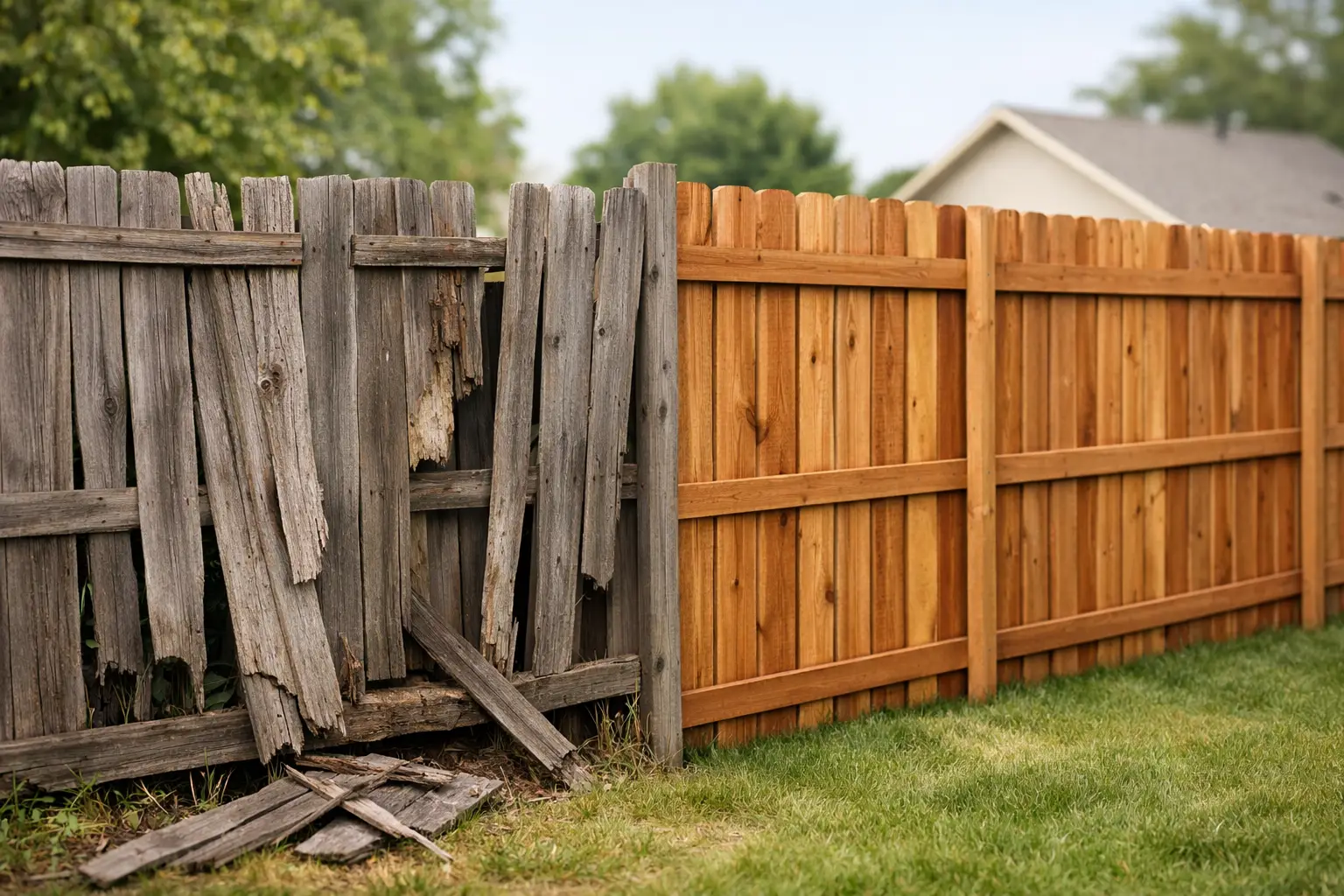
A fence rarely fails all at once. More often, a homeowner notices a gate that drags, a business owner sees a section leaning after a storm, or a property manager finds another loose picket during a routine walk-through. Knowing the signs your fence needs replacement helps you address the problem before it affects security, safety, curb appeal, or access to your property.
A few damaged boards do not always mean the entire fence is finished. Repairs can make good sense when the structure is sound and the damage is limited. But when deterioration reaches the posts, rails, gate hardware, or multiple sections, replacement is often the safer and more cost-effective decision.
1. Posts Are Leaning, Loose, or Rotting
Fence posts carry the load of the entire system. If several posts lean, shift in the ground, or show rot near the soil line, the fence has a structural problem that new pickets alone will not solve. This is especially common with older wood fences, where moisture and ground contact gradually weaken the post below the surface.
One loose post may be repairable. Multiple failing posts across a fence line usually point to a larger issue with age, installation depth, drainage, or material condition. On chain link and ornamental fencing, bent or unstable posts can also compromise the alignment and tension of the whole system.
2. Wood Has Widespread Rot, Splitting, or Insect Damage
A weathered wood fence can still have years of service left. Surface checking, fading, and a few split boards are normal in Arkansas weather. The concern begins when boards feel soft, crumble at the edges, show persistent fungal growth, or have insect damage in several areas.
Look closely at the bottoms of pickets, rails, and posts. Those locations hold moisture longer and usually deteriorate first. If rot appears throughout the fence rather than in one isolated area, replacing sections one at a time can become an ongoing cycle of labor and expense. A new wood fence, or a change to vinyl or composite material, may provide a better long-term result.
3. The Fence Is Leaning or Sagging Across Long Sections
A fence that leans in one small area after a fallen limb may be repairable. A fence that bows, sags, or runs out of level over several spans is different. It can indicate weakened rails, failed posts, shifting soil, or years of strain from wind and weather.
Beyond appearance, a leaning fence can create safety concerns. It may fall into a neighboring property, block a driveway, or become easier to push through. For commercial and industrial properties, an uneven perimeter can create gaps that undermine access control and site security.
4. Gates Will Not Latch, Swing, or Stay Aligned
Gates are often the first part of a fence to show structural trouble because they carry concentrated weight and see frequent use. A gate that rubs the ground, drags on pavement, will not latch, or must be lifted to close may have a hinge issue. It may also mean the gate posts are moving or the opening is no longer square.
For a residential walk gate, an adjustment or new hardware may be enough. For larger driveway, commercial, or automated gates, misalignment deserves prompt attention. A gate that does not close reliably is not providing the access control or security it was intended to provide.
5. Repairs Are Becoming Routine
Occasional maintenance is part of owning any fence. Replacing a damaged board, tightening hardware, or cleaning and staining wood can extend a fence's useful life. The calculation changes when you are calling for repairs every season or patching new trouble spots faster than old ones can be fixed.
Repeated repairs can also leave a fence with mismatched materials, uneven heights, and inconsistent strength. At that point, replacement often offers better value than continuing to invest in a system that is near the end of its service life. A professional evaluation can help separate repairs that will genuinely extend the fence's life from temporary fixes.
6. Security Gaps Are Appearing
A fence must do more than look intact from the street. Walk the entire line and check for gaps at the bottom, loose panels, broken pickets, separated chain link fabric, damaged tension wire, and spaces around gates. Pets can get out through surprisingly small openings, while unwanted animals or people can get in.
For businesses, construction sites, storage yards, and industrial facilities, perimeter gaps are a more serious operational concern. Damaged fencing may expose equipment, inventory, vehicles, or restricted areas. Replacement may be the right opportunity to upgrade the design with heavier materials, a better gate layout, privacy screening, or a controlled-entry system.
7. Storm Damage Has Affected More Than One Section
Northwest Arkansas and the River Valley can see high winds, heavy rain, and falling limbs that put real strain on a fence. After a storm, inspect the full perimeter instead of focusing only on the most visible damage. A section pushed over by wind may have placed stress on adjoining rails, posts, and gates.
If damage is confined to a small, otherwise sound section, a repair is usually practical. If the fence was already aging and the storm affected multiple areas, replacement can prevent a series of future failures. It also gives you the chance to choose a material and construction approach that better fits the exposure of the property.
8. Rust or Corrosion Is Weakening Metal Components
Chain link, ornamental steel, aluminum, and gate hardware are durable, but they are not maintenance-free. Surface rust on a small steel component may be treatable. Deep corrosion, flaking metal, failing welds, or rusted-through areas are different. Those conditions can weaken the fence and create sharp edges or unreliable gate operation.
Pay special attention to posts set near poor drainage, bottom rails close to wet ground, and hardware exposed to frequent use. In a security fence or automated gate system, damaged hinges, rollers, latches, and operator components should be evaluated as part of the full perimeter, not treated as separate issues.
9. The Fence No Longer Fits the Property's Needs
Not every replacement decision is caused by damage. A fence can be structurally sound but no longer serve the way the property is used. A growing family may need more privacy or a safer enclosure for pets. A business may need to direct vehicle traffic, secure a new storage area, or separate public access from employee-only areas.
This is where material and gate selection matter. Wood offers a traditional appearance and privacy. Vinyl and composite can reduce upkeep. Chain link is practical for large enclosures, while ornamental fencing can provide a more finished look without closing off visibility. Commercial properties may need sliding, cantilever, or pivot gates designed around vehicle flow and access requirements.
10. The Fence Looks Worn Even After Maintenance
Appearance is not the only reason to replace a fence, but it matters. A faded, warped, patchy, or uneven fence can pull down the look of a home, rental property, storefront, or office site. If cleaning, staining, and small repairs no longer create a consistent appearance, the material may simply be at the end of its useful life.
For homeowners, a replacement can improve privacy and curb appeal at the same time. For property managers and commercial owners, a well-built perimeter sends a clear message that the site is maintained and secure. The right fence should match both the property's practical needs and the impression you want it to make.
Repair or Replace? Start With the Structure
The best decision usually comes down to the condition of the posts, rails, footings, and gates. If those components remain stable and damage is limited, targeted repairs may be the sensible route. If the structure is failing in several areas, replacement avoids putting more money into materials that cannot support a dependable fence line.
A site evaluation should also account for drainage, grade changes, wind exposure, property lines, gate use, and the purpose of the fence. A backyard privacy fence, a livestock enclosure, a warehouse perimeter, and a controlled-access entry each call for different materials and construction details.
Ace Fence Company Inc. has served Fort Smith, Northwest Arkansas, and the River Valley since 1963, helping property owners choose practical solutions for everything from residential yards to commercial security perimeters. Before another repair turns into a larger problem, have the fence inspected and plan the replacement around how your property needs to work now.
Ready to Talk to a Real Fence Professional?
Free on-site estimates from the River Valley's most trusted fence company since 1963.