
Residential Chain Link Options for Arkansas Homes
Compare residential chain link options for your Arkansas home, from mesh and coatings to gates, height, privacy, and installation planning with confidence.
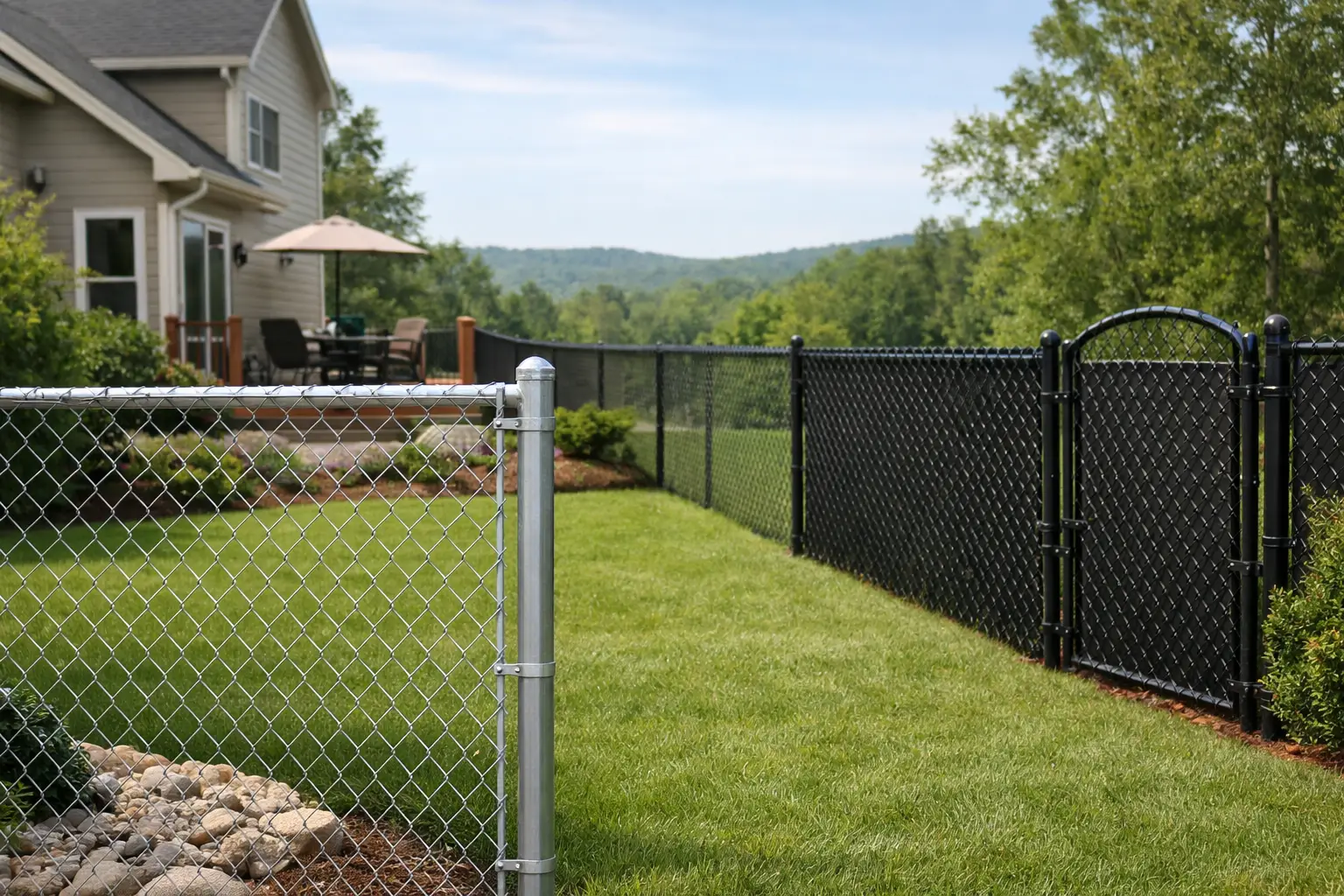
A backyard fence has to do more than mark a property line. It may need to keep a dog safely contained, give children a defined play area, protect a garden, or close off a side yard without blocking the view. Residential chain link options give homeowners a practical way to handle those jobs with a fence that is durable, cost-conscious, and adaptable to many types of properties.
Chain link is not a one-size-fits-all product. The right fabric, framework, height, coating, and gate arrangement depend on how you plan to use the yard. A basic enclosure for a small dog has different requirements than a six-foot perimeter with a drive gate, privacy additions, and a sloped lot to work around.
Start With the Job Your Fence Needs to Do
The best chain link fence starts with a clear purpose. For pet containment, the main concerns are fence height, the size and behavior of the animal, and whether there are gaps at the ground where digging could become a problem. For a pool-adjacent yard, local safety requirements and self-closing or self-latching gates may guide the design. For a side yard or large rural lot, homeowners may place more value on covering distance affordably and preserving an open sightline.
Chain link is especially useful when visibility matters. It creates a defined boundary without making a smaller yard feel closed in. It also works well around gardens, play areas, utility equipment, and backyard recreation spaces where airflow and visibility are more useful than full privacy.
Before selecting materials, consider where the property lines are, where gates need to go, and whether the terrain rises or falls. A fence that looks simple on a flat sketch can require different planning once drainage paths, retaining walls, mature trees, and uneven ground are taken into account.
Choosing Chain Link Fabric and Wire Gauge
The woven wire portion of the fence is called the fabric. Most residential chain link uses a two-inch diamond mesh, which provides a familiar open appearance while keeping pets and children inside the enclosed area. Smaller mesh is available for certain applications, but it is not necessary for every home project.
Wire gauge affects strength. With chain link, a lower gauge number generally means thicker wire. A lighter-gauge fabric can be appropriate for a modest enclosure with limited wear. Heavier fabric is a better fit for active dogs, larger gates, exposed locations, or homeowners who want a more substantial long-term fence.
It is worth comparing the entire system rather than focusing only on the fabric. Posts, rails, fittings, tension bars, and ties all contribute to how the fence performs. A heavier fabric connected to undersized framework will not provide the same result as a properly matched system. This is one reason an on-site estimate is useful: the fence can be specified for the actual layout and intended use instead of relying on a generic package.
Galvanized or Vinyl-Coated Chain Link
Galvanized chain link remains a dependable residential choice. The zinc coating helps protect steel from rust, and the traditional silver finish is often the most economical option. It is a straightforward choice for backyards, larger property enclosures, dog runs, and areas where appearance is secondary to function.
Vinyl-coated chain link adds a colored exterior coating over galvanized wire. Black and green are common choices because they tend to blend into landscapes better than silver. Black chain link can be especially effective near wooded property lines or ornamental landscaping, where the dark finish is less visually noticeable from a distance.
The coated option generally costs more, but many homeowners prefer it when the fence will be visible from patios, streets, or neighboring homes. Color consistency matters across the fabric, rails, posts, fittings, and gates. A fence with black fabric but galvanized framework can still serve its purpose, but a fully coordinated system has a more finished appearance.
Arkansas weather makes coating selection a practical matter as well as an appearance decision. Rain, humidity, summer heat, and ongoing lawn maintenance all put outdoor materials to work. Quality galvanized or vinyl-coated materials, installed with proper tension and secure posts, are built for that kind of regular exposure.
Fence Height Should Match the Use of the Yard
Four-foot chain link is common for defining a yard or containing smaller pets. It keeps the space open and is often sufficient where there is no concern about jumping or climbing. Five-foot and six-foot options provide more containment and security for larger dogs, active backyards, or locations where a more clearly defined boundary is wanted.
Height is not only a preference. Subdivision rules, city requirements, utility easements, and pool safety standards can affect what is allowed, particularly in front yards, corner lots, and around swimming pools. A taller fence may also require stronger posts and a more carefully planned gate system.
For homes on sloped ground, the fence can be stepped in sections or adjusted to follow the grade. Each approach creates a different look and changes the gap between the fence bottom and the ground. Pet owners should pay close attention to those bottom gaps. In some cases, grading, extensions, or other site-specific measures can help prevent a dog from pushing underneath the fence.
Gates Are Part of the Fence System
A gate is often the part of a chain link fence that gets the most use, so it should be planned early. A walk gate near the driveway, patio, or garage makes everyday access easier. Double swing gates can provide room for lawn equipment, trailers, or vehicle access. The width should be based on what actually needs to pass through, not simply on the opening that is easiest to place.
Gate placement also affects how the yard functions. A gate on the wrong side of the house can turn taking out the trash, moving a mower, or bringing in materials into an unnecessary hassle. If a driveway entrance needs to be secured, a custom gate or operator may be worth considering, depending on the layout and level of access control needed.
The posts supporting a gate carry more stress than standard line posts. Properly sized gate posts, quality hinges, latches, and bracing help prevent sagging and alignment problems. For pool areas, gate hardware may need to meet specific safety requirements. These details are small on paper but matter every day after installation.
Adding Privacy Without Replacing the Fence
One advantage of chain link is that it can remain open or be adapted later. Privacy slats can be installed through the mesh to reduce visibility and add color. They are useful along a close property line, around a patio, or near equipment that homeowners would rather keep out of view.
Slats do not create the same solid barrier as a wood, vinyl, or composite fence. They can also catch wind, which increases the load on the framework. On an exposed site, that trade-off deserves careful consideration. If complete privacy is the main goal for the entire yard, another material may be a better fit from the start.
Landscaping can provide a softer alternative. Shrubs, ornamental grasses, and climbing plants can add screening over time while allowing the chain link fence to continue providing immediate containment. This approach takes patience and maintenance, but it can work well for homeowners who prefer a more natural look.
Installation Details That Affect Long-Term Performance
A chain link fence performs best when the framework is set correctly, the fabric is stretched evenly, and every terminal point is secured. Posts need appropriate depth and concrete support for the soil conditions, fence height, and gate loads involved. Rails and tension wire help hold the fabric in position and keep the fence from becoming loose over time.
Property preparation matters too. Old fence removal, brush clearing, rock, tree roots, underground utilities, and drainage conditions can all affect the scope of work. Homeowners should identify property corners before installation and review any neighborhood restrictions before materials are ordered. A fence contractor can help address construction questions, but only a proper survey or reliable boundary information can establish the property line.
At Ace Fence Company Inc., residential projects are approached as complete perimeter systems, not just rolls of wire and posts. That means matching the fence design to the property, selecting suitable materials, and planning gates around how the homeowner will actually use the space.
Maintenance Is Simple, but It Still Matters
Chain link requires less upkeep than many fence materials, but an occasional inspection helps extend its service life. Check gates for smooth operation, make sure latches close securely, and watch for loose ties or fabric that has been damaged by impact. Keep soil, mulch, and heavy vegetation from building up against the bottom of the fence where moisture can remain trapped.
If a tree limb falls or a vehicle contacts the fence, repair the affected section before the damage spreads to posts, rails, or gate alignment. A small correction made early is usually easier than rebuilding a longer run later.
A well-planned chain link fence gives a home clear boundaries without adding unnecessary complication. Bring a rough idea of the yard, the purpose of the fence, and any gate needs to the estimate conversation. Those details make it easier to choose a system that fits the property and continues working long after installation day.
Ready to Talk to a Real Fence Professional?
Free on-site estimates from the River Valley's most trusted fence company since 1963.