Pool Fence Compliance for Arkansas Property Owners
Pool fence compliance depends on barrier height, gate operation, openings, and local review. See what Arkansas owners should check before installation.
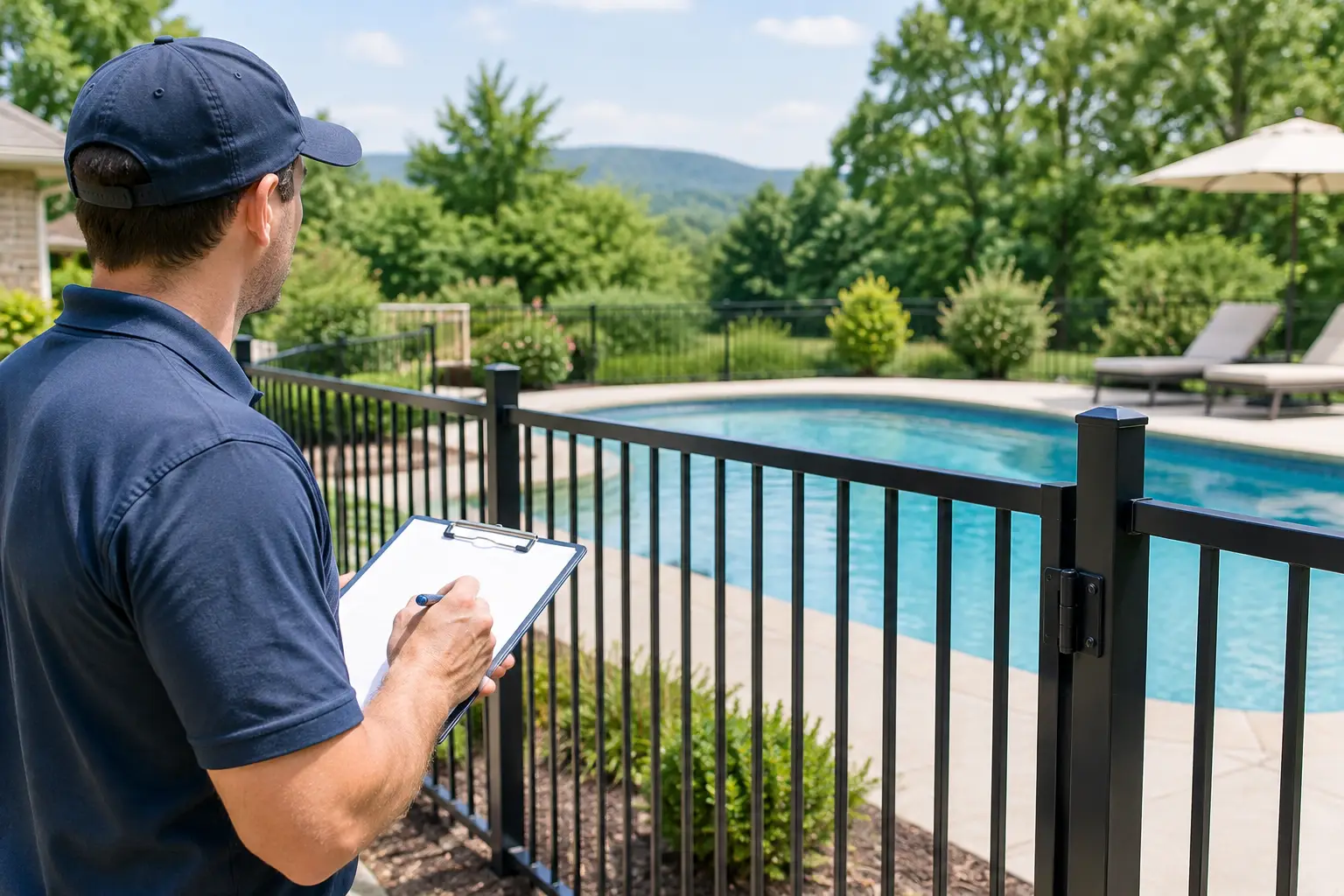
A pool fence is not just another backyard improvement. It is a safety barrier that may be reviewed by an inspector, insurer, lender, property manager, or local code official. Pool fence compliance starts with understanding the rules that apply to the property before materials are ordered or post holes are dug. A fence that looks secure can still fall short if the gate swings the wrong direction, openings are too large, or the barrier is measured from the wrong grade.
For homeowners, the goal is to protect children, guests, and neighbors while keeping the pool area usable and attractive. For apartments, hotels, neighborhoods, schools, and other shared facilities, the stakes are higher. These properties often have additional requirements for controlled entry, emergency access, hardware, signage, and inspection records.
Why Pool Fence Compliance Is a Site-Specific Job
There is no one fence layout that works for every pool. Requirements can differ based on the municipality, county, type of pool, whether the property is residential or commercial, and whether the pool is new or existing. Building codes, zoning rules, health department standards, and insurance requirements can all affect the finished barrier.
Many jurisdictions use pool-barrier standards that address a minimum fence height, maximum opening sizes, gate latches, and climb-resistant construction. A commonly referenced benchmark is a 48-inch barrier, but property owners should not treat that number as a complete answer. The local authority having jurisdiction determines what applies to a specific installation. A commercial or community pool may need a taller fence, self-closing hardware, panic hardware, an accessible gate arrangement, or other safety features.
The location of the fence also matters. Some owners enclose the entire yard, while others install a dedicated barrier around the pool. Either approach may be workable, but the design must prevent direct, unsupervised access to the water. If a house wall forms part of the pool enclosure, doors and windows leading to the pool area may trigger additional alarm or safety requirements.
The Pool Barrier Details That Often Cause Problems
Most compliance issues come from small details rather than the fence material itself. A strong-looking ornamental fence or chain link enclosure is only as compliant as its openings, gates, latch placement, and surrounding conditions.
Fence Height Must Be Measured Correctly
Height is generally measured from the finished ground level on the outside of the barrier. Sloped yards, retaining walls, landscape beds, and low spots can change the measurement from one section to the next. A fence that clears the required height at the posts may be too low where the ground drops beneath a panel.
Do not assume added mulch, gravel, or soil will remain at the same level over time. Erosion and settling can create gaps below the fence. During planning, it is better to account for the final grade than to build to the bare minimum at a single point.
Openings Cannot Create a Crawl-Through Hazard
The space below the fence, between pickets, and within mesh all matters. A child should not be able to pass through, under, or easily climb over the barrier. This is where material selection becomes practical.
Ornamental aluminum or steel fencing can provide a clean, open appearance around a residential pool, but picket spacing needs to meet the applicable standard. Chain link can be durable and cost-effective, particularly for larger properties, though mesh size and climb resistance should be reviewed carefully. Privacy fencing may provide more screening, but horizontal rails or nearby features can create footholds if they are accessible from the outside.
The area around the fence deserves the same attention. A deck box, grill, air-conditioning unit, stacked firewood, landscaping wall, or play equipment placed next to the enclosure can become an easy way over it. Keep climbable objects away from the outside of the pool barrier.
Gates Are the Most Critical Part of the Fence
A gate is the moving part of a safety system, which is why it receives close attention. In many pool barrier standards, pedestrian gates must be self-closing and self-latching. The latch typically needs to be positioned where a young child cannot readily reach or operate it.
Gate swing direction may also be required to move away from the pool area. This helps reduce the chance that a child can push through a partially secured gate toward the water. Gates should close and latch consistently from a fully open position, not only when they are gently released.
A gate that drags on the ground, binds against a post, or fails to catch every time is not a minor maintenance issue. It is a barrier failure. Homeowners should test it regularly, especially after ground movement, storms, freeze-thaw cycles, or repairs to nearby concrete and landscaping.
Choosing a Fence Material for Safety and Long-Term Use
The best material depends on the site, budget, local requirements, and the level of privacy or visibility desired. Pool fence compliance should guide the selection, but the barrier also needs to hold up to weather, foot traffic, lawn equipment, and routine use.
Ornamental fencing is a common choice for pool areas because it offers visibility and a finished appearance without closing off the yard. Vinyl can provide privacy and low-maintenance ownership, although the layout must avoid creating an easily climbable configuration. Wood fencing can work well for privacy, but it needs ongoing inspection for loose boards, warping, deterioration, and changing ground clearances. Chain link is often a practical solution for larger or utility-focused areas, particularly when paired with the right mesh, framework, and gate hardware.
For commercial properties, material decisions usually involve more than appearance. Property managers may need stronger posts, heavier gate frames, reliable self-closing hinges, access control, or separate service access. A fence around a hotel or apartment pool should be designed for repeated use by many people, not occasional use by one household.
Plan for Permits and Inspection Before Installation
The most efficient time to address compliance is before construction begins. Start by checking whether the project needs a permit and which department performs the review. Depending on the property, that may involve a city building department, county office, health department, fire authority, or a homeowners association in addition to local code enforcement.
A good project plan identifies the pool location, property lines, proposed fence path, gate locations, finished grades, existing structures, and any equipment that could affect the barrier. If an existing fence will serve as part of the enclosure, inspect it closely. An old gate, loose panel, damaged latch, or oversized gap can prevent the entire pool area from passing inspection.
For businesses and multifamily properties, confirm how staff, maintenance crews, emergency responders, and delivery personnel will access the area. A separate service gate may be necessary. Access systems should support security without creating a situation where the pool gate is propped open for convenience.
It is also wise to keep permit documents, approved plans, product information, and final inspection records with the property files. Those records can be useful during a sale, insurance review, renovation, or future fence repair.
Avoid These Common Pool Barrier Mistakes
Property owners often run into trouble when they treat the pool fence as a standard yard fence. The following issues deserve attention before final installation:
- Installing a gate without self-closing, self-latching hardware.
- Leaving a low spot or wide gap beneath a fence panel.
- Using a gate latch that is easy for a child to reach from outside the enclosure.
- Placing furniture, storage items, or equipment beside the barrier.
- Assuming an existing yard fence automatically meets current pool requirements.
- Failing to account for a sloped yard, retaining wall, raised deck, or outdoor kitchen.
These are usually fixable issues, but fixes cost less when they are addressed in the layout and material-selection stage.
Work With a Contractor Who Understands the Whole Perimeter
A pool enclosure has to work as part of the entire property. It may need to tie into a privacy fence, separate a patio from the pool deck, provide a water gate, or coordinate with an existing driveway or access gate. The best installation is one that handles the safety requirement without making the property harder to use.
Ace Fence Company Inc. brings decades of fence and gate experience to residential and commercial projects across Fort Smith, Northwest Arkansas, and the River Valley. That experience matters when a project calls for more than a basic fence line, including custom gates, specialty access needs, grade changes, and durable materials selected for the site.
Before committing to a pool fence design, verify the current requirements with the local authority that will inspect the work. Then build the barrier with enough care that the gate closes properly, the openings stay controlled, and the pool remains protected long after installation day.
Ready to Talk to a Real Fence Professional?
Free on-site estimates from the River Valley's most trusted fence company since 1963.