Pivot Lift Gate Installation for Secure Access
Learn what pivot lift gate installation involves, where it works best, and how to plan a durable, secure access solution for your site.
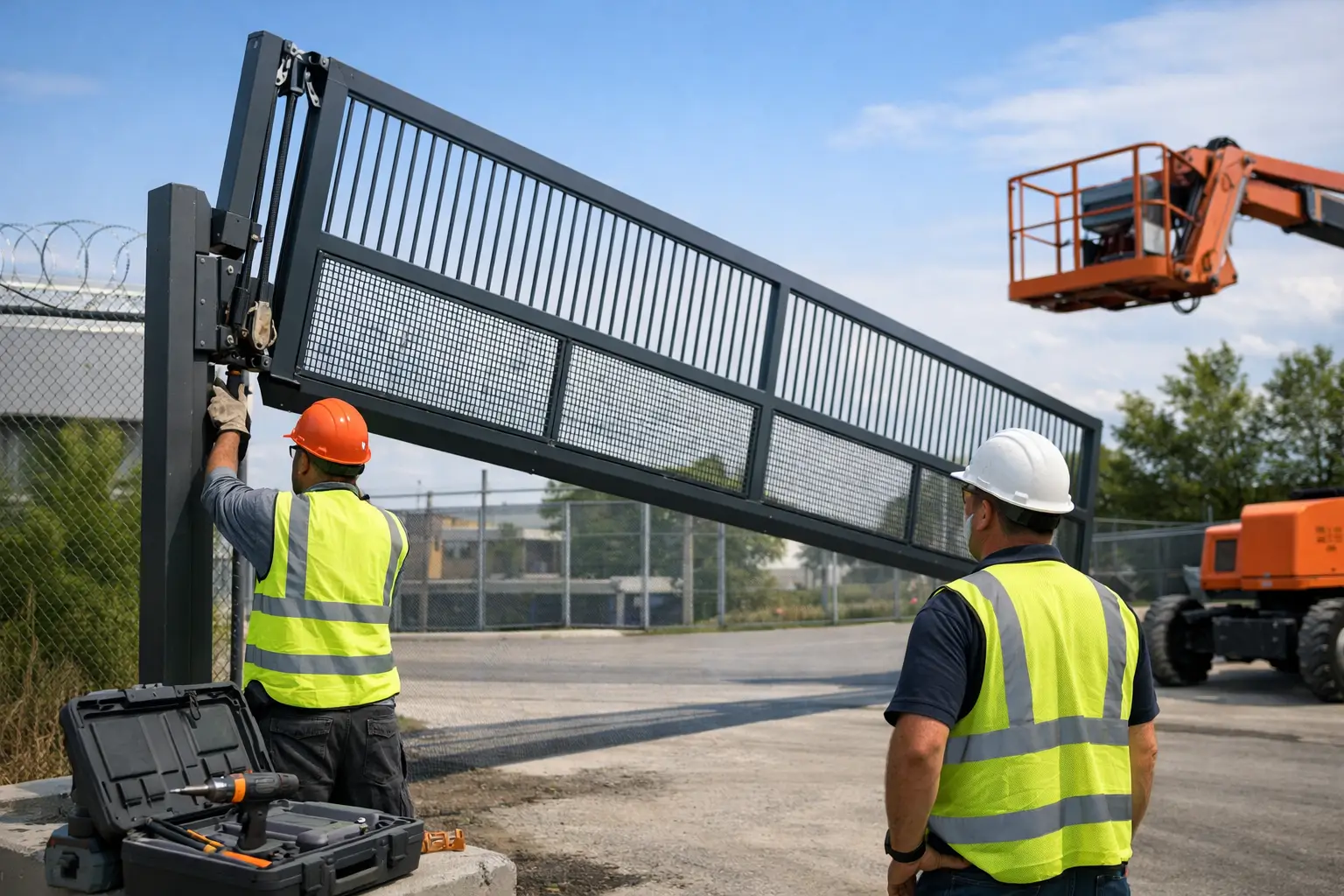
When a standard swing gate drags, a slide gate has no room to travel, and traffic still needs controlled access, pivot lift gate installation starts making a lot of sense. These systems are built for places where grade changes, tight spaces, drainage issues, or heavy-use entry points make other gate types less practical. For commercial sites, industrial facilities, and some specialty properties, the right gate is not just about opening and closing - it is about reliable clearance, safe operation, and long-term performance.
A pivot lift gate works differently than a traditional gate. Instead of swinging flat across the ground or sliding along a fence line, it lifts as it pivots. That movement gives the gate panel clearance over uneven surfaces, gravel, drainage swales, snow buildup, or other site conditions that can interfere with a conventional gate. It is a specialized solution, which is exactly why planning matters.
Where pivot lift gate installation makes sense
Not every property needs this style of gate. In many cases, a chain link swing gate or cantilever gate will do the job well and at a lower cost. But there are situations where a pivot lift system solves a real access problem that other gate types do not handle cleanly.
Sites with rising grades near the opening are a common example. A standard swing gate may bind against the surface as it opens, especially if the entrance slopes up. A pivot lift gate is designed to gain clearance during operation, which helps avoid that contact point. The same idea applies to entrances with rough terrain, stormwater flow, loose stone, or pavement conditions that make low-clearance operation unreliable.
This type of gate is also worth considering where side room is limited. A sliding or cantilever system needs runback space along the fence line. If that space is blocked by structures, utilities, terrain, or traffic flow, the project may need a different approach. A pivot lift design can sometimes provide the access control you need without requiring the long side clearance a slide gate depends on.
For industrial and commercial properties, these gates are often part of a larger security plan. That can include access controls, vehicle entry management, keypad or card access, safety loops, and integration with perimeter fencing. In that setting, the gate has to do more than move. It has to work consistently under real traffic conditions.
What affects a pivot lift gate installation
A good installation starts well before equipment arrives on site. The gate opening itself matters, but so does everything around it. Grade, width, daily traffic count, wind exposure, surface material, drainage patterns, and available power all shape the design.
The weight and size of the gate panel are major factors. Larger openings may require heavier structural members, stronger support posts, and operator equipment rated for the application. If a property handles frequent truck traffic or commercial deliveries, the gate may need to cycle far more often than a residential system. That changes the hardware, the operator, and the service expectations.
The ground condition at the entrance also plays a big role. If soils are unstable or drainage is poor, the support structure needs to account for that. A gate system is only as dependable as the footing and post installation that carries it. Shortcuts in the foundation stage tend to show up later as alignment issues, premature wear, or inconsistent operation.
Electrical planning is another part of the job that should not be treated as an afterthought. Automated pivot lift gates may require trenching, operator power, low-voltage wiring, safety devices, and controls placed where users can access them without creating traffic conflict. If the gate is intended to secure a commercial property after hours, backup access and fail-safe planning matter too.
The installation process from field layout to operation
Every site is different, but most pivot lift gate installation projects follow the same general path. First comes the field review. That is where measurements are confirmed, grades are checked, utilities are considered, and the opening is evaluated in relation to the fence line, traffic flow, and operator placement.
From there, the gate system is selected or fabricated to fit the application. On some projects, that means matching an existing commercial chain link perimeter. On others, it may involve a more custom frame or a specialized operator setup. The goal is not to force a standard gate onto a difficult site. The goal is to build the system around the actual conditions.
Once layout is complete, posts and structural supports are installed. This step has to be precise. Gate movement depends on proper alignment, and a small error at the support point can create bigger problems over the travel path. Concrete work, anchor placement, and curing time all affect the schedule.
After the structure is in place, the gate panel, hardware, and operator components are installed. Then the system is adjusted and tested. A quality test phase checks travel path, lift clearance, open and close limits, latch behavior if used, safety devices, and response under repeated cycles. If access controls are part of the project, those components need to be tested as part of the whole system, not treated as separate add-ons.
Choosing between pivot lift and other gate types
Property owners sometimes know they need a gate but are not sure which style fits the site. That is normal. The best option depends on how the entrance is used and what constraints the property presents.
A swing gate is often the most economical choice for straightforward openings with enough swing area and relatively level ground. A slide gate or cantilever gate can work well where there is room along the fence line and where frequent use calls for dependable, controlled movement. A pivot lift gate fills the gap when the site creates clearance problems that make those systems less effective.
There are trade-offs. Pivot lift systems are more specialized, and that can mean more planning, more structural consideration, and a higher upfront cost than a simple gate. But if the site conditions are working against a standard design, a cheaper gate that struggles every week is not really the lower-cost option. The better value is the system that fits the job from the start.
Why installation quality matters
Specialty gates are not forgiving of poor workmanship. If the support posts are out of line, if operator sizing is off, or if the site drainage is ignored, the gate may still move - just not the way it should. That usually shows up as premature wear, delayed operation, safety concerns, or service calls that could have been avoided.
An experienced contractor looks at the full entrance, not just the opening width. That includes the perimeter fence tie-in, surface condition, access control needs, and how the gate will be used day after day. For sites in Arkansas, it also means paying attention to weather exposure, drainage, and the kind of use the property really sees, not just what is listed on paper.
This is one reason many owners prefer to work with a contractor who can handle fencing, gate structure, and access-related components together. Coordination matters. When the perimeter, gate frame, and operator setup are treated as one system, the finished result is usually stronger and easier to maintain.
Planning for long-term performance
A pivot lift gate should be installed with maintenance in mind. That does not mean the gate will require constant service, but it does mean the design should allow for adjustment, inspection, and normal wear over time. Heavy-use commercial entrances especially benefit from realistic planning at the front end.
That includes choosing materials that match the environment, using hardware rated for the load, and making sure the operator is not undersized for the gate and duty cycle. It also means talking through how the site will function during power loss, after-hours access, or high-traffic periods. A gate that looks good on installation day but struggles under normal use is not a successful project.
For property owners and managers, the smart move is to bring site conditions and operational needs into the conversation early. If your entrance has slope, limited side room, drainage concerns, or security requirements beyond a basic gate, say so at the estimate stage. That helps shape the right recommendation and avoids forcing a standard solution onto a nonstandard site.
Ace Fence Company Inc. works with property owners, businesses, and facilities that need practical perimeter solutions, including specialized gate systems built for tougher access conditions. If a standard gate is not the right fit for your entrance, a well-planned pivot lift installation can give you the clearance, control, and durability the site has been missing. The best next step is a field-driven estimate based on how your property actually works.
Ready to Talk to a Real Fence Professional?
Free on-site estimates from the River Valley's most trusted fence company since 1963.