Manual Gate vs Automatic - Which Fits Best?
Compare manual gate vs automatic options for Arkansas homes and businesses. Learn about cost, security, maintenance, traffic, and right fit for your site.
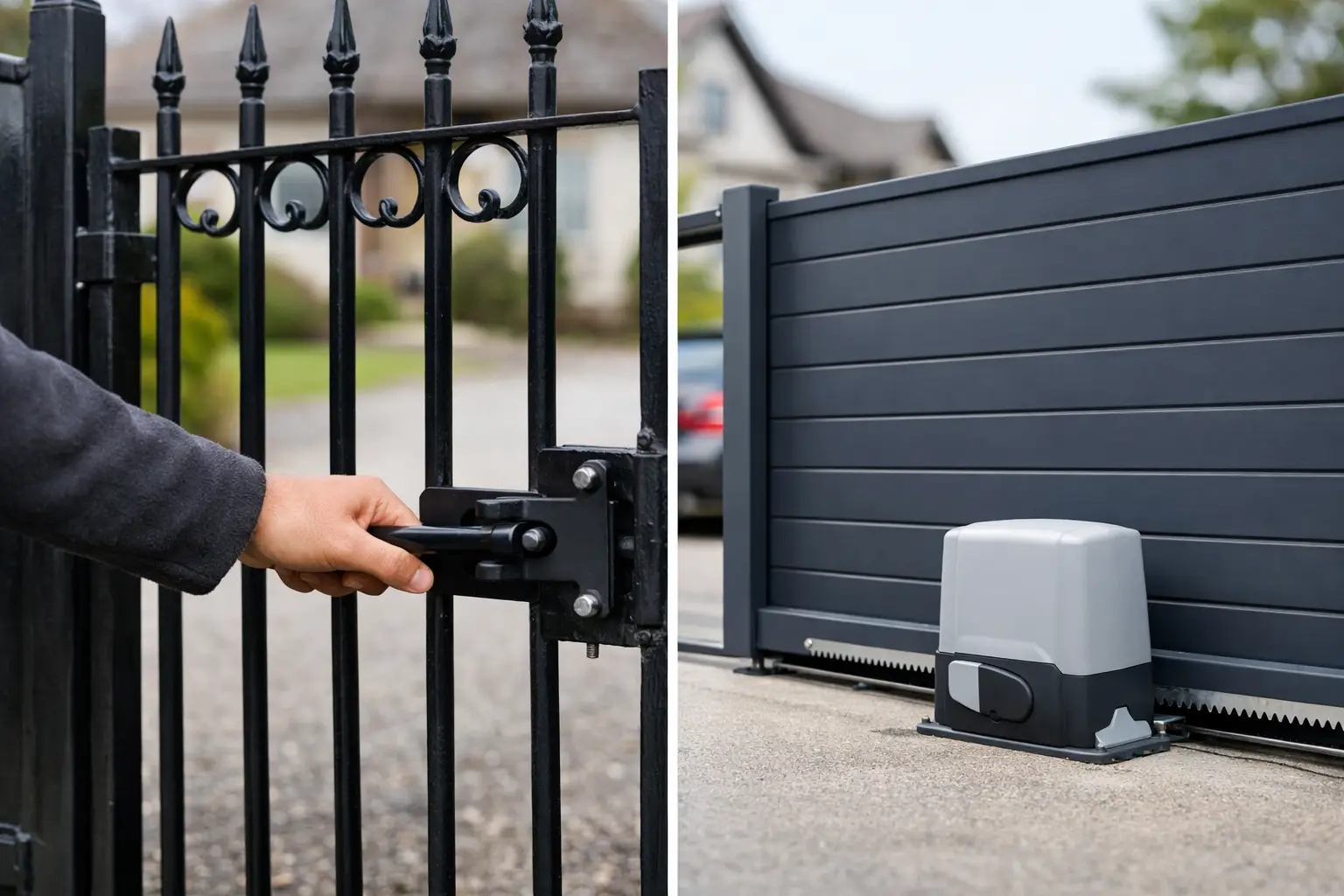
A gate has to work with the way your property operates, not create another daily chore. The manual gate vs automatic decision affects how people enter, how deliveries are handled, how secure the site feels, and what the project costs over time. For a quiet residential driveway, a well-built manual gate may be the practical answer. For a busy business entrance, an automatic system can be a necessary part of controlling access.
The right choice depends on traffic volume, gate size, site layout, power availability, security needs, and who will use the entrance. Looking at those factors early helps prevent a gate that is difficult to operate, poorly suited to the driveway, or expensive to change later.
Manual Gate vs Automatic: Start With Daily Use
A manual gate is opened and closed by hand. It can be a walk gate, driveway swing gate, slide gate, farm entrance, or a custom-built gate installed with a latch, lock, drop rod, or chain. Its basic operation makes it dependable and easy to understand.
An automatic gate uses an operator to open and close the gate. Depending on the system, users may activate it with a remote, keypad, card reader, phone-based access control, exit loop, intercom, or other entry device. Automatic gates can be designed for residential driveways, multi-family properties, commercial facilities, industrial yards, and controlled-access sites.
The key question is simple: how often does someone need to open the gate, and what happens when that task is inconvenient? If a homeowner opens the driveway gate once in the morning and once at night, getting out of the vehicle may not be a concern. If employees, vendors, customers, and delivery drivers enter throughout the day, repeated manual operation becomes inefficient and may lead to the gate being left open.
When a Manual Gate Is the Better Fit
Manual gates are often a strong choice for properties with limited traffic and straightforward access needs. They generally cost less upfront because there is no operator, control equipment, electrical work, or safety-device package to install. They also have fewer mechanical and electrical components that may need service over the years.
For a homeowner with a side yard, garden, pasture, pool enclosure, or lightly used driveway, a manual gate can provide privacy and boundary control without adding unnecessary complexity. A quality frame, hinges, latch, and posts matter more than fancy features. The gate still needs to hang level, close correctly, and resist sagging, especially when it is wide or built from heavier materials.
Manual gates can also make sense at rural properties where power is not readily available. A lockable farm or equipment entrance may only need occasional access. In those cases, spending more on automation may not offer much practical return.
There are trade-offs. A manual gate does not control who enters unless users consistently lock it. It is less convenient during rain, after dark, or when drivers are pulling trailers. It can also become a bottleneck at a business site where several vehicles arrive at once. If the gate is regularly propped open because people do not want to operate it, it is no longer serving its security purpose.
Where an Automatic Gate Earns Its Cost
Automatic gates are built for convenience, but convenience is only part of the value. At commercial and industrial properties, automated entry supports better access control. A property manager can issue remotes or credentials, limit entry points, and reduce the need for staff to walk out and operate a gate for every vehicle.
For homeowners, an automatic driveway gate keeps the entrance closed without requiring anyone to leave the vehicle. That can be especially useful on a busy road, a long driveway, or a property with children and pets. A keypad can provide access for family members and trusted service providers without handing out physical keys.
At businesses, automatic operation can help separate public access from employee, fleet, contractor, or delivery access. A facility may need an exit loop that opens for departing vehicles, a keypad for approved visitors, and an intercom for drivers who need authorization. The gate system should be planned around the actual traffic pattern rather than installed as a one-size-fits-all package.
Automation also comes with responsibility. Gate operators need properly installed safety features, such as photo eyes and vehicle detection devices where appropriate. The gate, operator, controls, and safety equipment must work together. A gate operator cannot correct poor gate construction, undersized posts, bad track alignment, or a layout that leaves no safe space for vehicles waiting to enter.
Consider the Full Cost, Not Just the Installation Price
The initial price difference between a manual gate and an automatic gate can be significant. Automation may require an operator, controls, wiring, trenching, electrical service, batteries or solar equipment, safety devices, and access-control components. Larger or heavier gates may require a more capable operator and stronger structural support.
Those costs should be weighed against how the gate will be used. A commercial property that has someone opening a manual gate dozens of times each day is already paying for that access process in time, labor, and lost productivity. A residential owner who wants controlled driveway access every day may consider the added cost worthwhile for comfort and peace of mind.
Ongoing maintenance also deserves attention. Manual gates need periodic inspection of hinges, latches, wheels, tracks, and hardware. Automatic systems require that same gate maintenance plus attention to the operator, electrical connections, batteries, controls, and safety equipment. Regular service helps identify problems before a gate becomes stuck open or closed.
Choose the Gate Style Before Choosing the Operator
The gate design often determines whether automation will perform well. Swing gates need adequate clear space to open inward or outward, and driveway grades can affect their operation. A sliding gate requires room along the fence line for the gate to travel. A cantilever gate slides without a ground track, making it useful where gravel, mud, snow, debris, or uneven ground would interfere with a tracked slide gate.
For commercial yards and high-traffic entrances, cantilever and specialty sliding systems are often practical because they can accommodate wider openings and frequent operation. Pivot lift gates may be a fit where space is limited or a fast-opening design is needed. Each system has structural, clearance, and operating requirements that should be reviewed before construction begins.
Material matters as well. Chain link gates are common for commercial, industrial, athletic, and utility applications. Ornamental steel can provide a more finished look for homes, offices, and entry features. Wood, vinyl, and composite gates can complement residential fencing, but their weight, wind exposure, and hardware requirements should be considered carefully when automation is planned.
Arkansas Conditions Can Affect the Decision
Local site conditions have a real impact on gate performance. Sloped driveways may limit swing-gate options. Soft ground, drainage issues, and gravel can make a traditional slide track less appealing. Strong wind exposure can add strain to a solid privacy gate, particularly when it is wide and automated.
Power is another practical issue. A hardwired operator is often the most direct option when electrical service is nearby, while solar may be considered for remote entrances with suitable sun exposure and manageable operating demands. A site review can determine whether the available power source and location support the planned system.
Property owners should also think about emergency access and daily exceptions. Where will a delivery truck wait? Can a fire department or service vehicle enter when needed? Will trailers need a wider opening than passenger vehicles? These details can change the recommended gate width, type, and access-control setup.
Make the Choice Around the Property, Not the Product
A manual gate is not a lesser gate when it matches the way a property is used. It can be durable, secure, and cost-effective for the right entrance. An automatic gate is not automatically the better choice either. It needs sound construction, appropriate safety equipment, and a plan for service and operation.
Before selecting either option, consider how many vehicles use the gate each day, who needs access, whether vehicles need to stop on a public road, how much room exists around the opening, and what level of control the property requires. Those answers lead to a better recommendation than choosing based on appearance alone.
For Arkansas homes, businesses, and job sites, Ace Fence Company Inc. can help evaluate the entrance, fencing material, gate structure, and access needs as one complete project. A gate should make the property easier to secure and easier to use every day - and the best way to get there is to build it around the real conditions of the site.
Ready to Talk to a Real Fence Professional?
Free on-site estimates from the River Valley's most trusted fence company since 1963.