Industrial Perimeter Security Fencing Basics
Industrial perimeter security fencing helps protect facilities, control access, and reduce risk with the right layout, materials, gates, and planning.
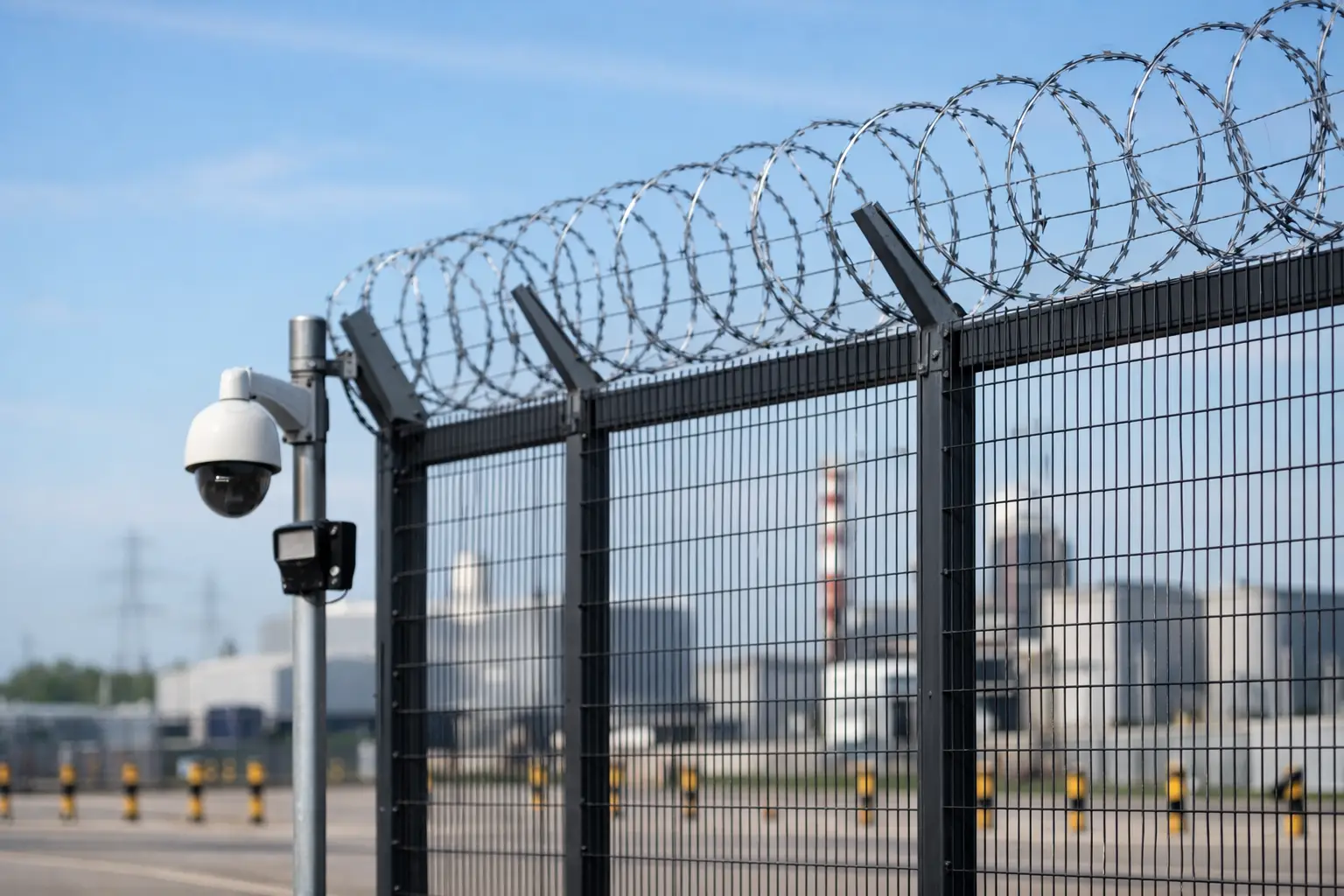
A fence around an industrial site has one job on paper - mark the perimeter. In practice, industrial perimeter security fencing has to do much more. It needs to slow down unauthorized access, support gate control, hold up under daily wear, and fit the way a facility actually operates.
That is where many projects go off track. A property owner may focus on fence height alone, while the real issue is a poorly protected gate opening, bad sight lines, or a layout that leaves room for easy breach points. A good perimeter system is not just a line of fence fabric or panels. It is a working part of site security.
What industrial perimeter security fencing needs to accomplish
For most industrial properties, the goal is not simply to put up a barrier. The goal is to create a controlled edge around the site. That means defining who can enter, where vehicles can move, how deliveries are handled, and how the property is monitored after hours.
A manufacturing plant, utility site, warehouse yard, or equipment storage area may all need security fencing, but they do not use their perimeter in the same way. Some properties need wide vehicle access with heavy gate cycles. Others need to secure outdoor inventory, fuel tanks, or restricted service areas. The right fence system depends on those day-to-day realities.
A well-planned installation usually addresses deterrence, visibility, durability, and access control at the same time. If one of those gets overlooked, the fence may still look substantial while leaving a weak point where it matters most.
Choosing the right industrial perimeter security fencing
Chain link remains one of the most common choices for industrial perimeter security fencing, and for good reason. It is cost-effective, durable, and adaptable to large sites. It also works well with barbed wire, privacy screening, and a wide range of commercial gate systems. For many facilities, chain link gives the best balance between security, maintenance, and budget.
That said, chain link is not the answer for every property. Some sites need ornamental steel or other heavy-duty options where appearance matters along the front elevation or where a stronger visual deterrent is part of the plan. In other cases, a site may need a combination approach - one material near public-facing areas and another around storage yards or service zones.
Fence height matters, but height alone does not make a perimeter secure. A 6-foot fence may be enough for one facility, while another may need 8 feet with added deterrent features. The decision depends on the asset value, local code requirements, surrounding traffic, and the level of access restriction needed.
Visibility is another factor that deserves more attention than it usually gets. Some owners want to screen the site completely. That can make sense in specific situations, but full screening can also reduce sight lines for staff or cameras. In some industrial settings, being able to see through the fence line is actually part of a better security plan.
The gate system is often the real pressure point
A perimeter is only as strong as its access points. Many security issues happen at the gate, not through the fence itself. If the wrong gate type is installed, daily operations suffer. If the opening is too narrow, trucks have trouble entering. If the operator is not matched to traffic volume, breakdowns follow.
Sliding gates, cantilever gates, swing gates, and pivot lift gates each fit different site conditions. A facility with heavy truck traffic may need a cantilever or sliding system that keeps the opening clear and handles repeated cycles. A site with grade challenges or limited room may need a different solution altogether. This is one reason it helps to work with a contractor that understands both fence installation and commercial gate systems.
Automation can also be part of the perimeter strategy, especially where controlled entry is essential. Keypads, card readers, telephone entry, safety loops, and other access components can improve both security and traffic flow. But they need to be planned as part of the whole system, not added as an afterthought.
Site conditions affect performance more than many buyers expect
Industrial fencing is not installed on a blank sheet of paper. The ground may slope. Drainage may cut across the perimeter. Existing pavement, utilities, retaining walls, and easements may limit post placement or gate layout. These are practical issues, but they directly affect long-term performance.
Poor drainage around a fence line can weaken posts over time or create washout at critical points. Uneven grades can leave gaps under the fence. Wide vehicle entrances may need reinforced construction to handle frequent use. If the property includes multiple access points, remote corners, or separate yards, the perimeter may need to be built in phases or divided into zones.
This is also where local experience matters. A contractor familiar with Northwest Arkansas and the River Valley is more likely to account for soil conditions, weather exposure, and the practical demands that come with industrial sites in this region. That kind of planning helps avoid problems that do not show up on a simple material quote.
Security levels vary by facility type
Not every industrial property needs the same level of perimeter protection, and overspending can be just as unhelpful as underbuilding. A warehouse with standard business hours and moderate inventory exposure may need a solid chain link perimeter with controlled gates and clear visibility. A utility or infrastructure site may need tighter access restriction, more height, and added deterrent features.
The right question is not, "What is the strongest fence available?" It is, "What level of protection fits this property, this operation, and this risk profile?" That answer can change based on tenant turnover, equipment value, public exposure, after-hours traffic, or prior security incidents.
Some owners are replacing aging perimeter fencing that no longer matches current use. Others are securing newly developed land before operations expand. In either case, the best results come from looking at the full site plan instead of treating the fence as a standalone item.
Maintenance and lifecycle costs matter
An industrial fence is a long-term asset, so the lowest initial price is not always the best value. Materials, finish quality, post spacing, gate hardware, and installation methods all affect how the system performs over time. If a fence is expected to carry years of daily use, those details matter.
Gates deserve special attention here because they see more wear than the rest of the perimeter. A gate that drags, misaligns, or fails to latch properly becomes a security problem fast. Commercial-grade hardware and proper installation usually cost more upfront, but they help reduce service calls and operational headaches later.
Maintenance should be realistic, not theoretical. If a property manager knows the site has high traffic, limited staff time, and demanding schedules, it makes sense to choose a system built for that environment. A simpler, durable design is often better than a more complicated setup that becomes hard to maintain.
Planning the project the right way
The most successful perimeter projects usually start with a site conversation, not a product conversation. Before choosing materials or gate types, it helps to define the actual needs of the property. Where are the vulnerable points? Which entrances need to stay active? What kind of vehicles use the site? Is visibility a priority, or is screening more important? Are there code or safety requirements that affect the design?
From there, layout and system selection become much clearer. In many cases, the best solution combines traditional fence construction with custom gate fabrication and access-control planning. That is especially true for industrial sites that need more than a basic enclosure.
For Arkansas property owners and facility managers, working with an established contractor can simplify that process. Ace Fence Company Inc. handles both perimeter fencing and commercial gate solutions, which helps keep the project coordinated from the first estimate through installation.
Industrial perimeter security fencing works best when it is built around how the site operates every day. If the perimeter fits the property, supports access control, and holds up under real use, it does more than close off a boundary - it gives the people responsible for that site one less problem to worry about.
Ready to Talk to a Real Fence Professional?
Free on-site estimates from the River Valley's most trusted fence company since 1963.