Industrial Perimeter Example for a Secure Facility
See an industrial perimeter example that pairs fencing, controlled gates, and clear site planning to protect people, equipment, and operations at work.
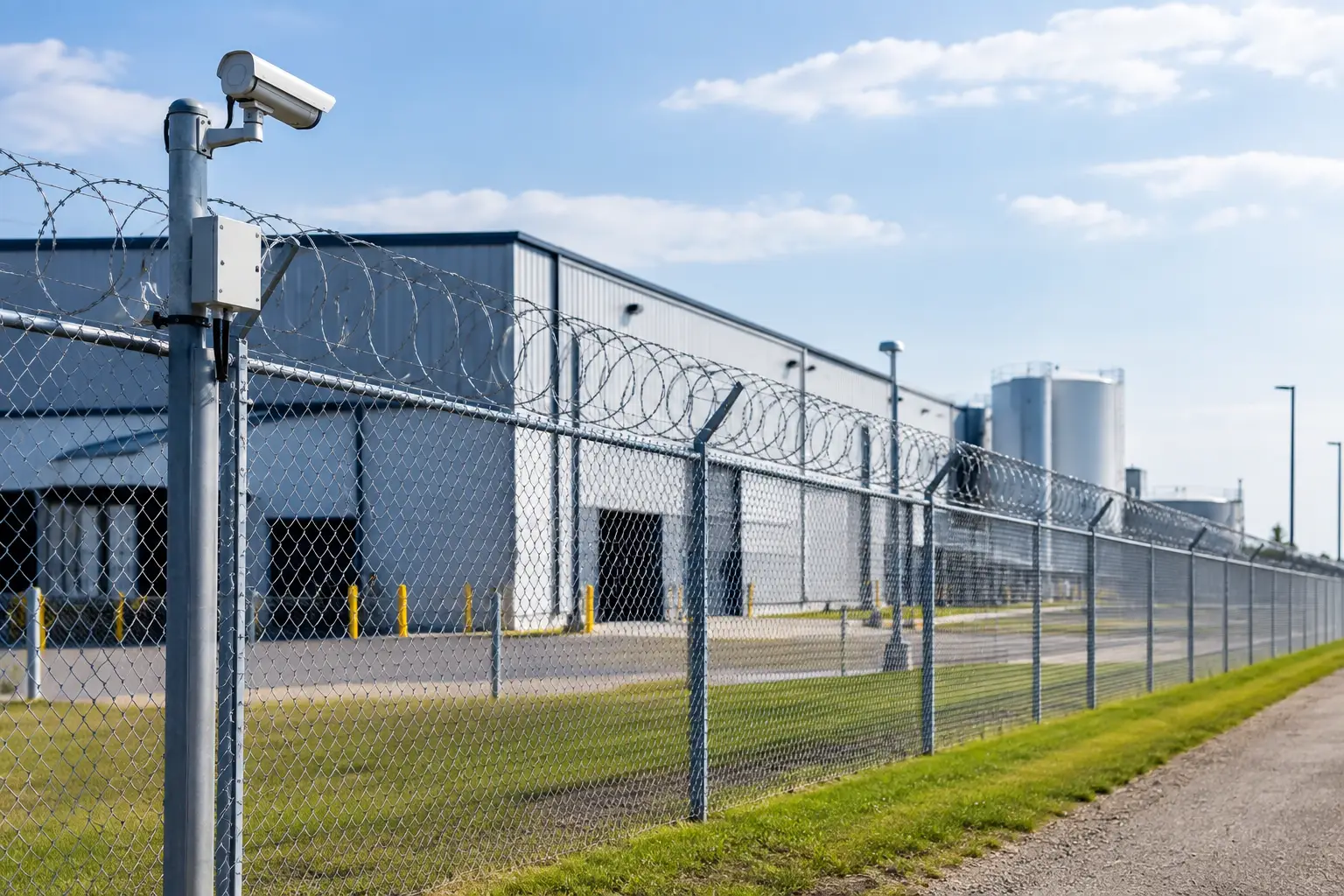
A good industrial perimeter example is not just a fence around a property line. It is a planned system that directs traffic, discourages unauthorized entry, protects equipment, and gives employees a clear boundary between public areas and active work zones. For a warehouse, plant, utility site, construction yard, or distribution facility, the right perimeter starts with how the site operates each day.
An industrial property may need to allow delivery trucks in before sunrise, give employees controlled access through a separate gate, keep the public away from loading areas, and secure valuable materials after hours. One fence style or one gate rarely handles every one of those needs. The best approach is to build the perimeter around actual site conditions, risk level, and daily traffic patterns.
An Industrial Perimeter Example Built Around Site Use
Consider a 12-acre equipment and material yard outside Fort Smith. The property stores service trucks, trailers, steel stock, fuel tanks, and job materials. It has one main road entrance, a side entrance used occasionally by oversized deliveries, and an office near the front of the property. Employees arrive in personal vehicles, while vendors and freight trucks need room to turn, stage, and exit safely.
A practical perimeter plan for this site could use six-foot or eight-foot commercial chain link fencing around the main boundary. Chain link is often a solid fit for industrial work because it is durable, visible, economical over long runs, and easier to repair than many specialty materials. Where greater security is needed, the fence can include heavier commercial fabric, stronger posts, bottom tension wire, or other measures selected for the property.
The main vehicle entrance might use an automated cantilever sliding gate. Unlike a swing gate, a cantilever gate does not drag across the driveway surface, which can be helpful where truck traffic, gravel, drainage, or uneven pavement would interfere with a ground track. A keypad, card reader, remote controls, or telephone entry system can manage access according to the owner’s needs.
A separate walk gate near the office gives employees and visitors a controlled entrance without opening the vehicle gate. The occasional delivery entrance may use a wider double swing gate if it is not used frequently and there is enough clear space for the gate leaves to operate safely. The result is not one oversized opening trying to do every job. It is a perimeter with defined access points that match how people and vehicles move through the property.
Start With the Property’s Real Security Needs
Fence height and gate type should come after a site review, not before it. An industrial yard that mainly needs to mark its boundary and prevent casual entry has different needs from a facility with regulated inventory, expensive equipment, sensitive infrastructure, or a history of trespass and theft.
Property owners should look at the full boundary, including the areas that are easiest to overlook. A rear property line behind a building, a drainage ditch, a tree line, or an unused side drive can become the weak point if it is not included in the plan. The same is true for gate locations. A gate that is convenient for a driver but leaves no room for a truck to pull safely off the road can create a daily operational problem.
Visibility matters as well. Chain link fencing allows staff and cameras to see through the perimeter, which can be an advantage for many commercial and industrial sites. In other situations, privacy screening may be appropriate along a public-facing edge or near stored materials. Privacy, however, can also limit visibility from the street or adjacent property. The right choice depends on whether the greater concern is screening, observation, appearance, or all three.
Choose Fence Materials for the Job
Most industrial perimeter projects rely on commercial chain link, ornamental steel, or a combination of materials. Each has a place, and the lowest initial price is not always the lowest long-term cost.
Commercial chain link is a workhorse option for yards, storage areas, utility locations, service facilities, and construction sites. It is available in different heights, wire gauges, coatings, and framework sizes. A heavier system costs more than light residential-grade chain link, but it is better suited for vehicle exposure, large gates, frequent use, and a longer service life.
Ornamental steel fencing is often used where an industrial or commercial site has a public-facing office, entrance drive, or customer area. It provides a more finished appearance while still creating a clear boundary. It may be paired with chain link around the back and sides of the property, where appearance is less critical and long runs are more economical.
Temporary fencing serves a different purpose. On an active construction project, temporary panels or driven-post fencing can control access while a building is under construction, materials are staged, or permanent site improvements are underway. Temporary fencing should still be planned carefully, especially around delivery routes, emergency access, excavation areas, and public sidewalks.
Gate Design Is Where Perimeter Plans Succeed or Fail
A fence is only as effective as its access points. Gates must be sized for the largest expected vehicle, located for safe approach and exit, and supported by posts and hardware designed for the gate’s weight and use. A light gate on a busy industrial driveway will quickly show its limits.
Sliding, cantilever, swing, and pivot lift gates all have appropriate uses. A cantilever slide gate is often a strong choice for frequent vehicle access because it operates without a ground track across the opening. A slide gate needs enough room beside the opening for the gate to travel, so it may not fit every site. Swing gates can work well for low-frequency access, wide openings, or locations with limited side room, provided the swing area stays clear.
Automated gate operators add convenience and control, but they need proper installation, safety devices, and ongoing attention. Photo eyes, vehicle loops, safety edges, warning signs, and emergency release procedures should be considered as part of the system, not added as an afterthought. The goal is to control access without creating a hazard for employees, visitors, or delivery drivers.
For facilities with different access levels, separate gates are often worth the investment. A primary automated entrance can serve employees and approved vendors, while a locked service gate handles occasional large deliveries. This reduces unnecessary wear on the main gate and keeps traffic more organized.
Plan for Drainage, Grade, and Daily Wear
Industrial fencing is exposed to conditions that do not show up on a simple site sketch. Grade changes can leave gaps under fencing or complicate gate operation. Poor drainage can wash out post areas, create standing water near an operator, or cause a gate track to clog. Truck traffic can damage fence corners and gate posts if turning areas are too tight.
Before installation, identify low spots, drainage routes, overhead utilities, buried utilities, and the path of large vehicles. Fence lines may need to step with the grade, follow a contour, or use custom fabrication in certain locations. Gates may need additional clearance or protective bollards where vehicles frequently pass near posts and operators.
It also helps to think ahead. If a facility expects to add parking, expand storage, install new equipment, or change truck routes within a few years, the perimeter should leave room for those changes. Moving a fence later is possible, but planning for growth at the start is usually more efficient.
A Local Contractor Should Coordinate the Whole System
Industrial perimeter work often involves more than setting posts and stretching fabric. It may require custom gate fabrication, operator selection, access-control coordination, handrails near pedestrian routes, water gates at drainage crossings, or specialty solutions for unusual terrain. Working with one experienced contractor helps keep those pieces aligned.
Ace Fence Company Inc. has served the Fort Smith area, Northwest Arkansas, and the River Valley since 1963. For industrial owners and property managers, that experience matters when a project calls for commercial fencing, heavy-duty gates, access control, and practical field adjustments rather than a one-size-fits-all installation.
The right industrial perimeter does more than close off a property. It gives the people responsible for that property a clear, workable way to manage entry, protect assets, and keep the site ready for the next workday.
Ready to Talk to a Real Fence Professional?
Free on-site estimates from the River Valley's most trusted fence company since 1963.