Industrial Access Control That Works
Industrial access control helps secure facilities, manage entry, and reduce risk with the right gates, operators, and site-specific planning.
A gate that stays open too long, a fence line with one weak entry point, or a keypad placed in the wrong spot can create problems fast on an industrial site. Industrial access control is not just about letting authorized vehicles in and keeping everyone else out. It is about how traffic moves, how assets are protected, how crews work safely, and how the site functions day after day without constant workarounds.
For industrial properties, access control has to do more than check a box. It needs to match the way the facility actually operates. A distribution yard, manufacturing plant, utility site, equipment storage lot, or municipal service area will all have different traffic patterns, different security concerns, and different expectations for uptime. That is why the best results usually come from planning the full perimeter and entry system together, not treating the gate operator as a standalone product.
What industrial access control really includes
When people hear access control, they often think of a card reader or keypad. On an industrial property, the system is usually broader than that. It includes the gate itself, the operator, safety devices, entry credentials, exit controls, and the surrounding fence line that supports the whole setup.
The physical gate matters as much as the electronics. A sliding gate may make sense where space is limited and frequent operation is expected. A cantilever gate can be a strong fit where ground conditions make a track less desirable. A pivot lift gate may work better in certain heavy-duty environments or where site conditions demand more clearance. The right choice depends on traffic volume, available space, grade changes, surface conditions, and the level of control the property needs.
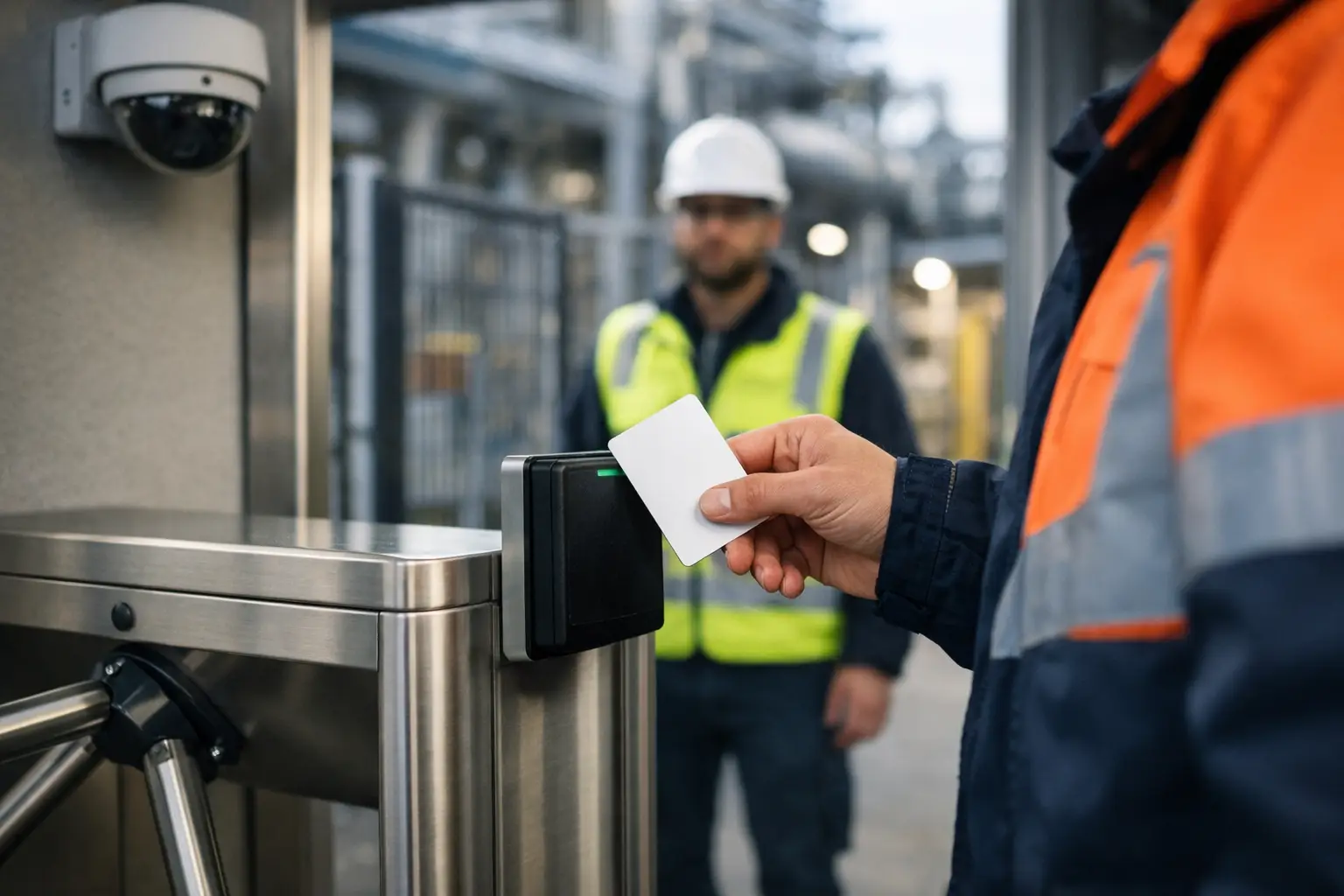
Then there is the question of how users gain access. Some sites do fine with keypads for staff and vendors. Others need card readers, remote transmitters, telephone entry, or integrated controls tied to facility operations. In many cases, a combination works best. Employees may use credentials, approved vendors may use temporary codes, and management may need remote override capability.
Why one-size-fits-all systems usually fall short
Industrial properties are hard on equipment. Dust, mud, rain, temperature swings, vibration, and constant use all affect performance. A system that looks good on paper can become a daily frustration if it was not selected for the actual jobsite.
That is where many projects go wrong. The wrong operator gets paired with a heavy gate. The entry point is placed where trucks have trouble stacking safely. The gate cycle is too slow for shift changes. Or the system is installed without enough attention to emergency access and life-safety devices.
Industrial access control works best when the design starts with practical questions. How many vehicles arrive at one time? Are they pickups, semis, service trucks, or mixed traffic? Is the property staffed at the gate or self-service? Does the site need after-hours access for a small group or regular 24-hour movement? What happens if power is interrupted or equipment needs service?
The answers shape everything from gate type to operator class to control method. They also help avoid expensive changes after installation.
Industrial access control for different site types
A warehouse or logistics site often needs quick throughput. If trucks are backing up at the road, the access system becomes an operations issue, not just a security issue. These sites usually benefit from wide, dependable gate openings, easy-to-use controls, and layouts that keep incoming and outgoing traffic from competing for the same space.
Manufacturing facilities often need tighter user control. Employee access, vendor visits, shipping schedules, and restricted service areas may all need to be managed differently. In that case, separating pedestrian access from vehicle access can help improve both security and safety.
Equipment yards and contractor storage lots usually put a premium on perimeter strength and after-hours control. These sites may not have constant staffing, so the access system has to hold up under limited supervision. Durable gate construction and dependable automated operation matter more than extra features that do not add much real value.
Utility and municipal sites can bring another layer of complexity because reliability and controlled access are closely tied to public service. Those sites often need straightforward systems that authorized personnel can use quickly without confusion, especially during off-hours callouts.
The gate and fence should be planned together
An access point is only as strong as the perimeter around it. If the fencing is undersized, poorly aligned, or not matched to the gate opening, the system can create weak spots instead of solving them.
That is why perimeter security works better when one contractor understands both the fence and the gate system. The posts, gate frame, clearances, and hardware all have to work as one assembly. On industrial jobs, small mistakes in alignment or support can turn into larger maintenance issues later, especially with heavier automated gates.
A properly planned system also takes daily wear into account. Frequent cycles, heavier vehicles, and rougher operating conditions all put more stress on the opening than many standard commercial entrances see. Building for those conditions up front usually saves money over time.
Safety is not optional
On an industrial property, access control has to protect people as well as property. Automated gates need safety devices and operating logic that make sense for the location. That can include photo eyes, loop detectors, monitored entrapment protection, and controls placed where drivers can use them without awkward maneuvers.
Good layout matters here. If a driver has to lean out in traffic to reach a keypad, the site has a design problem. If a truck stops across a public sidewalk or too close to the road while waiting for entry, the problem is bigger than convenience. It affects liability, traffic flow, and daily site management.
Emergency access should also be part of the conversation early. Fire, police, and service personnel may need dependable entry methods that do not slow response time. There is no single answer for every facility, but there should always be a clear plan.
Balancing security with convenience
The strongest system is not always the best system if it slows the site down so much that staff start bypassing it. That happens more often than people think. If entry is too complicated, codes get shared, gates get propped open, or alternate paths get used.
The goal is controlled access that people can actually live with. For some sites, that means simple credentials and fast gate cycles. For others, it means tighter permission levels and more reporting. The right balance depends on risk, staffing, and how the property is used.
There is also a budget trade-off. More features can improve control, but they also add complexity. Some industrial properties truly need advanced credential management and layered entry points. Others are better served by a durable automated gate, quality hardware, and a layout that reduces misuse. Spending should follow the real risks and daily demands of the site.
What to look for in an installation partner
Industrial access control is not a plug-and-play purchase. It is a site-built solution, and experience matters. A contractor should be able to evaluate the terrain, the opening width, the traffic pattern, the fence type, and the operating demands before recommending a gate or control method.
It also helps to work with a company that can handle both straightforward enclosures and more specialized perimeter systems. That range matters when a project includes custom gate fabrication, commercial-grade operators, and coordination between fencing and automated entry components. In Arkansas, property owners often need systems that can stand up to real field conditions while still being practical to use every day.
Ace Fence Company Inc. has worked with perimeter and gate systems long enough to know that the best installations are usually the ones that look simple after the fact. That only happens when the planning is done right.
When it makes sense to upgrade
Many industrial properties do not need a full replacement right away, but they may still have clear signs that the current setup is not doing the job. Common issues include gates that sag or bind, operators that struggle with daily cycles, outdated controls, poor vehicle stacking, and fence lines that no longer match current security needs.
Sometimes an upgrade is driven by growth. A site that once had occasional vendor traffic may now have regular truck deliveries and multiple shifts. Sometimes it is driven by risk, such as repeated unauthorized entry or concerns about after-hours asset protection. And sometimes it is simply because the old setup creates too many interruptions.
A good access system should reduce headaches, not add to them. It should support the way the site works, give managers better control over entry, and hold up under daily use.
If you are planning improvements to an industrial property, start with the full picture - fence line, gate type, controls, safety, and traffic flow. The right industrial access control system is the one that fits the site, the workload, and the people using it every day.
Ready to Talk to a Real Fence Professional?
Free on-site estimates from the River Valley's most trusted fence company since 1963.