How to Protect Fence Utilities Before You Build
Learn how to protect fence utilities before installation, from locating buried lines and easements to planning gates, posts, and safe access on site.
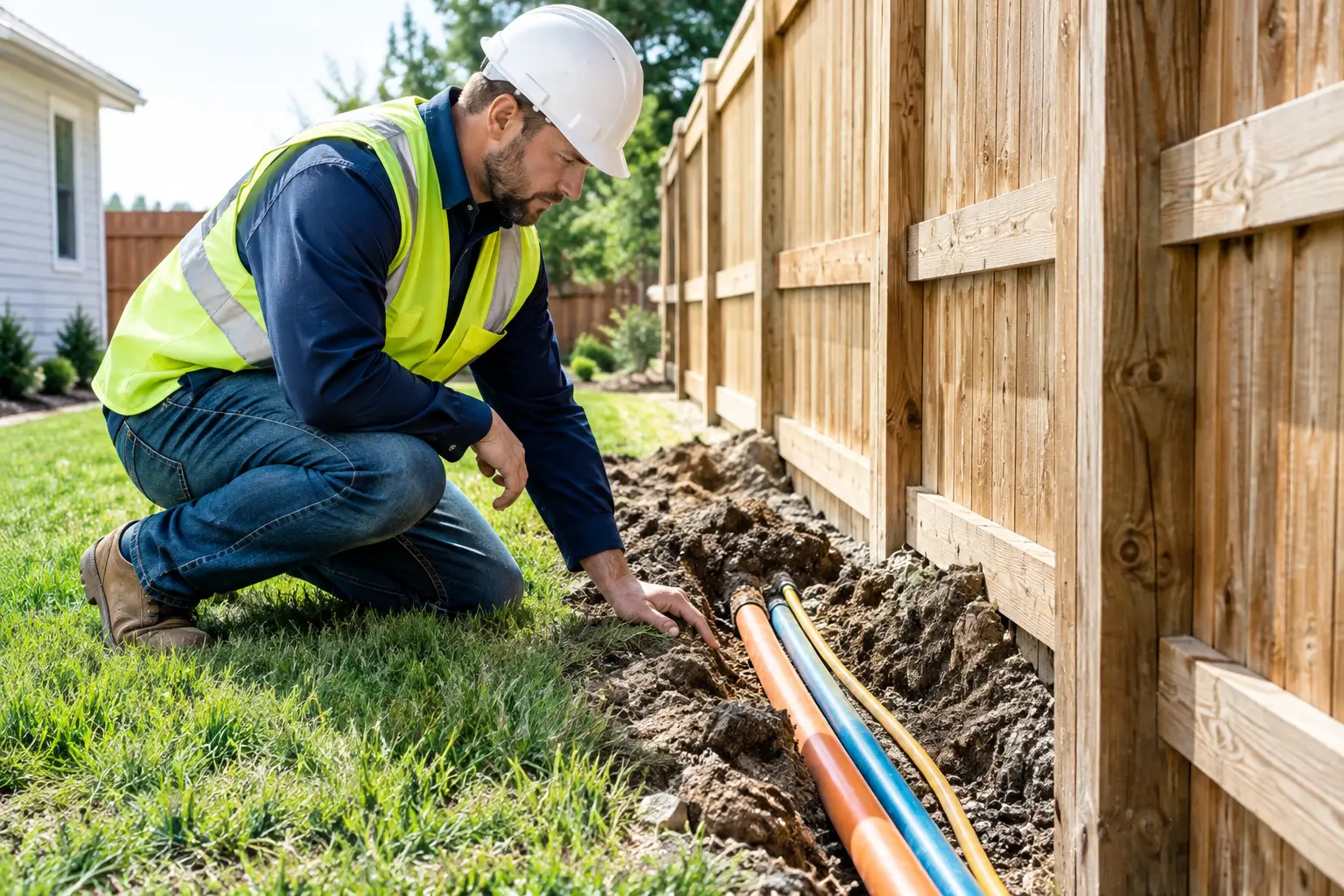
A fence line can look simple on a site plan and become complicated the moment a post hole reaches a buried cable, water line, or drainage connection. Knowing how to protect fence utilities before construction helps avoid service interruptions, repair bills, unsafe conditions, and delays that can affect the entire project.
For homeowners, that may mean protecting a sprinkler line, septic component, or electrical feed to an outbuilding. For commercial properties, the stakes can include communications lines, fire protection systems, gas service, utility easements, and access for service crews. The right approach starts before materials are ordered or holes are marked.
Start With Utility Locating, Not Post Layout
Call 811 before any fence excavation begins. The utility-locating process identifies many public utility lines in the planned work area, including electric, natural gas, water, sewer, and communications services. Give the locating request enough lead time, and keep the markings visible until digging is complete.
Do not assume every line on a property will be marked. Utility locates commonly cover public facilities up to the service point, but privately installed lines may be the property owner's responsibility to identify. That can include lines to detached garages, workshops, pool equipment, landscape lighting, irrigation controls, private water systems, propane tanks, security cameras, and signs.
If the site has private utilities, arrange for a qualified private utility locator or contractor to identify them before installation. This is especially worthwhile on commercial sites, older properties, large rural parcels, and properties that have been expanded over time. A short investigation up front is far less costly than repairing a damaged line after the fact.
Understand What Is in the Fence Path
A professional fence layout looks beyond the property boundary. Walk the proposed line and identify every visible feature that may point to infrastructure below or nearby. Utility meters, transformer pads, cleanouts, valve boxes, pedestals, drainage inlets, guy wires, and outdoor equipment all deserve attention.
There are several common conflicts to watch for:
- Buried electrical, gas, water, sewer, and communications lines near post locations
- Irrigation piping and low-voltage landscape wiring crossing a yard or entrance
- Utility easements that limit where permanent structures can be installed
- Above-ground equipment that needs safe, clear access for utility crews
- Overhead lines near tall fence sections, gate frames, equipment, or installation tools
A straight fence is not always the best fence line. Shifting a corner, using a shorter panel, adjusting gate placement, or changing a post location can preserve access and reduce risk without sacrificing security or appearance.
Do Not Treat Markings as a Finished Dig Plan
Paint and flags show the approximate location of a utility, not necessarily its exact depth or position at every point. Soil movement, prior grading, erosion, and earlier construction can change how close a line is to the surface. Fence posts may be deep enough to create a conflict even when a line is not directly under the planned center of the hole.
Where a post must be installed near a marked utility, use hand digging or vacuum excavation as appropriate to expose the line safely. Follow the required tolerance zone and utility instructions. Mechanical augers are efficient in open ground, but they should not be used blindly around marked facilities.
Protect Access to Meters, Pedestals, and Equipment
Fence utilities are not limited to what is underground. Electric meters, gas meters, transformer cabinets, telecommunications pedestals, water valves, and backflow devices must remain accessible after the fence is installed.
A fence that blocks a meter may create problems when a utility company needs to read, inspect, maintain, or replace equipment. On commercial and industrial sites, blocked access can also interfere with emergency response, scheduled service, or code requirements. Equipment clearances vary by utility and location, so confirm the requirements before finalizing the layout.
Sometimes the best answer is to place the fence outside the equipment clearance area. In other cases, a properly located access gate provides the practical solution. The gate should be wide enough for the expected service work, easy to operate, and positioned so a technician does not have to enter through a locked tenant area or navigate a tight corner.
For properties with access control, plan how authorized utility personnel will enter when needed. A gate operator, keypad, card reader, or intercom system should support site security without creating an unnecessary barrier to maintenance. This is where fence construction and access-control planning need to work together rather than being handled as separate projects.
Check Easements Before Building a Permanent Fence
An easement gives a utility provider, municipality, or other authorized party rights to access a portion of private property for a specific purpose. A fence may be allowed within an easement, but that does not mean the utility is responsible for removing and replacing it if future work is required.
Review the property survey, recorded documents, development plat, and any available utility information before setting the line. If there is uncertainty, ask the relevant utility provider or local authority what restrictions apply. A property manager or developer should also verify requirements before approving a perimeter plan for a new commercial site.
The trade-off is straightforward. Placing a fence through an easement can make the best use of a site or provide needed security, but it can also mean accepting the possibility of future removal or repair. Where possible, use removable panels, accessible gates, or a layout that lets crews reach the easement without dismantling a large section of fence.
Plan Post Depth and Fence Type Around the Site
Fence construction is not one-size-fits-all. A light residential boundary fence, a tall chain link enclosure, an ornamental security fence, and a cantilever gate all have different structural needs. Deeper or larger footings may be needed for wind loads, gate posts, slopes, and high-security applications, which increases the importance of utility planning.
If a buried line limits the depth or location of a post, do not simply shorten the hole and pour concrete. That can weaken the fence and create a repair issue later. A better approach may be to move the post, redesign the panel spacing, use a different fence system, or engineer the gate and terminal posts for the available conditions.
This matters most at entrances. Gate posts carry more load than line posts, and automated systems may require electrical service, safety devices, loop detectors, conduit, and communication wiring. Planning these components early helps prevent a finished gate from needing trenching, patchwork, or avoidable changes after installation.
Keep Drainage and Water Control Working
Drainage is another utility concern that is easy to overlook. Swales, culverts, storm drains, water gates, and drainage channels need to keep moving water as intended. A fence that catches debris or blocks a designed flow path can cause standing water, washouts, erosion, and damage to both the fence and surrounding property.
Choose the fence style and bottom clearance based on the site. Chain link may work well where visibility and water flow are needed. Water gates or specialized crossings may be appropriate for ditches and channels. Privacy fencing near drainage features may need careful spacing, reinforced construction, or a revised layout to avoid becoming a dam during heavy rain.
Communicate the Plan Before Work Starts
Good utility protection depends on communication between the property owner, project manager, utility locator, and fence contractor. Provide surveys, site plans, known utility information, and photos of unusual conditions before installation begins. Point out any past repairs, abandoned structures, septic systems, irrigation zones, or areas where the ground has been filled or regraded.
For commercial projects, include utility requirements in the preconstruction discussion. Confirm who is responsible for private locating, permits, utility coordination, gate power, and restoring any disturbed areas. These details are easier to settle before crews and equipment arrive.
If conditions change during excavation, stop and reassess. Unmarked wire, unexpected pipe, wet ground, old concrete, or a utility route that differs from the markings should not be treated as a minor inconvenience. A short pause can prevent a serious incident and protect the schedule.
Work With a Contractor Who Plans Beyond the Fence Line
The strongest fence installation begins with a layout that accounts for the whole property, not just the visible boundary. That means considering utilities, easements, drainage, equipment access, terrain, gate operation, and the demands of the finished site.
Ace Fence Company Inc. helps property owners across Fort Smith, Northwest Arkansas, and the River Valley plan residential, commercial, and specialty fence systems around real jobsite conditions. Whether the project calls for wood, chain link, ornamental fencing, vinyl, composite materials, or a custom access gate, the details below ground and around the perimeter deserve the same attention as the finished fence itself.
Before committing to a fence line, take the time to locate what is below it, confirm who needs access around it, and adjust the design where necessary. That practical planning protects your utilities, your investment, and the fence you expect to rely on for years.
Ready to Talk to a Real Fence Professional?
Free on-site estimates from the River Valley's most trusted fence company since 1963.