
How to Plan a Driveway Gate That Fits Your Property
Learn how to plan a driveway gate for your Arkansas property, including layout, gate type, safety, materials, and access control before installation work.
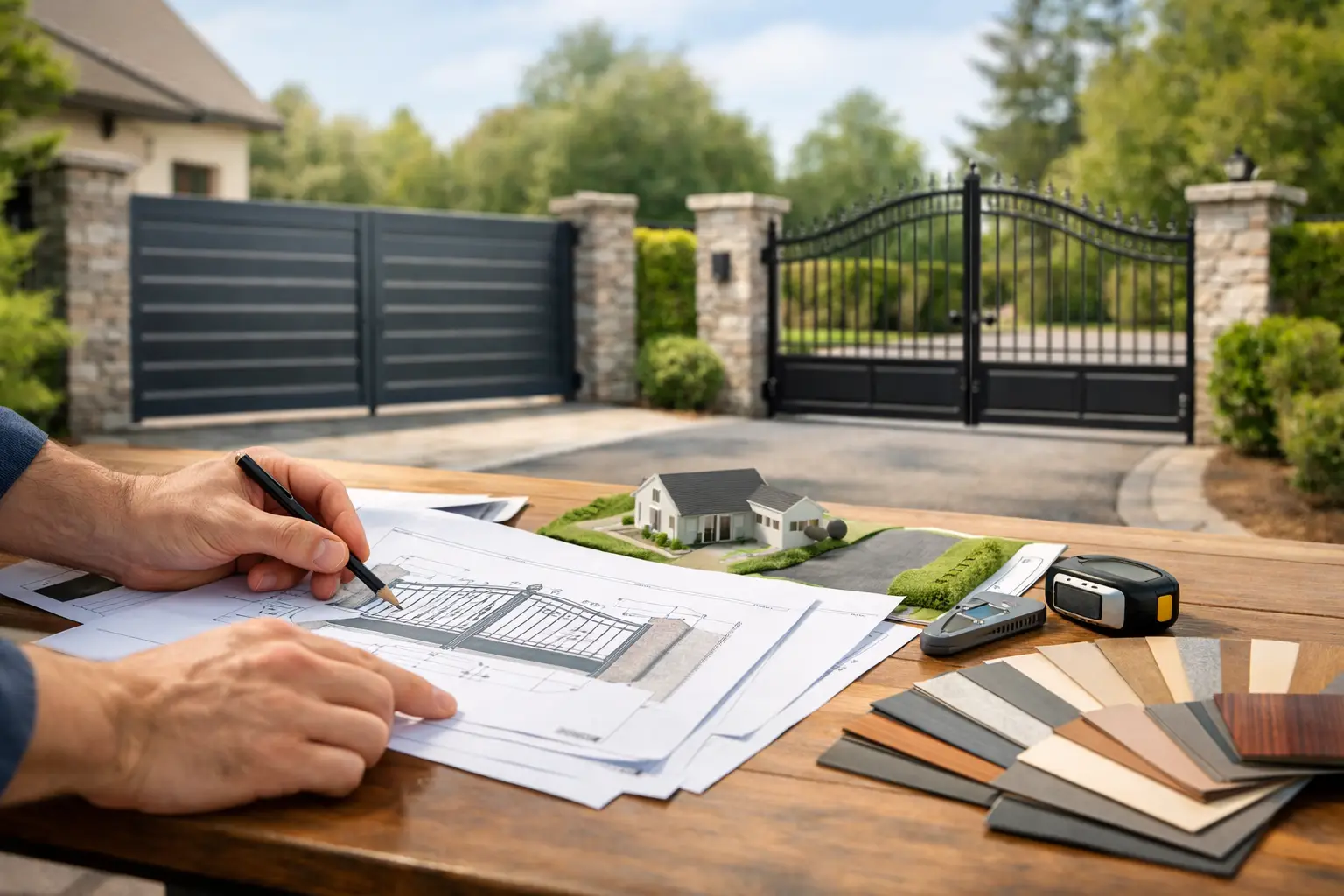
A driveway gate has to work every day, not just look good on installation day. Knowing how to plan a driveway gate starts with the practical details: who needs to enter, what vehicles use the drive, where the gate can travel, and how the property needs to be secured. A gate that is undersized, poorly placed, or matched with the wrong operator can create a daily inconvenience and an expensive correction later.
For homeowners, the right driveway gate may add privacy, curb appeal, and a safer boundary for children or pets. For businesses, farms, industrial sites, and managed properties, the priority may be controlled access, asset protection, and dependable operation under frequent use. The planning process is similar, but the right system depends on the property.
Start With the Way Your Driveway Is Used
Before selecting a style or material, look at traffic. Measure the usable driveway opening, then consider the width and turning path of the largest vehicle that will enter regularly. A passenger car may fit through a narrow opening, but delivery trucks, trailers, service vehicles, emergency responders, and equipment may not.
A residential gate opening is often wider than the driveway itself appears to need because vehicles need room to turn through it. On a curved drive, a gate set too close to the road can be especially difficult to use. Commercial properties should account for delivery vehicles, employee traffic, trash collection, maintenance equipment, and any future changes in site use.
Gate placement matters just as much. A gate should generally be far enough inside the property line that a vehicle can pull completely off the road before stopping to enter a code or wait for the gate to open. This is particularly important along busy roads and highways in the Fort Smith area and throughout Northwest Arkansas and the River Valley.
Also identify what is below and above the proposed gate area. Drainage swales, steep grades, overhead utility lines, buried utilities, irrigation, and uneven pavement can affect the design and cost of the installation. A site visit is the best time to catch these conditions before materials are ordered.
How to Plan a Driveway Gate Style and Operation
The basic decision is whether the gate should swing, slide, cantilever, or use a specialty configuration. Each type solves a different site problem.
Swing gates
A swing gate opens inward or outward on hinges, much like a large door. It can be a single leaf or a pair of gates meeting in the middle. Swing gates are often a good choice for residential driveways with level ground and clear space behind the gate.
They can provide a traditional appearance and work well with ornamental metal, wood, vinyl, or composite fencing. However, a swing gate needs a clear arc of travel. It is not the right choice where the driveway slopes sharply, where snow or debris may collect in the swing path, or where the gate would open into traffic.
Slide gates
A slide gate moves parallel to the fence line rather than swinging into the driveway. This makes it useful where there is limited depth behind the gate or where a wide opening is needed. Conventional slide gates require room along the fence line and typically use a ground track.
Tracks can be practical on paved, level sites, but they need routine attention. Gravel, leaves, mud, and debris can interfere with operation. For a low-traffic residential property, that may be manageable. For a heavily used commercial entrance, the maintenance requirements should be considered from the start.
Cantilever gates
A cantilever gate also slides horizontally, but it is supported above the driveway rather than rolling on a track across the opening. It needs additional space beside the opening because of its counterbalance section, but it avoids a ground track.
This design is often a strong choice for commercial, industrial, and high-use applications. It can handle uneven ground and debris better than a tracked slide gate when designed and installed correctly. It is also a common option for wider entrances where durability and reliable operation matter more than decorative appearance alone.
Specialty gate systems
Some sites need more than a standard swing or slide gate. Pivot lift gates, vertical lift systems, water gates, and other specialty configurations can solve access problems involving tight spaces, flood-prone areas, difficult grades, or high-security requirements. These systems should be planned around the actual site conditions, not selected from a catalog based on appearance.
Choose Materials That Match the Fence and the Job
The gate should look appropriate with the surrounding fence, but its construction must also match its workload. A decorative gate at a private home has different demands than a gate controlling daily truck traffic at a warehouse or construction site.
Ornamental metal gates offer a clean, durable appearance and work well for homes, estates, offices, and secure entry points. They can be fabricated in many styles and are a natural fit with ornamental fencing. Chain link gates are a practical choice for commercial yards, industrial facilities, athletic areas, and locations where visibility and security are both needed.
Wood gates offer privacy and a traditional look, but large wood gates are heavy and can move as the material reacts to moisture and seasonal weather. Proper framing, hardware, and post construction are essential. Vinyl and composite options can provide a lower-maintenance appearance for certain residential applications, though gate framing still needs to carry the weight and resist sagging.
For any material, do not treat the posts and hardware as an afterthought. The gate posts, hinges, rollers, latches, operator mounts, and foundation work carry the load. A well-built gate panel will not perform properly if it is attached to undersized posts or inadequate footings.
Plan Access Control Before the Gate Is Built
A manual gate may be sufficient for a lightly used private drive. If the gate will be opened several times a day, an automatic operator can make the property more convenient and more secure. The key is choosing an operator that fits the gate size, weight, travel pattern, and expected number of cycles.
Residential systems may use keypads, remotes, wireless controls, or phone-based access. A commercial site may need credentials, card readers, telephone entry, vehicle loops, exit devices, timed access schedules, or integration with existing access-control equipment. The more people and vehicles using the entrance, the more important it becomes to define who has access and how that access will be managed.
Power is another early decision. A hardwired operator generally provides dependable performance where electrical service is available. Solar power can be useful in remote locations, but panel exposure, battery capacity, gate usage, and seasonal weather all need to be considered. Solar is not automatically the best answer for every rural or off-grid entrance.
Plan conduit and wiring before paving, landscaping, or concrete work is completed. Adding power, communication wiring, safety devices, or exit loops after the fact often means cutting pavement or disturbing finished areas.
Put Safety and Code Requirements First
An automated driveway gate is not simply a motorized fence section. It is a moving system that must be designed with safety in mind. Entrapment protection, photo eyes, safety edges, properly placed controls, warning signs, and secure gaps around the gate are all part of a responsible installation.
The operator must be appropriate for the gate type and use classification. A gate serving a single-family home does not have the same operating demands as one used by employees, customers, tenants, or the public. Commercial and multi-user sites require especially careful planning because more users create more opportunities for misuse.
Local requirements can also affect placement, setbacks, driveway visibility, electrical work, and permitting. Property owners should verify boundary lines, easements, and any homeowner association requirements before finalizing the design. On commercial projects, fire access, emergency entry, and site circulation may affect the gate location and clear opening width.
Set a Budget Around the Complete System
The gate panel is only one part of the cost. A realistic plan includes posts or structural columns, concrete, hardware, operator equipment, access controls, electrical service, safety devices, fabrication, installation, and any needed grading or driveway work.
A simple manual chain link gate may be an efficient solution for one property, while a custom ornamental cantilever gate with access controls may be the right long-term investment for another. The lowest initial price is not always the lowest ownership cost. A gate that is too light for its use, poorly matched to the driveway, or difficult to maintain can cost more in repairs and downtime.
It also helps to plan for service. Gates are mechanical systems exposed to weather, traffic, and repeated use. Ask how the gate will be adjusted, lubricated, inspected, and repaired if a vehicle strikes it or an operator stops working. Selecting durable components and leaving reasonable access for service can prevent avoidable problems.
Bring a Site-Specific Plan to the Estimate
The most useful estimate conversation begins with a clear picture of the property. Bring approximate opening measurements, photos from inside and outside the entrance, the location of utilities if known, and details about the largest vehicles that need access. Explain whether privacy, appearance, controlled access, security, or high traffic is the main goal.
At Ace Fence Company Inc., driveway gate planning can include fencing, custom gate fabrication, automated operators, and access-control components as one coordinated project. That matters because the gate, fence line, posts, and controls need to work together rather than being treated as separate purchases.
The best driveway gate is the one that fits the property on its busiest day, not just its quietest one. Plan for the vehicles, people, weather, and security needs you will have over the next several years, then build the entrance around those realities.
Ready to Talk to a Real Fence Professional?
Free on-site estimates from the River Valley's most trusted fence company since 1963.