
How to Improve Backyard Security at Every Entry
Learn how to improve backyard security with practical fencing, gates, lighting, and maintenance steps that protect your property without sacrificing use.
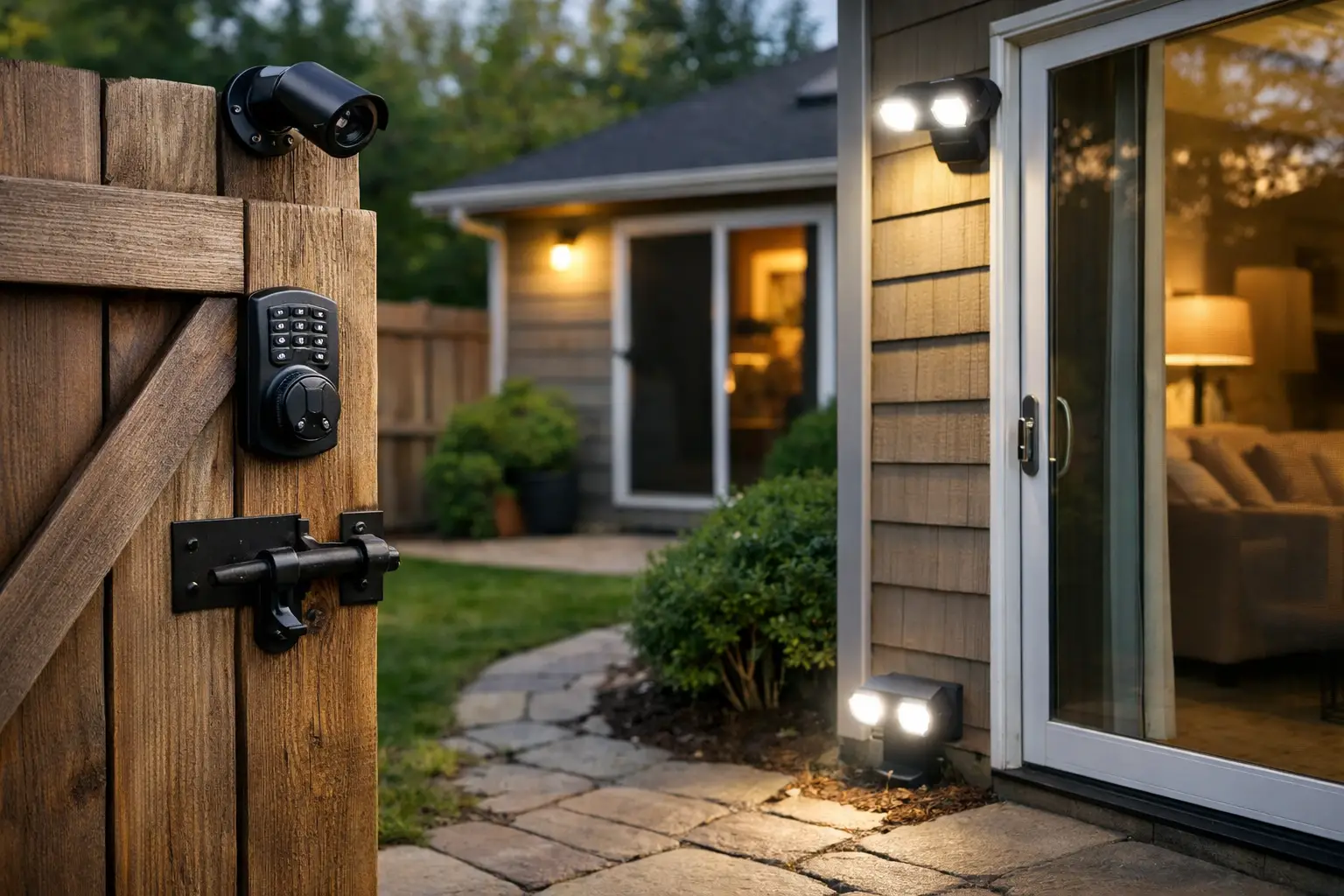
A backyard should be a place where your family, pets, equipment, and outdoor space feel protected - not an easy access point for unwanted visitors. Knowing how to improve backyard security starts with looking at the entire perimeter, not just adding a lock to one gate. Fence condition, gate placement, visibility, lighting, and daily habits all work together.
For many homeowners, the right solution is not the tallest fence or the most expensive hardware. It is a well-planned boundary that fits the property, closes off weak points, and remains practical to use every day.
Start With a Walk Around the Perimeter
Before choosing a new fence or security upgrade, walk the property during the day and again after dark. Look at the yard as someone trying to enter without being noticed would. Check fence lines, gates, side-yard passages, utility access areas, and places where landscaping blocks the view from the house or street.
Pay close attention to loose panels, leaning posts, damaged chain link, gaps under a fence, and gates that do not latch correctly. A fence that is mostly sound but has one open corner or a gate that can be lifted off its hinges still leaves a clear weak point.
Also consider how people legitimately enter the backyard. Children coming home, lawn crews, pool service, deliveries, and family members all need a convenient route. Good backyard security controls access without making normal use of the property frustrating.
Choose a Fence That Matches the Security Need
Fencing establishes the physical boundary, but each material provides a different balance of privacy, visibility, maintenance, and strength. The best choice depends on what you are protecting and how your yard is used.
Wood, Vinyl, and Composite for Privacy
A privacy fence can reduce visibility into the yard and make it harder for someone to assess what is stored outside. Wood remains a practical choice for homeowners who want a traditional look and design flexibility. A properly built wood fence with quality posts, rails, and fasteners can provide years of dependable service, but it needs periodic inspection for rot, loose pickets, and weather-related movement.
Vinyl and composite fencing offer a clean appearance with less routine maintenance. These materials can be a good fit where privacy and curb appeal are both priorities. Keep in mind that a privacy fence should be installed with a secure gate system. A solid fence does little good if the gate is undersized, poorly aligned, or easy to force open.
Chain Link and Ornamental Fencing for Visibility
Chain link is a durable, cost-effective option for enclosing a larger backyard, defining property lines, or securing pet areas. Its open design allows you to see activity around the yard, which can be an advantage when visibility matters more than privacy. Privacy slats or screening can be added in some applications, though they can increase wind load and should be planned correctly.
Ornamental fencing provides a more finished appearance while maintaining sightlines. It is often a good choice for homes with pools, landscaped areas, or front-to-back property transitions where homeowners want defined boundaries without closing off the view. Depending on the design and height, ornamental fencing can also provide a more difficult barrier to climb than a basic residential enclosure.
Fence height, local requirements, property lines, and pool safety rules all need to be considered before installation. A contractor can help identify the fence style and layout that makes sense for the site rather than relying on a one-size-fits-all approach.
Secure the Gate, Not Just the Fence
The gate is usually the most active and vulnerable part of a backyard enclosure. It is opened, closed, bumped by equipment, exposed to sagging, and often used more roughly than the rest of the fence. A gate that drags on the ground or fails to latch will only get worse with time.
Use a latch that closes reliably and is positioned where it cannot be easily reached from outside the fence. For gates leading to a pool area, follow applicable safety requirements for latch height, self-closing hinges, and self-latching hardware. If children or pets use the yard, these features offer day-to-day safety as well as better security.
For wider openings, such as a driveway or equipment access point, a heavier gate design may be needed. Sliding, cantilever, and automated gate systems can provide controlled access where a standard swing gate is not practical. These systems require proper planning for the opening width, grade, operator location, vehicle clearance, and power source. They are especially useful for properties where vehicles, trailers, or stored equipment need protection.
Improve Visibility Without Giving Up Privacy
A private backyard should not become a hidden backyard. Dense shrubs, tall hedges, stacked firewood, sheds, and play equipment can create places where someone can move or wait out of sight. You do not need to remove every tree or planting, but you should be able to see key gates and access paths from windows or doors when possible.
Trim branches that hang over fencing or provide an easy route into the yard. Keep shrubs near gates lower enough that they do not conceal the latch area. Move valuable items such as grills, bicycles, tools, and lawn equipment away from the fence line when practical.
Lighting matters here. Motion-activated fixtures near gates, side yards, detached garages, and rear doors can discourage trespassing while helping your family move safely through the property after dark. Aim lights down and toward access points rather than directly into a neighbor's windows. A light that triggers every time a tree moves in the wind will quickly become background noise, so placement and sensitivity settings matter.
Add Layers Where They Make Sense
The most effective backyard security is layered. A fence creates a boundary. A locked gate delays entry. Lighting increases visibility. Cameras or alarms can provide notice when someone enters an area they should not. Each layer serves a different purpose.
Homeowners do not always need every option. A small, visible backyard may benefit most from a well-built privacy fence, a dependable latch, and lighting near the rear door. A larger lot with detached buildings, vehicles, or expensive equipment may need stronger fencing, wider gates, controlled vehicle access, and monitored cameras.
If you use cameras, make sure they cover real approach routes rather than only the center of the yard. A camera aimed at the rear gate, side passage, and driveway access is generally more useful than one pointed at an open lawn. Keep devices high enough to reduce tampering, and periodically verify that vegetation, weather, or dirt has not blocked the view.
Maintain the Security You Already Have
Security upgrades lose value when they are not maintained. Check gates several times a year for sagging, loose hinges, damaged latches, and ground movement. Inspect fence posts after heavy rain, high winds, or freezing weather. In the River Valley and Northwest Arkansas, changing weather and wet ground can put extra stress on posts and gates over time.
Repair problems while they are small. Replacing a loose hinge or resetting a leaning post is simpler than waiting for a gate to stop closing altogether. If a fence line has repeated trouble in one area, the issue may be drainage, soil conditions, tree roots, or an undersized gate structure rather than just worn hardware.
For homeowners planning a full upgrade, Ace Fence Company Inc. can evaluate the perimeter, material options, gate needs, and access points as part of a practical project plan. The goal is not to add security features you will never use. It is to build a dependable boundary that works for your property.
Make Security Part of Daily Use
Even the best-installed fence depends on consistent habits. Keep gates closed when the yard is not in use, do not leave ladders against the fence, and store portable equipment where it cannot be quickly removed from outside the property. If contractors or service providers need access, decide ahead of time which gate they should use and how it will be secured afterward.
Backyard security does not have to make your home feel closed in. A solid fence, properly built gate, clear sightlines, and a few well-placed layers can give you more confidence in the space you use every day. Start with the weak point you can see now, then make improvements that will hold up over time.
Ready to Talk to a Real Fence Professional?
Free on-site estimates from the River Valley's most trusted fence company since 1963.