How to Fence Loading Areas for Safer Access
Learn how to fence loading areas with the right layout, gates, materials, and safety clearances for secure, efficient commercial traffic flow every day.
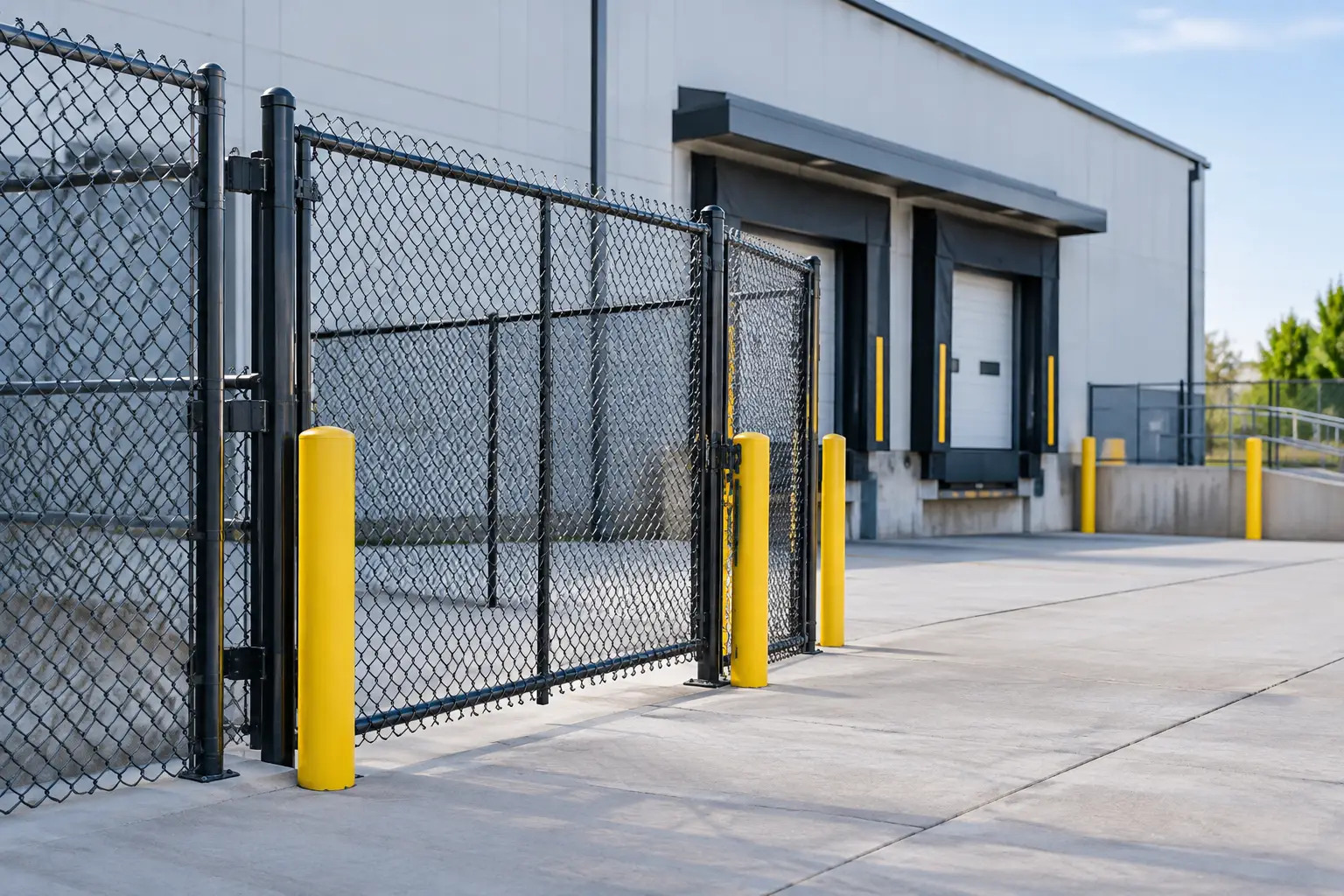
A loading area has to do two jobs at once: keep people and property protected while allowing trucks, forklifts, vendors, and employees to move without delay. That is why knowing how to fence loading areas starts with traffic flow, not just choosing a fence material. A fence that blocks a trailer swing, crowds a dock approach, or puts a gate in the wrong place can create a daily operational problem.
For warehouses, manufacturing facilities, retail receiving areas, construction yards, and distribution properties, the right layout creates a controlled boundary without slowing down the work inside it. The best approach considers vehicles, pedestrians, access needs, site conditions, and the level of security the operation actually requires.
Start With the Loading Area's Daily Traffic Pattern
Before setting fence posts or selecting a gate, map how the area works during a normal busy day. Identify where trucks enter, wait, back into docks, turn around, and exit. Also identify forklift routes, employee parking, pedestrian doors, dumpster access, utility equipment, and emergency routes.
A loading zone can look open on a site plan but become tight when a full-size trailer is backing toward a dock. Turning room is especially important at corners, near gate openings, and along drive lanes. The fence line should stay outside the truck maneuvering area and leave enough room for drivers to make corrections while backing.
It also helps to separate people from equipment whenever possible. A pedestrian gate located away from truck gates gives employees and delivery drivers a designated way into the property without walking through an active vehicle lane. Where employees must cross near loading activity, a defined walkway and appropriate safety barriers may be needed in addition to perimeter fencing.
Choose the Right Place for the Fence Line
The simplest installation is not always the safest or most useful one. Fencing directly around a dock may protect inventory, but it can make loading difficult if trailers need room along the building. In many cases, it makes more sense to fence the outer edge of the receiving yard and control entry at one or two vehicle gates.
A perimeter layout works well when the goal is to keep unauthorized vehicles, after-hours dumping, and trespassers out of the loading area. It also gives site managers a clear point for access control. Drivers can be directed to a gate, check-in point, or call box before entering the yard.
Some properties need a more selective layout. For example, a business may fence a valuable equipment storage area beside the loading dock while leaving the truck approach open during business hours. A contractor yard may need fencing around materials and fuel tanks, with a separate wide opening for equipment deliveries. There is no single layout that fits every operation.
Keep required fire lanes, utility access, drainage paths, and building exits in mind as well. Local requirements, property conditions, and the facility's safety plan should be reviewed before finalizing the layout. A professional site visit can catch conflicts that are easy to miss from a drawing alone.
Select Fence Materials Based on Security and Visibility
Chain link is a common choice for commercial loading areas because it is durable, cost-effective, and allows staff to see activity on both sides of the fence. A taller commercial-grade chain link fence can establish a clear boundary around a receiving yard, storage area, or service drive without closing off visibility for cameras and employees.
For higher-security locations, chain link can be paired with privacy screening, security fabric, barbed wire where appropriate, or other deterrent features. These additions should match the site and its surroundings. Privacy screening can hide stored materials from public view, but it also reduces visibility from outside the fence. That may be helpful for security in one setting and a drawback for surveillance in another.
Ornamental steel fencing is often a better fit at customer-facing commercial properties where appearance matters along with controlled access. It provides a more finished look than chain link and can work well around smaller loading areas, service entrances, or mixed-use properties. However, it may not be the most economical option for a large industrial yard.
Vinyl, wood, and composite fencing are generally better suited to privacy-focused applications than heavy truck environments. They can be appropriate where a loading area borders a residential property or where visual screening is the main concern. For an active commercial or industrial site, material selection should account for vehicle exposure, maintenance needs, and the likelihood of impact damage.
Plan Gate Openings Around the Largest Vehicle
Gates are often the most important part of a loading-area fence. A strong fence will not help much if drivers cannot enter safely, the opening is too narrow, or the gate interferes with day-to-day traffic.
Start with the largest vehicle that regularly uses the site, not the smallest delivery van. Consider tractor-trailers, box trucks, garbage trucks, forklifts on trailers, and occasional oversized deliveries. The entrance needs enough width for the vehicle and enough clear approach space for it to line up before passing through.
Swing gates can work for smaller or lower-traffic entrances, provided they have room to open fully without extending into a roadway or travel lane. Sliding gates are often a better choice where a wide opening is needed and there is limited room for gate leaves to swing. Cantilever gates are useful on commercial sites because they slide across the opening without a ground track, helping avoid problems with gravel, debris, standing water, or uneven pavement.
For larger sites or locations with frequent traffic, automated gate operators can improve control and reduce the need for staff to manually open gates. Access can be managed with keypads, card readers, remote controls, telephone entry systems, or other approved access-control methods. The right system depends on whether the site needs employee-only access, scheduled deliveries, visitor check-in, or 24-hour security.
Build in Safety Features, Not Just Security
Loading areas bring together large vehicles, moving equipment, and people on foot. The fence and gate system should support safe operations instead of creating blind corners or pinch points.
Use clear signage to direct delivery drivers to the correct entrance, waiting area, and exit. Mark truck lanes and pedestrian routes where needed. If a gate is automated, it should include the proper safety devices and be installed so it does not close onto vehicles or people. Gate operators need routine inspection and maintenance, particularly on busy commercial properties.
Protect fence sections near tight turns, dock corners, and equipment lanes from accidental impact. Depending on the site, bollards, guardrails, or other barriers may be appropriate near gate posts, operator equipment, and building corners. This is often less expensive than repairing a damaged gate system after a truck backs into it.
Lighting also matters. A well-lit gate and receiving yard make it easier for drivers to navigate after dark, support camera coverage, and help employees recognize visitors. Make sure lighting placement does not interfere with gate movement or leave glare in a driver's line of sight.
Account for Grade, Drainage, and Surface Conditions
A loading-yard fence has to handle more than daily traffic. Northwest Arkansas and the River Valley see heavy rain, changing ground conditions, and occasional severe weather. Water that flows across a gate opening or pools around posts can affect long-term performance.
Before installation, look at slopes, drainage swales, pavement edges, and low spots. A fence may need stepped panels, adjusted clearance at the bottom, or a layout that follows grade without leaving easy gaps underneath. Gates need a stable, level operating area, especially sliding and automated systems.
If trucks will travel close to the fence, post depth and framework strength deserve attention. Commercial fencing should be designed for the expected height, material, gate size, wind exposure, and use of the area. A light-duty installation can become a constant repair issue when it is placed beside an active loading lane.
Work From an Operations Plan, Then Get a Site-Specific Estimate
A good fencing project begins with practical questions: Who needs access? When do deliveries arrive? What vehicles use the site? What needs to stay visible, and what needs to stay protected? Answering those questions makes it easier to choose the right fence height, material, gate style, and access-control setup.
For properties with complicated traffic patterns, custom gates or multiple access points may be worth the investment. For a straightforward receiving yard, a commercial chain link perimeter and properly sized vehicle gate may be all that is needed. The goal is not to add more fence than necessary. It is to create a boundary that works reliably every day.
Ace Fence Company Inc. can evaluate loading-area conditions, recommend fence and gate options, and provide an estimate based on the way your property actually operates. A well-planned fence gives drivers a clear route, gives employees a safer work area, and gives property owners better control of the space they depend on.
Ready to Talk to a Real Fence Professional?
Free on-site estimates from the River Valley's most trusted fence company since 1963.