How to Choose Fence Material That Fits
Learn how to choose fence material for privacy, security, upkeep, and budget. Compare wood, vinyl, chain link, ornamental, and composite.
A fence usually looks simple from the street. Then the estimates start coming in, the property line gets real, and you realize the right choice has to do a lot more than mark a boundary. If you are deciding how to choose fence material, the best place to start is not with color or style. It is with the job the fence needs to do.
A backyard privacy fence, a commercial perimeter, a pool enclosure, and a controlled-access entry all call for different materials and different construction methods. The right answer depends on your property, your budget, your maintenance tolerance, and how much security you actually need. A good fence should make sense on day one and still make sense years later.
How to choose fence material based on the job
Most fence problems start when the material does not match the purpose. Homeowners sometimes choose based on appearance alone, then get frustrated by upkeep or shortened lifespan. Commercial buyers sometimes focus on the lowest initial cost, then end up replacing sections early or adding security upgrades after the fact.
Start with the main priority. If privacy matters most, that narrows the field quickly. If visibility matters, that changes the options. If the goal is security and controlled entry, the conversation needs to include gates, access points, and how the fence works with the rest of the site.
It helps to ask a few direct questions. Do you need to block sight lines, contain pets, secure inventory, define a property line, improve curb appeal, or control vehicle access? In many cases, the answer is a mix of several needs, which is why trade-offs matter.
The most common fence materials and where they fit
Wood fencing
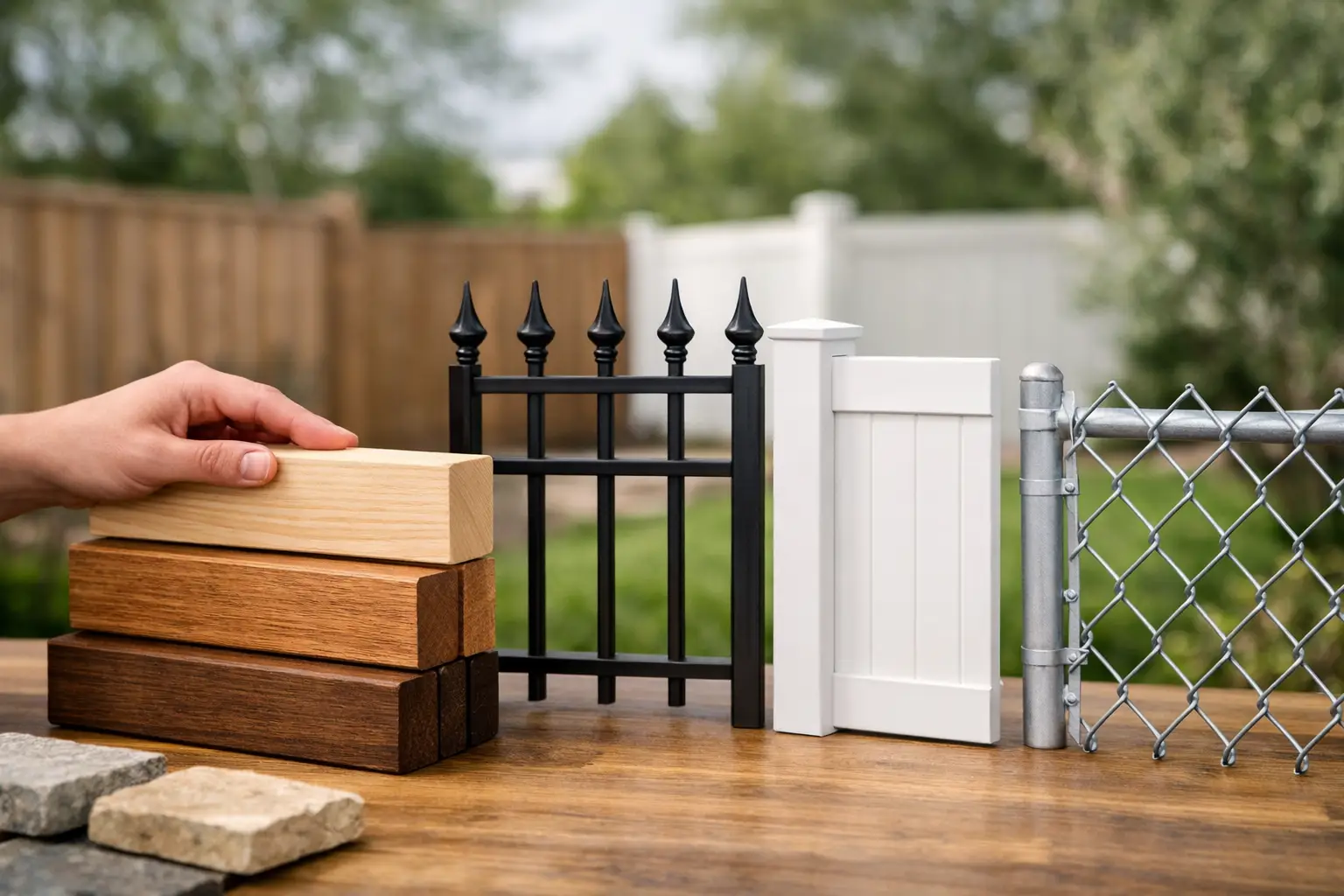
Wood remains one of the most popular residential choices because it offers privacy, a classic look, and flexibility in design. It works well for backyards, side yards, and homes where appearance matters just as much as enclosure.
The trade-off is maintenance. Wood needs periodic staining, sealing, or painting if you want to protect its appearance and extend its service life. In Arkansas, heat, moisture, and seasonal weather swings can take a toll over time. Wood can also warp, rot, or develop insect damage if it is not properly installed and maintained.
Wood is often a strong choice when you want full privacy and a traditional look, but it is not always the best fit if you want the lowest long-term upkeep.
Vinyl fencing
Vinyl is attractive to property owners who want a clean, finished appearance without the regular maintenance that wood requires. It does not need painting, and it holds up well against moisture and normal weather exposure.
That does not mean it is the right fit for every job. Vinyl can have a higher upfront cost than some other materials, and depending on the style, it may not offer the same impact resistance as heavier commercial-grade systems. For residential privacy fencing, though, it is often a practical balance between appearance and maintenance.
If your priority is a polished look with less hands-on upkeep, vinyl deserves a close look.
Chain link fencing
Chain link is one of the most practical options for residential, commercial, and industrial properties. It is cost-effective, durable, and efficient for enclosing large areas. It works especially well when security, visibility, and function matter more than privacy.
For commercial sites, storage yards, schools, sports areas, and utility spaces, chain link is often the straightforward answer. It can also be adapted with privacy slats, security enhancements, and different heights depending on the application.
The limitation is appearance and privacy. Some homeowners do not want the open look, and some commercial properties need a stronger visual barrier. Still, when the goal is dependable perimeter definition at a reasonable cost, chain link remains hard to beat.
Ornamental fencing
Ornamental fencing is usually chosen when appearance and security need to work together. It is common around commercial entrances, office buildings, multifamily properties, higher-end homes, and institutional sites.
It offers a more finished, upscale look than chain link while still allowing visibility. That can be useful where you want to secure a property without making it feel closed off. Ornamental systems can also pair well with gates and access-control solutions.
The main trade-off is that ornamental fencing generally does not provide privacy on its own, and it can cost more than basic functional materials. It makes the most sense when presentation matters and the fence is part of the property’s overall image.
Composite fencing
Composite fencing is often considered by buyers who want privacy and a more premium appearance with less maintenance than traditional wood. It can be a strong option for residential properties and selected commercial settings where visual appeal is important.
Compared with wood, composite usually asks for less upkeep over time. Compared with vinyl, it may offer a different look that feels warmer or more substantial depending on the product. The upfront investment is often higher, so the question becomes whether the long-term maintenance savings and appearance justify the cost.
For some properties, the answer is yes. For others, especially where budget is the main driver, a simpler material may make more sense.
Match the material to your property conditions
When people think about how to choose fence material, they often compare products without thinking enough about the site itself. Grade changes, drainage, soil conditions, wind exposure, and gate locations all affect performance.
A large rural or semi-rural property may need a different solution than a tight in-town lot. A commercial site with truck traffic, multiple access points, or security concerns may need more than a standard fence panel and swing gate. If the ground is uneven, some materials and layouts adapt better than others. If you need a long run of fencing, installation efficiency and future repair costs matter more.
This is also where local experience counts. In Northwest Arkansas and the River Valley, the right fence is not just about catalog options. It is about what holds up on actual properties in this region.
Budget means more than initial price
It is normal to begin with budget, but the cheapest material on paper is not always the lowest-cost decision over time. A lower upfront price may come with more maintenance, earlier repairs, or a shorter useful life. A higher upfront investment may be easier to live with if it reduces upkeep and holds its appearance longer.
For example, wood may cost less initially than composite on some projects, but ongoing maintenance can change the picture. Chain link may be the most efficient choice for enclosing a large commercial area, especially if privacy is not necessary. Ornamental or automated gate systems may carry a higher project cost, but they can add security, control, and a more professional appearance that matters to the property owner.
The key is to compare total value, not just the first number on the estimate.
Do not overlook gates, access, and code requirements
Fence material is only part of the decision. Gates, latches, access control, and local requirements can shape the final recommendation just as much as the fence itself.
For residential properties, that may mean thinking about walk gates, driveway gates, pool safety requirements, and how often the gate will be used. For commercial and industrial sites, it may mean planning for sliding gates, cantilever gates, operator systems, keypad access, or more specialized entry control.
A fence that looks right but does not function well at the access points will become a daily frustration. On more complex sites, it is better to think of the fence and gate system as one project instead of separate parts.
A practical way to narrow your options
If you are stuck between materials, focus on four priorities in order: purpose, maintenance, appearance, and budget. That sequence usually leads to a clearer answer.
If privacy is first and low maintenance is second, vinyl or composite may rise to the top. If cost and function matter most for a large area, chain link may be the right call. If you want a strong visual impression with security, ornamental fencing may be the better fit. If you want a traditional backyard look and are comfortable with upkeep, wood still has a place.
For buyers with mixed needs, a site visit is often what settles it. Seeing the layout, slope, access points, and surrounding uses helps turn a general preference into a practical plan. That is especially true when the project includes commercial demands, specialty gates, or a need for long-term perimeter security.
Ace Fence Company Inc. works with property owners across Fort Smith, Northwest Arkansas, and the River Valley on everything from straightforward residential enclosures to more complex commercial and access-control projects. The right material is the one that fits the property, the purpose, and the way you plan to use it every day.
A good fence should not leave you second-guessing the decision a year from now. If you start with the job it needs to do and choose a material that fits the site, the budget, and the maintenance you can live with, you will be much closer to a fence that actually works for the long haul.
Ready to Talk to a Real Fence Professional?
Free on-site estimates from the River Valley's most trusted fence company since 1963.