How to Choose a Commercial Gate Operator
Learn how to choose a commercial gate operator by matching gate weight, traffic, safety devices, power, and access controls to your Arkansas site needs.
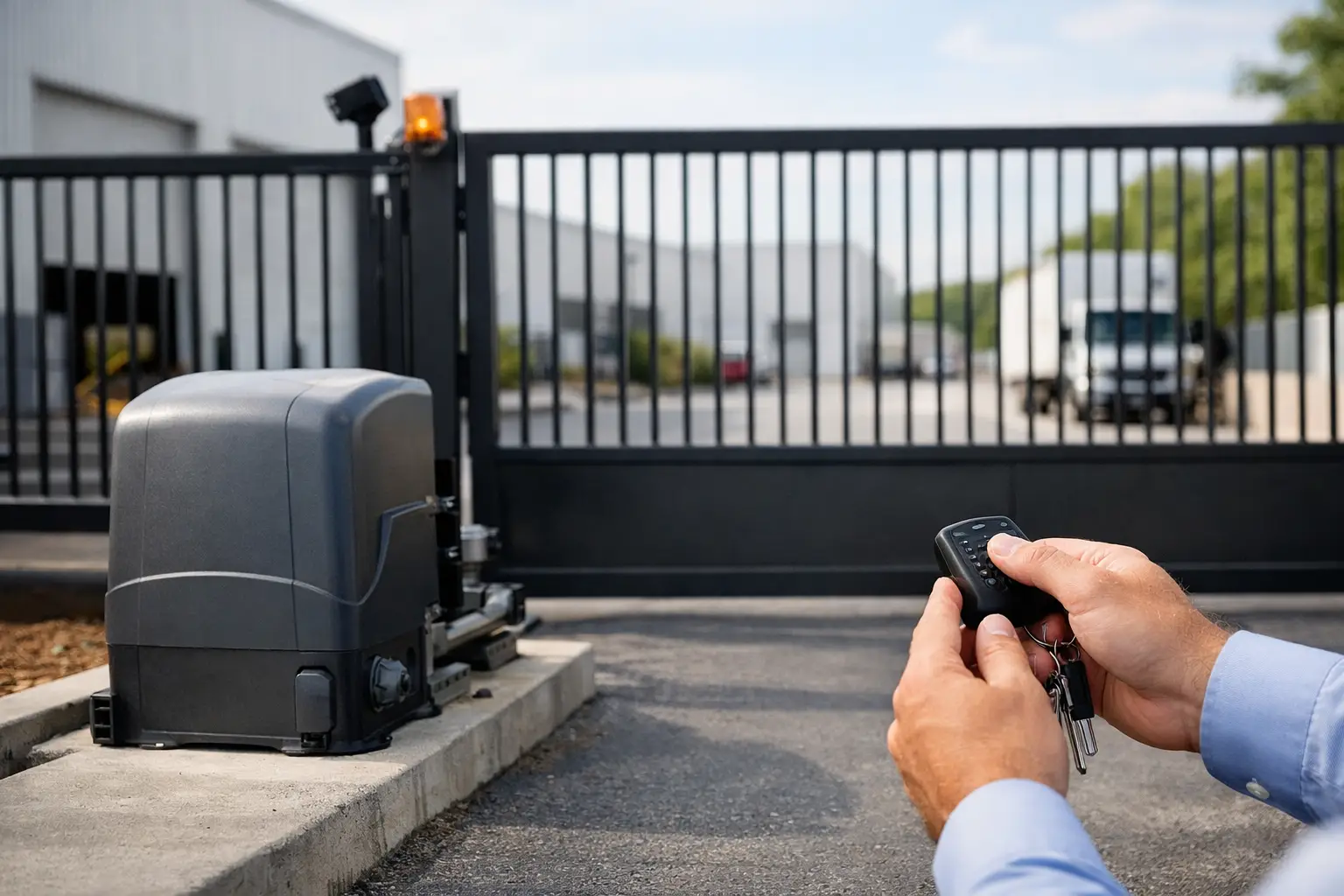
A commercial gate operator is not a one-size-fits-all motor. An operator that works well at a lightly used office entrance may fail quickly at a busy warehouse, apartment community, industrial yard, or contractor storage site. Knowing how to choose a commercial gate operator starts with the gate itself, then moves to traffic volume, safety requirements, available power, and the way people need to enter the property.
A properly planned system protects the investment in your fence and gate while giving employees, tenants, customers, deliveries, and emergency responders dependable access. The right choice is usually made before installation begins, not after a gate is already hanging on the opening.
Start With the Gate Type and Physical Requirements
The operator must be matched to the kind of gate it will move. A sliding gate, swing gate, cantilever gate, vertical pivot lift gate, and barrier arm all require different equipment and site planning. Choosing an operator based only on price or horsepower can create ongoing reliability problems.
For sliding gates, the operator needs to handle the full gate weight, its length, and the amount of friction in the track or rolling system. A cantilever gate does not run on a ground track, but it still needs an operator rated for its weight and intended use. Cantilever gates are often a strong choice for commercial entrances because they keep the driveway clear of a track that can collect gravel, mud, ice, and debris.
Swing gates need adequate room for the leaf or leaves to travel. A long, heavy swing gate can place significant force on hinges, posts, arms, and operator components. Wind exposure matters as well. A solid-panel gate in an open area can act like a sail, which may call for a heavier-duty operator or a different gate design altogether.
Before selecting equipment, confirm the gate's actual weight, length, material, hardware condition, travel path, and whether the opening has slopes, drainage issues, uneven pavement, or limited side room. Those details are not minor. They determine whether a gate moves smoothly enough for an operator to perform as intended.
How to Choose a Commercial Gate Operator for Daily Traffic
The next question is how often the gate will cycle. A gate at a small business with a few daily arrivals has different demands than an entrance serving 150 employees, delivery trucks, visitors, and after-hours access.
Commercial operators are commonly rated by duty cycle or by the number of cycles they can reasonably handle over a period of time. A cycle generally means the gate opens and closes once. If the site has peak traffic in the morning, at lunch, and at shift changes, select an operator that can handle those busy periods without overheating or wearing prematurely.
Consider the real traffic pattern, not just the number of employees on the property. Ask whether the gate will serve passenger vehicles, box trucks, semis, service crews, tenants, or all of them. A busy facility may need separate entry and exit lanes, a wider opening, faster gate travel, or a barrier arm for frequent authorized vehicles while the main slide gate remains secured.
Speed also involves a trade-off. Faster operation can reduce vehicle backup, but the gate must still have proper safety protection and enough stopping distance. A gate should not be set to move faster than the site layout and safety devices can support.
Match the Operator to Power at the Site
Most commercial gate operators are powered by electricity, but the available power source may influence the design. A new gate location may require trenching and electrical work, especially when the entrance is far from the building. That work should be planned along with the fence and gate installation rather than treated as an afterthought.
Hardwired power is often the most dependable option for high-traffic commercial locations. It provides consistent operation for larger gates, access controls, lighting, and communication equipment. Battery backup is worth considering where access must continue during a power outage. For certain remote or lower-cycle sites, solar power may be practical, but it depends on sun exposure, gate weight, daily cycles, and the electrical load of connected devices.
Do not assume solar is the best answer simply because running power is inconvenient. A heavily used gate with poor southern exposure, frequent cloudy weather, or several accessories may not receive enough charging capacity to perform reliably. A site review can determine whether solar is suitable or whether a hardwired system will be the better long-term value.
Build Safety Into the Gate System
A commercial automatic gate must be designed as a complete system. The operator is only one part of it. Gate construction, safety devices, controls, warning signs, fencing around the operator area, and the location of access equipment all matter.
Commercial gate systems should be evaluated for applicable safety requirements, including entrapment protection. This commonly includes monitored photo eyes, edge sensors, and controls that stop or reverse gate movement when an obstruction is detected. The exact devices needed depend on the gate type, its travel path, and potential pinch points around posts, rollers, hinges, and nearby fencing.
A common mistake is installing a strong operator on an older gate without correcting the surrounding hazards. Gaps in fencing, exposed rollers, climbable areas, or openings where a person could become trapped need to be addressed. The gate should also be installed so pedestrians are not encouraged to walk through the vehicle entrance. When possible, provide a separate pedestrian gate and clear access route.
Emergency access deserves attention early in the planning process. Fire departments, police, maintenance personnel, and property managers may need a reliable way to enter when normal credentials are unavailable. The best approach depends on the property, but it should be discussed before equipment is ordered.
Choose Access Controls That Fit the People Using It
The right access control method depends on who enters, when they enter, and how much control the property needs. A small secured yard may only need keypad access and a remote for the owner. A larger site may need credential readers, telephone entry, intercom communication, vehicle detection loops, keypad codes, and cloud-based management.
For employee parking areas and industrial facilities, card readers, key fobs, or mobile credentials can limit entry to authorized users and make it easier to remove access when staffing changes. For apartments, offices, or visitor-driven properties, a telephone entry or video entry system may be more appropriate. For truck entrances, long-range transmitters, loop detectors, or a staffed call box can reduce delays at the gate.
Think through exit as carefully as entry. Free-exit loops, request-to-exit devices, and controlled exit credentials each serve different security needs. If the site is protecting equipment, inventory, or restricted operations, unrestricted vehicle exit may not meet the property's security plan.
Do Not Overlook Gate Construction and Site Conditions
Even the best commercial operator cannot compensate for a poorly built gate. The gate should be properly framed, balanced, aligned, and equipped with commercial-grade hardware. Posts and foundations must be sized for the gate, the operator forces, and local soil conditions.
Northwest Arkansas and the River Valley see heavy rain, changing temperatures, wind, and occasional ice. Drainage around the opening matters, particularly for slide gates with ground tracks. Gravel migration, standing water, and mud can interfere with gate movement and shorten the life of components. On sloped sites, a gate design may need to change to maintain proper clearance and safe operation.
Vehicle approach space matters, too. A gate that opens directly into a public roadway, blocks a fire lane, or leaves trucks waiting in traffic creates a problem beyond convenience. The site should provide enough stacking distance for vehicles to wait safely off the road while the gate opens.
Plan for Service, Not Just Installation
A commercial gate operator is mechanical and electrical equipment exposed to daily use and outdoor conditions. It needs periodic attention. Preventive service can identify loose hardware, worn rollers, chain tension problems, damaged safety devices, battery issues, or access-control failures before they cause an entrance to stop working.
When comparing options, consider parts availability, service access, warranty coverage, and whether the operator is appropriately sized with room for future demand. Spending less on an undersized operator can cost more when it struggles with a heavy gate or requires repeated repairs. On the other hand, the largest operator is not automatically the best choice if the gate and traffic needs are modest.
A good commercial gate system is planned around the property rather than pulled from a shelf. Ace Fence Company Inc. can evaluate the opening, gate design, traffic pattern, safety needs, and access controls together so the finished system works as a dependable part of your perimeter. The best next step is a site-specific estimate that accounts for how your property operates every day.
Ready to Talk to a Real Fence Professional?
Free on-site estimates from the River Valley's most trusted fence company since 1963.