Gate Operator Performance Review Checklist
A gate operator performance review helps property owners catch safety, access, and reliability issues before they cause expensive downtime or hazards.
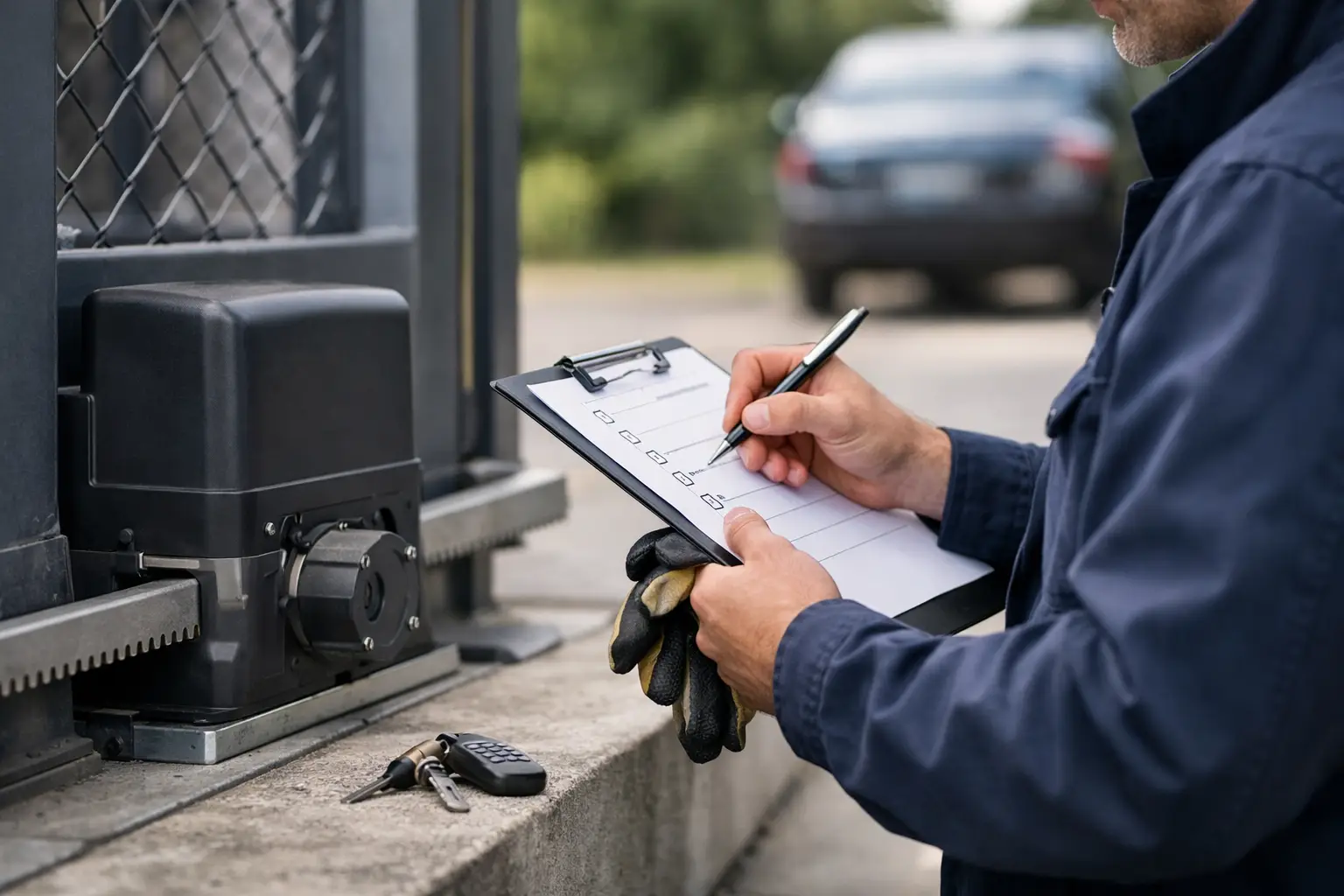
A gate that opens slowly, reverses without reason, or fails at the busiest part of the day is more than an inconvenience. It can interrupt deliveries, leave a property exposed, create safety concerns, and put unnecessary strain on the operator. A regular gate operator performance review gives property owners a practical way to identify problems before a minor adjustment turns into a service call or a complete system failure.
Automated gates are working systems, not set-it-and-forget-it equipment. The operator, gate frame, rollers, hinges, safety devices, power supply, access controls, and surrounding site conditions all affect how reliably the entrance performs. A good review looks at the entire opening, not just whether the gate moves when someone presses a button.
What a Gate Operator Performance Review Should Reveal
The purpose of a performance review is to answer a few straightforward questions. Does the gate open and close consistently? Does it stop or reverse when it should? Are authorized users able to enter without delays? Is the operator working harder than it should because of a gate alignment or hardware issue?
For a homeowner, this may mean checking a driveway gate that serves family members, guests, and service vehicles. For a commercial property, it may mean reviewing a high-cycle entry point that controls employee access, truck traffic, deliveries, or equipment yard security. The stakes are different, but the basic goal is the same: dependable access without creating an unsafe condition.
A gate operator can appear to be functioning while hiding a developing mechanical problem. If the gate drags, binds, sags, or moves unevenly, the operator may be compensating for resistance that will eventually wear out components. Reviewing performance early helps separate an operator issue from a gate construction issue, electrical issue, or access-control issue.
Start With Safety Devices and Reversal Functions
Safety should be the first part of any gate operator performance review. Automatic gates create pinch points, entrapment zones, and moving-vehicle hazards. The system needs properly installed and functioning safety equipment suited to the type of gate and the way people use the property.
Test the gate under normal operating conditions. Watch how it behaves from the time a command is sent until it reaches the fully open or fully closed position. Pay attention to sudden stops, harsh starts, delayed reversal, or movement that looks jerky instead of controlled.
Four areas deserve close attention:
- Photo eyes and monitored sensors: These devices should detect an obstruction in the gate path and prevent or reverse movement as designed. Dirt, spider webs, damaged wiring, poor alignment, and sun exposure can all affect performance.
- Contact edges: If the system uses monitored edges, inspect them for visible damage and confirm the gate responds properly when the edge encounters an obstruction.
- Force and travel limits: The gate should stop at the correct positions without slamming, overtraveling, or applying excessive force. Improper settings can lead to nuisance reversals or unsafe operation.
- Emergency release function: The manual release should be accessible to authorized personnel and operate correctly when power is unavailable or the operator requires service.
Do not bypass safety devices to keep a gate running. A sensor that causes frequent reversals may be dirty, misaligned, damaged, or incorrectly placed, but removing it is not a repair. The right correction depends on the system and site conditions.
Check the Gate Before Blaming the Operator
An automatic operator is only as reliable as the gate it moves. A sliding gate should roll freely by hand when disconnected from the operator. A swing gate should move smoothly through its travel without dragging on the ground, catching on a latch, or binding at the hinges. If manual movement takes excessive effort, the operator is being asked to do more work than it was designed to handle.
Inspect rollers, tracks, guide rollers, hinges, wheels, posts, brackets, chains, rack gear, and weld points. Look for loose hardware, worn rollers, rust, damaged gate frames, shifting posts, and debris in the travel path. A cantilever gate requires proper support and alignment across a longer opening, while a swing gate may be affected by grade changes, wind load, or sagging leaves.
Listen to the gate during operation. Grinding, popping, repeated clicking, or a strained motor sound can point to mechanical resistance, worn drive components, or electrical trouble. The source may be simple, but continued operation without correction can lead to a larger repair.
Review Access Controls and Daily Use Patterns
A gate can move properly and still fail as an access-control system. Review every method used to open the gate, including keypads, remotes, card readers, telephone entry systems, vehicle loops, exit devices, timers, and manual controls.
Keypads should accept authorized codes consistently and be protected from weather and physical damage. Remotes should work at a reasonable distance without requiring drivers to pull unusually close to the gate. Vehicle detection loops and free-exit devices should respond to traffic without opening for vehicles outside the intended detection area.
Commercial sites should also consider whether the system matches real traffic patterns. A gate that works well for ten vehicles a day may not be suitable for a busy warehouse entrance, apartment community, contractor yard, or industrial facility. High-cycle usage can require a different operator capacity, stronger gate construction, better access equipment, or additional safety devices.
Look at Power, Weather, and Site Conditions
Electrical supply problems can look like operator failures. Intermittent performance, slow movement, control board errors, and failure after storms may be tied to power quality, damaged wiring, tripped breakers, grounding issues, or surge damage. Solar-powered operators require a separate review of panel placement, battery condition, seasonal sunlight, and power demand.
Northwest Arkansas and the River Valley see heat, heavy rain, wind, freezing weather, and muddy conditions that can affect gate systems. Water drainage matters around tracks, posts, operator pads, and underground conduit. Vegetation can block photo eyes. Gravel, leaves, ice, and road debris can interfere with wheels and sliding paths.
Site changes matter, too. A resurfaced driveway, new landscaping, added parking, different truck routes, or a new building can change how a gate operates and how vehicles approach it. A performance review should account for how the entrance is used now, not only how it was used when the gate was installed.
Document Problems Before They Become Downtime
Keep a simple record of operator issues, especially at commercial or multi-user properties. Note the date, time, weather, gate position, error message, unusual sound, and access device involved. If a problem occurs only during rain, at certain times of day, or when larger vehicles enter, those details help narrow down the cause.
This record is useful when deciding whether the system needs adjustment, component replacement, gate repair, or a more substantial upgrade. It also helps property managers explain recurring problems clearly when scheduling service.
A review does not always lead to replacement. In many cases, cleaning sensors, correcting gate alignment, replacing worn hardware, adjusting limits, or repairing an access device can restore reliable operation. On the other hand, an operator that is undersized, outdated, repeatedly damaged by electrical events, or unable to support current traffic may be better replaced than repeatedly repaired.
When to Bring in a Gate Professional
Call for professional service when safety devices do not respond correctly, the gate reverses unpredictably, the operator strains or overheats, the frame has visible damage, or the system has electrical faults. Commercial entrances, cantilever gates, pivot lift gates, and integrated access-control systems often require a trained assessment because multiple components must work together.
Ace Fence Company Inc. can evaluate the gate structure, operator, and access equipment as one system, then recommend repairs or upgrades based on the property’s actual use. The best time to address a gate problem is before a tenant, employee, delivery driver, or family member finds the failure at a locked entrance.
Ready to Talk to a Real Fence Professional?
Free on-site estimates from the River Valley's most trusted fence company since 1963.