Gate Automation for Safer Property Access
Gate automation gives homes, businesses, and industrial sites controlled access. Learn to choose the right gate, operator, safety devices, and controls.
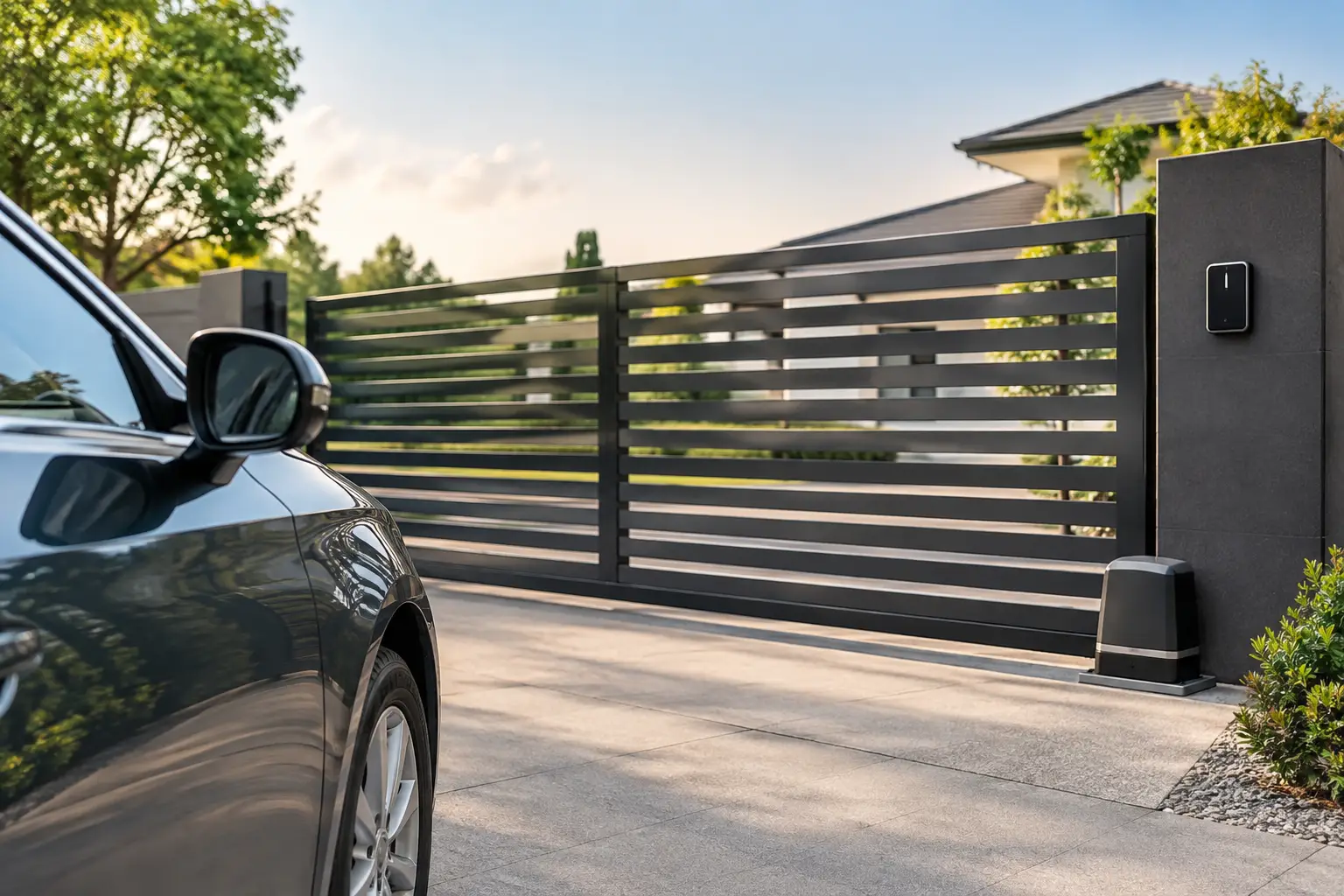
A gate should do more than open and close. It should control who enters, protect people and equipment, and keep daily traffic moving without creating a problem at the driveway. Gate automation turns a manual entry point into a working access system, but the right setup depends on the property, the gate design, traffic volume, and the level of security required.
For a homeowner, that may mean opening a driveway gate from a vehicle or keypad. For a commercial yard, apartment community, farm, or industrial site, it can mean managing employee access, delivery traffic, visitors, and after-hours security. The operator is only one part of the system. The gate, foundation, safety devices, controls, and installation all need to work together.
Start With the Gate, Not Just the Operator
An automated operator cannot correct a gate that is undersized, poorly supported, out of alignment, or built for lighter use than the property demands. Before selecting equipment, evaluate the gate opening, available space, grade, wind exposure, vehicle traffic, and the material being used.
Swing gates are common at residential driveways and smaller entrances. They can provide a clean appearance and work well when there is adequate room for the gate leaves to swing inward. However, a sloped driveway, limited setback, or frequent traffic may make a swing gate less practical. A swing gate must also be kept clear of snow, debris, landscaping, and parked vehicles within its travel path.
Sliding gates are often a better fit for commercial properties and wider openings. A standard slide gate requires room along the fence line for the gate to travel. Cantilever slide gates are especially useful where a track across the driveway would create maintenance issues from gravel, mud, leaves, or vehicle traffic. They carry the gate above the drive surface and are commonly selected for industrial yards, storage facilities, and secure commercial sites.
Specialty options, including pivot lift gates and custom fabricated systems, can solve access challenges where a conventional swing or slide gate is not the best answer. The best design is the one that matches the site instead of forcing the site to fit a standard gate.
Choosing the Right Gate Automation System
Gate operators are rated for different gate weights, lengths, duty cycles, and operating conditions. A light-duty residential operator may be appropriate for a home with a few daily cycles. It is not the right equipment for a busy business entrance with employee arrivals, delivery trucks, service vehicles, and frequent visitor access.
When planning gate automation, consider these four operating needs:
- How many times the gate will open and close on a typical day
- The gate's weight, length, construction, and wind load
- Whether power is available at the entrance or solar power is needed
- Who needs access and how they will be authorized
Duty cycle matters. A gate that operates several times each day has very different demands than one serving a commercial lot with repeated traffic during business hours. Selecting an operator with adequate capacity helps reduce strain, service interruptions, and premature component wear.
Power is another practical decision. Hardwired electrical service provides dependable power for most installations and is usually the preferred option when available. Solar operators can be a good solution for remote entrances, agricultural land, and locations where trenching power would be costly. Solar performance depends on panel exposure, battery capacity, gate usage, and seasonal weather, so it should be sized for actual site conditions rather than treated as a one-size-fits-all option.
Access Controls Should Match the Property
The control method determines how authorized users enter and how visitors request access. A single-family residence may only need remote controls, a keypad, and a vehicle exit loop. A business may need telephone entry, card readers, key fobs, intercom communication, or access credentials tied to employees and tenants.
Keypads are straightforward and convenient, but codes should be changed when staff changes or when access needs to be removed. Remote transmitters are simple for regular users, although lost remotes need to be replaced and removed from the system. Telephone entry systems allow visitors to call a resident, office, or manager for approval. Card and fob systems offer better control for properties with many authorized users because credentials can be added or removed without changing a shared code.
For commercial and industrial sites, access control should be planned around traffic flow. Employee vehicles, delivery drivers, visitors, and emergency responders may need different ways to enter. A gate that is secure but creates a line of vehicles on a public road is not serving the property well. Entrance layout, gate speed, call box placement, and vehicle detection all affect how the system performs during busy periods.
Safety Devices Are Not Optional Add-Ons
Automated gates move heavy materials. Proper safety equipment protects vehicles, pedestrians, and anyone near the entry. It also helps the system respond correctly when an obstruction is present.
Photo eyes use an invisible beam across the gate opening. If a vehicle, person, or object breaks that beam, the operator can stop or reverse as designed. Edge sensors mounted on the moving gate provide another layer of protection when the gate contacts an obstruction. Vehicle loops installed in the driveway can hold a gate open, trigger an exit, or prevent a gate from closing on a vehicle.
Safety equipment must be placed correctly and tested after installation. It also needs ongoing attention. A photo eye that is blocked by dirt, misaligned after a storm, or damaged by landscaping equipment cannot do its job. Gate automation should be installed with appropriate entrapment protection and configured for the actual conditions at the entrance.
Plan for the Site Conditions Around the Gate
A gate system works best when the surrounding construction is prepared for it. Posts, footings, gate frames, fencing, and operator pads all need to support the load and movement of the system. Drainage is also a major consideration. Standing water, erosion, and shifting ground can affect gate alignment, tracks, electrical components, and vehicle loops.
Arkansas weather adds its own set of conditions. Heavy rain, changing temperatures, wind, and seasonal vegetation can expose weak points in an installation. A properly designed system accounts for drainage, wind load, clearance, and protection for electrical components. In rural locations, gravel drives and uneven approaches may influence the choice between a tracked slide gate, cantilever gate, or swing gate.
Emergency access should be addressed before installation. Depending on the property and local requirements, this may involve a designated access method, emergency release, or coordination with the appropriate authorities. Gates should never create an avoidable delay for emergency vehicles.
Maintenance Keeps Automated Gates Dependable
Like any mechanical system, an automated gate needs periodic inspection. Most issues start small: loose hardware, worn rollers, a dragging gate, damaged wiring, a low battery, or a photo eye that has moved out of alignment. Addressing these issues early is less disruptive than waiting for the gate to stop operating at the worst possible time.
Property owners and managers should keep the gate path clear, watch for changes in movement or noise, and test controls and safety devices regularly. Gates should travel smoothly without binding or sagging. If an operator is working harder than it should because the gate is misaligned, replacing the operator will not solve the underlying problem.
Commercial properties may benefit from scheduled service, particularly when the gate handles high daily traffic. Routine maintenance can include checking gate alignment, tightening hardware, inspecting rollers and hinges, testing safety devices, examining electrical connections, and reviewing access-control performance.
Work With a Contractor Who Sees the Whole System
A fence contractor who understands automated gates can evaluate the perimeter, gate structure, operator requirements, and access controls as one project. That avoids a common problem: installing a gate first, then discovering later that it is not built or positioned for the selected operator.
Ace Fence Company Inc. helps property owners throughout Fort Smith, Northwest Arkansas, and the River Valley plan gate systems for residential, commercial, industrial, and specialty applications. From ornamental driveway gates to cantilever slide gates and controlled-access entrances, the goal is to build a system that fits the property and holds up to the work it needs to do.
The right automated gate is not necessarily the largest or most complicated system. It is the one that provides dependable access, appropriate security, and safe operation for the people using the property every day. A site review and detailed estimate are the practical first steps toward getting that balance right.
Ready to Talk to a Real Fence Professional?
Free on-site estimates from the River Valley's most trusted fence company since 1963.