Gate Automation Buyer Guide for Arkansas Properties
Use this gate automation buyer guide to choose the operator, access controls, safety devices, and gate design for your Arkansas property with confidence.
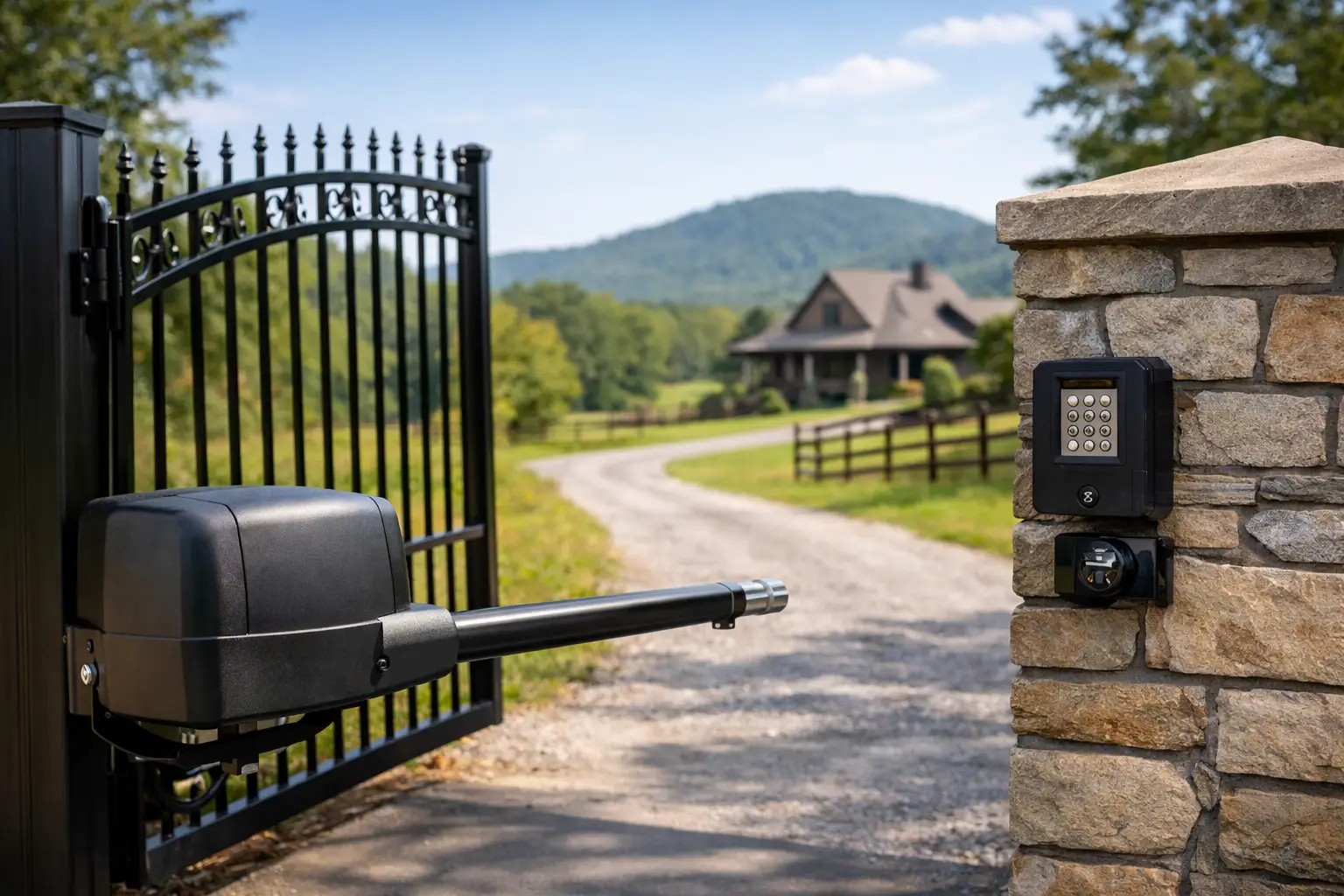
A gate operator is not a bolt-on convenience item. It has to move the actual gate you own, handle the traffic your property receives, and stop safely every time it cycles. This gate automation buyer guide covers the decisions that matter before buying equipment for a home, business, farm, development, or industrial site in Arkansas.
The right system starts with the gate, the driveway, and how people use the entrance. A light residential swing gate that opens a few times each day needs something very different from a commercial sliding gate serving delivery trucks, employees, and visitors. Selecting equipment by price alone often leads to slow operation, frequent repairs, or a gate that does not meet the site’s safety needs.
Start With How the Property Uses the Gate
Before choosing an operator, define who needs access and how often the gate will open. A homeowner may want a keypad and remote controls for family members. A business may need access cards, telephone entry, automatic exit devices, and a way to manage credentials when employees change. A property manager may need a system that works consistently for tenants, service providers, and emergency personnel.
Cycle volume is one of the first questions to answer. A cycle is one full opening and closing action. Operators are rated for different duty levels, from occasional residential use to continuous commercial traffic. Installing a light-duty unit on a busy entrance may save money at first, but the motor, gearbox, and controls can wear out early. For commercial, industrial, or multi-user properties, plan for the traffic the site will have in several years, not just the traffic it has this month.
Also consider the users and vehicles. Large trucks need wider clear openings and enough room to approach without blocking the road. School, warehouse, and jobsite entrances may need separate pedestrian access so people are not walking through an automated vehicle gate. If the property has a steep drive, tight turning area, or limited space behind the gate, those conditions affect the gate style as much as the operator.
Choose the Gate Style Before the Operator
An automated system works best when the gate design and operator are planned together. Retrofitting automation to an existing gate can be practical, but only if the gate is square, properly supported, and built to carry the added operating forces.
Swing Gates
Swing gates are common at residential entrances and can offer a traditional appearance. They need clear space inside the property for the leaves to travel. Single-swing gates work well for narrower openings, while dual-swing gates can cover wider driveways. Wind load matters with solid panels, wood infill, vinyl, or privacy-style designs. A large solid gate can act like a sail during Arkansas storms, placing extra stress on hinges and the operator.
Swing gates are not always the best choice on a sloped driveway. The gate’s travel path must stay clear of the ground, and the operator must have a stable mounting location. In some cases, a sliding system is the more dependable answer.
Slide and Cantilever Gates
Sliding gates move parallel to the fence line, making them a strong option where a swing gate would interfere with vehicles or slopes. A traditional slide gate runs along the ground on wheels and track. It can be a suitable choice for level, well-maintained surfaces, but debris, gravel, ice, and poor drainage can affect performance.
Cantilever gates are suspended above the driveway and supported from one side. They do not require a ground track across the opening, which helps at commercial sites, uneven surfaces, and entrances with frequent truck traffic. They require additional fence-line room for the counterbalance section, but they are often a practical long-term choice for security-focused and high-use locations.
Vertical Pivot and Specialty Gates
Where space is limited along the fence line or fast opening is needed, specialty systems may be appropriate. Vertical pivot lift gates raise out of the vehicle path and can work well at commercial or industrial entrances. These systems require careful engineering, secure foundations, and properly selected safety equipment. They are not necessary for every property, but they solve problems that conventional swing and slide gates cannot.
Match the Operator to Gate Weight, Length, and Duty Cycle
Every operator has limits. Gate weight, leaf length, material, wind exposure, slope, and expected cycles all affect sizing. A long ornamental gate may weigh less than a shorter solid wood gate. A gate that moves freely by hand can still need a larger operator if it is exposed to wind or used heavily throughout the day.
Avoid treating published maximum ratings as the target. If an operator is rated for a gate at the edge of its capability, there is little margin for weather, wear, or future changes. A properly sized commercial-grade operator may cost more upfront, but it generally provides better service life on busy sites.
Power supply is part of the decision. Hardwired electrical service is often the best option where available, especially for frequent-use gates and systems with multiple access devices. Solar power can work well in the right location, particularly on rural properties where trenching power is expensive. It depends on sun exposure, gate cycles, battery capacity, and winter conditions. Shade from trees or buildings can make a solar system unreliable if it is not designed for the actual site.
Battery backup should also be considered. A power outage should not leave residents, employees, or approved visitors trapped outside or inside the property. The right backup arrangement depends on the operator, local requirements, and the level of access the property needs during an outage.
Build Access Control Around Real Users
The gate operator moves the gate. Access control determines who can tell it to move. For a basic private entrance, remotes and a keypad may be enough. For a managed property, credentials that can be added or removed without collecting remote controls are often easier to manage.
Common options include keypad entry, card or fob readers, telephone entry systems, vehicle loops, exit wands, and app-based access. Each has trade-offs. Keypads are convenient but codes need to be changed when they are shared too broadly. Remotes are simple, but lost units can create a security concern. Telephone and app-based systems can give managers more control, though they depend on reliable communication service and proper setup.
Think through visitor handling before installation. Delivery drivers, vendors, guests, tenants, and emergency responders all use an entrance differently. A well-planned system may include a call box at the gate, an interior exit device, and a separate pedestrian gate. It should not require someone to back into traffic or exit a vehicle in an unsafe location just to gain entry.
Safety Equipment Is Not Optional
An automated gate has enough force to cause serious injury or property damage when it is installed or used incorrectly. Proper gate construction, guarding, controls, signage, and entrapment protection are essential. Safety requirements can vary based on gate type, operator, site conditions, and local code expectations.
Photo eyes are commonly used to detect a vehicle or person in the gate path. Edge sensors can help detect contact or obstruction points. Vehicle loops can keep a gate from closing on a vehicle and provide automatic exit. These devices need correct placement, not just installation. A photo eye positioned where it misses a pickup trailer, a child, or a pedestrian does not solve the hazard.
The gate itself must be evaluated for pinch points, gaps, exposed rollers, and climbable areas. A gate that was acceptable as a manual gate may need modifications before it is suitable for automation. This is one reason a complete fence and gate contractor is valuable: the structural gate work and the access-control work should support each other.
Plan for Foundations, Drainage, and Service Access
Most gate problems are not caused by the control board. They start with posts that move, poor drainage around a track, undersized concrete, worn hinges, damaged wiring, or a gate that was never properly aligned. The operator cannot correct a gate that drags, sags, or binds.
Ask how the installation will address foundations, electrical routing, drainage, and protection from vehicle impact. Commercial sites may need protective bollards near equipment. Rural sites may need conduit runs planned before drives are poured or resurfaced. A service technician should be able to access the operator without stepping into traffic or working around unstable ground.
Maintenance is part of ownership. Gates should be inspected regularly for loose hardware, alignment changes, worn rollers, damaged safety devices, vegetation growth, and battery condition. Busy commercial gates may need scheduled service, while a residential gate may only need periodic inspection and prompt attention when operation changes.
Questions to Ask During Your Gate Automation Buyer Guide Consultation
A useful consultation should cover more than a catalog of operators. Ask whether the proposed gate is rated and built for automation, how the operator is sized, what safety devices are included, and how the system will operate during a power outage. Confirm who will coordinate electrical work if needed and what ongoing maintenance the equipment will require.
It is also reasonable to ask how the system can grow. A homeowner may later want a call box or added remotes. A business may add employees, extend operating hours, or need separate access rules for different areas. Planning conduit, mounting space, and compatible controls now can prevent costly changes later.
Ace Fence Company Inc. can help property owners evaluate the gate structure, access needs, site conditions, and equipment options as one complete project. A clear plan at the beginning gives you a safer entrance, better daily operation, and fewer avoidable repair calls after installation.
The best time to solve gate automation problems is before concrete is poured and equipment is ordered. Bring the actual details of your driveway, vehicles, users, and security concerns to the estimate process so the finished system fits the way your property works.
Ready to Talk to a Real Fence Professional?
Free on-site estimates from the River Valley's most trusted fence company since 1963.