
Fence Post Repair: Reset, Reinforce, or Replace?
Fence post repair restores stability, safety, and appearance. Learn when a post can be reset or reinforced and when replacement is the smarter choice.
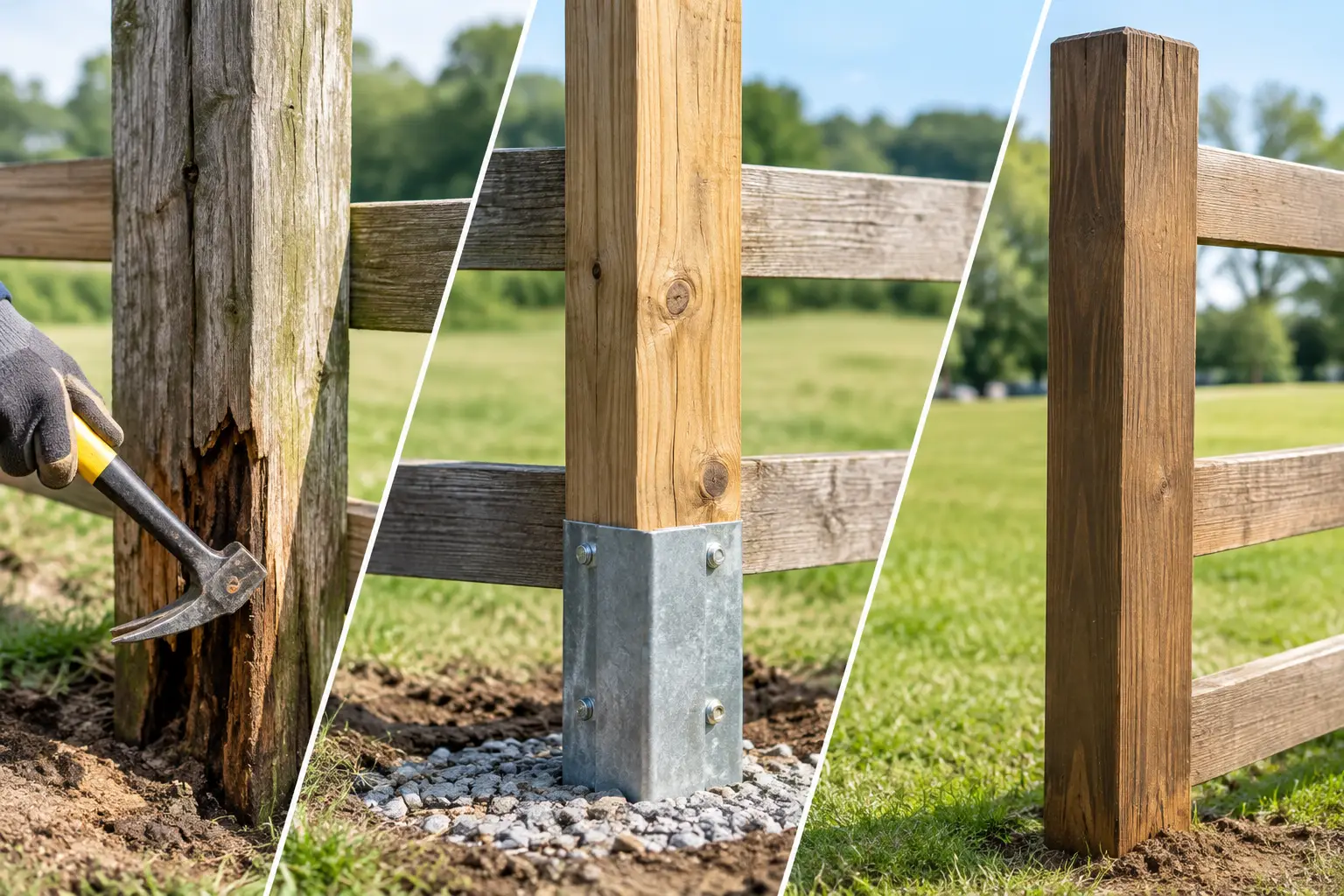
A fence can look mostly intact while one loose, leaning, or rotted post is quietly putting the whole line at risk. Fence post repair is often a practical way to restore strength without rebuilding an entire fence, but the right approach depends on what failed below grade, how much stress the fence carries, and the condition of the surrounding sections.
For homeowners, a failing post can mean a sagging gate, a privacy gap, or a fence that no longer stands straight after heavy rain or high wind. For commercial properties, it can affect site security, access control, safety, and the appearance of a maintained facility. A proper assessment prevents a small repair from turning into a larger replacement project later.
What Causes Fence Posts to Fail?
Most post problems start underground. Wood posts are exposed to constant moisture at the soil line, where decay can develop even if the above-ground portion still looks sound. Poor drainage, standing water, termite activity, and years of seasonal movement can all shorten a post's service life.
Concrete-set posts can fail, too. The concrete may crack, loosen from the soil, or hold moisture against a wood post. In some cases, the post itself is still solid, but the footing has shifted because of erosion, saturated ground, or inadequate depth. A post set too shallow is especially vulnerable to wind load and movement from a heavy gate.
Impact damage is another common cause. A mower, vehicle, falling limb, or livestock pressure can push a post out of plumb. Chain link posts may bend, ornamental fence posts can loosen at their base, and vinyl or composite fence systems may show stress at the rails or brackets when a supporting post shifts.
The type of fence matters. A single loose post in a short wood picket fence may be a contained repair. The same condition on a tall privacy fence, a commercial chain link enclosure, or an automated gate opening may require a broader inspection because the loads are greater.
When Fence Post Repair Makes Sense
A repair is usually worthwhile when the post is structurally sound and the problem is limited to its footing, alignment, or connection points. For example, a steel chain link terminal post that has shifted but is not bent or corroded through can often be reset with a properly sized concrete footing. A wood fence post that remains solid below grade may only need to be straightened and stabilized after soil erosion.
Reinforcing can also be an option in the right situation. A brace or support may help stabilize a post while preserving adjacent fence sections, particularly where immediate replacement would require disturbing established landscaping or removing connected panels. This is typically a practical measure for light-duty fence lines, not a substitute for replacing a post that has lost its structural integrity.
Fence post repair is most successful when it addresses the actual cause. Resetting a post without correcting drainage, for example, may leave the property owner with the same problem after the next extended wet period. If the soil has washed away around the footing, restoring grade and directing water away from the fence line should be part of the work.
Signs the Post Should Be Replaced
Replacement is generally the better choice when a wood post is soft, split, hollowed by decay, or loose because the portion below ground has deteriorated. Pushing it back into position and adding more concrete may make it look better temporarily, but it will not restore wood that is already compromised.
A post should also be replaced when it is cracked through, severely bent, rusted through, or unable to hold the tension and weight placed on it. This is especially true for gate posts. Gates create repeated side loads every time they open and close, and an undersized or weakened post can lead to dragging, sagging, latch misalignment, and premature operator issues.
Look beyond the individual post before deciding. If several posts are leaning in the same direction, the fence may have a deeper installation or drainage problem. If multiple wood posts are rotted at ground level, replacing one post at a time can become less cost-effective than rebuilding the affected section with properly selected materials and footings.
Repairing Different Fence Post Materials
Wood Fence Posts
Wood fence posts most often fail from moisture and decay. When replacement is needed, the affected rails and pickets are carefully released, the old post and failed footing are removed, and a new treated post is set at the correct depth and alignment. The connected fence section is then reattached so the line remains straight and the spacing remains consistent.
Matching existing materials can be straightforward on a newer fence and more complicated on an older one. Wood ages, changes color, and may no longer be available in the same dimensions. A professional repair focuses first on strength and alignment, then on making the finished section blend as closely as possible with the rest of the fence.
Chain Link Fence Posts
Chain link fencing relies on properly set terminal, corner, and line posts to maintain fabric tension. A loose terminal post can cause a much larger section of fabric to sag or pull out of alignment. Repair may involve removing tension from the fabric, resetting or replacing the post, then retensioning the system correctly.
Commercial chain link repairs deserve particular attention when the fence includes barbed wire, privacy screening, security features, or controlled-access gates. Repairs should maintain the intended height, tension, and function of the overall perimeter rather than simply correcting the visible lean.
Vinyl, Composite, and Ornamental Posts
Vinyl and composite fence posts can shift when their internal reinforcement, concrete footing, or rail connections are affected. The post may appear intact while the base has moved. Because these systems use specific brackets, inserts, and rail configurations, repairs should be completed with compatible components that preserve the fence's appearance and performance.
Ornamental steel and aluminum fencing may require a different approach. If a post has shifted, the repair must protect the coating, panel alignment, and connection hardware. A post that supports a gate or access point needs enough footing capacity for the weight and daily use of that opening.
Gate Posts Need a Higher Standard
Not every fence post carries the same load. Gate posts are structural components, whether they support a simple walk gate, a double drive gate, a sliding gate, or an automated access system. A minor lean can affect hinges, latches, safety devices, and the operation of the entire entrance.
For gate-related repairs, the condition of the post, hinges, frame, latch, and surrounding fence should be evaluated together. Replacing only the post may not solve the problem if the gate frame is sagging or the opening has changed. Larger commercial gates, cantilever systems, and automated operators often require specialized planning to ensure the repaired structure remains safe and dependable.
Why Proper Depth and Drainage Matter
The visible portion of a fence is only as reliable as what supports it underground. Post depth should account for fence height, material, wind exposure, soil conditions, and the loads created by gates or security additions. There is no one-depth answer that fits every property.
Drainage deserves the same level of attention. Low areas, downspout discharge, runoff from paved surfaces, and saturated clay soils can all undermine footings over time. In the River Valley and Northwest Arkansas, changing soil conditions and severe weather can place added strain on older fence lines. Correcting water movement around the post can extend the life of both a repair and a new installation.
Before digging, utility locations should be identified. This is particularly important around commercial properties, access gates, lighting, irrigation, and existing underground services. A repair that seems small from the surface can involve real risk when buried lines are nearby.
Choosing a Repair Approach That Holds Up
The lowest-cost repair is not always the least expensive outcome. Adding a quick brace to a decayed privacy-fence post may buy time, but it can also place additional stress on the next post in line. Replacing a failed gate post with a properly sized, properly installed support may cost more upfront while preventing repeated adjustments and damage to the gate itself.
A qualified fence contractor can determine whether the issue is isolated, identify material and footing concerns, and recommend a repair that fits the fence's purpose. Ace Fence Company Inc. works with residential, commercial, and specialty perimeter systems, including fencing and gate structures that require more than a basic patch.
If a post is leaning, loose, or showing signs of rot, address it before wind, water, or a heavy gate turns one weak point into a damaged fence line. A timely inspection gives you a clear path forward and helps keep the property secure, functional, and well maintained.
Ready to Talk to a Real Fence Professional?
Free on-site estimates from the River Valley's most trusted fence company since 1963.