Fence Post Foundation Guide for Lasting Fences
Use this fence post foundation guide to choose depth, concrete, drainage, and installation methods for residential and commercial fences across Arkansas.
A fence can look straight and solid on installation day but still fail early if the posts are not supported correctly. This fence post foundation guide explains the decisions that matter below grade: post depth, hole width, drainage, concrete use, soil conditions, and the extra reinforcement required for gates. The right approach depends on the fence material, the terrain, and the loads the fence will carry.
For homeowners, a sound foundation protects the privacy, security, and curb appeal of the fence. For commercial properties, it helps keep perimeter fencing, access points, and security gates operating as intended. Cutting corners below ground usually creates the same problems later: leaning sections, loose posts, sagging gates, and expensive repairs.
What a Fence Post Foundation Must Do
A fence post foundation does more than hold a post upright. It must resist side pressure from wind, shifting soil, stretched chain link fabric, gate movement, and occasional impacts. It also needs to manage water. Standing water around a wood post can speed up decay, while saturated or poorly compacted soil can allow any type of post to move.
The foundation requirements change with the fence. A light decorative residential fence has different needs than a tall privacy fence exposed to wind. Chain link terminal posts carry tension that line posts do not. Ornamental steel fencing needs consistent layout and stable footings to preserve a clean finished line. Automated sliding, cantilever, and swing gates place much greater demands on their supporting posts and concrete pads.
That is why a single rule for every fence project does not work. A contractor should consider the full system, not just the individual post.
Start With the Site Before Digging
The soil and layout of the property affect nearly every foundation decision. Northwest Arkansas and the River Valley include a mix of clay, rocky ground, slopes, wet areas, and sites where runoff moves quickly after heavy rain. A post foundation that performs well in firm, well-drained soil may need adjustment on a low spot with soft ground or persistent moisture.
Before excavation, identify the fence line, finished grade, drainage paths, and any elevation changes. Mark gate openings carefully. A gate that looks centered before installation can become difficult to operate if the grade drops across the opening or water regularly crosses the threshold.
Underground utilities must also be located before work begins. This is essential for every property, whether the project involves a backyard wood fence or a commercial security enclosure. Utility conflicts can create a serious safety hazard and quickly stop a project.
On sloped ground, the installation method matters as much as the footing. Fence sections may follow the slope or step down in level sections, depending on the material, privacy needs, and appearance desired. In either case, each post needs a stable base at the proper depth rather than a shallow hole adjusted only to make the fence look level.
Fence Post Depth and Hole Diameter
Post depth is usually the first question property owners ask, and the honest answer is that it depends. A common starting point is to set about one-third of the total post length below grade. Taller fences, exposed locations, heavy materials, and gate posts often require deeper foundations.
For example, a standard residential fence may use a post deep enough to provide support while leaving the intended finished height above ground. A six-foot privacy fence needs more embedded post than a shorter decorative fence because its broad panels catch more wind. Commercial chain link corner, end, and gate posts generally need larger and deeper concrete footings than line posts because they carry concentrated tension and operational forces.
Hole diameter should leave enough room for the selected backfill or concrete to support the post. A hole that is too narrow provides little lateral resistance. A hole that is excessively wide can waste material and disturb more soil than necessary. The correct diameter should match the post size, fence height, soil stability, and design loads.
Local frost conditions should also be considered. While deep frost heave is less common in Arkansas than in northern climates, seasonal moisture and soil movement still affect footings. Areas with expansive clay, poor drainage, or a history of movement deserve closer planning.
Gate Posts Need Their Own Plan
Gate posts should never be treated like ordinary line posts. They carry the weight of the gate, the stress of opening and closing, and sometimes the added force of an operator. A wood or vinyl walk gate may need a larger foundation than adjacent fence posts. A wide commercial swing gate, cantilever gate, or automated entry system requires engineered planning based on the gate type, opening width, hardware, and site conditions.
If a gate post moves even slightly, hinges can bind, latches may not align, and an automated operator can wear prematurely. Strong posts and properly sized concrete foundations are less expensive than repeated gate adjustments after installation.
Choosing Concrete, Gravel, or Compacted Backfill
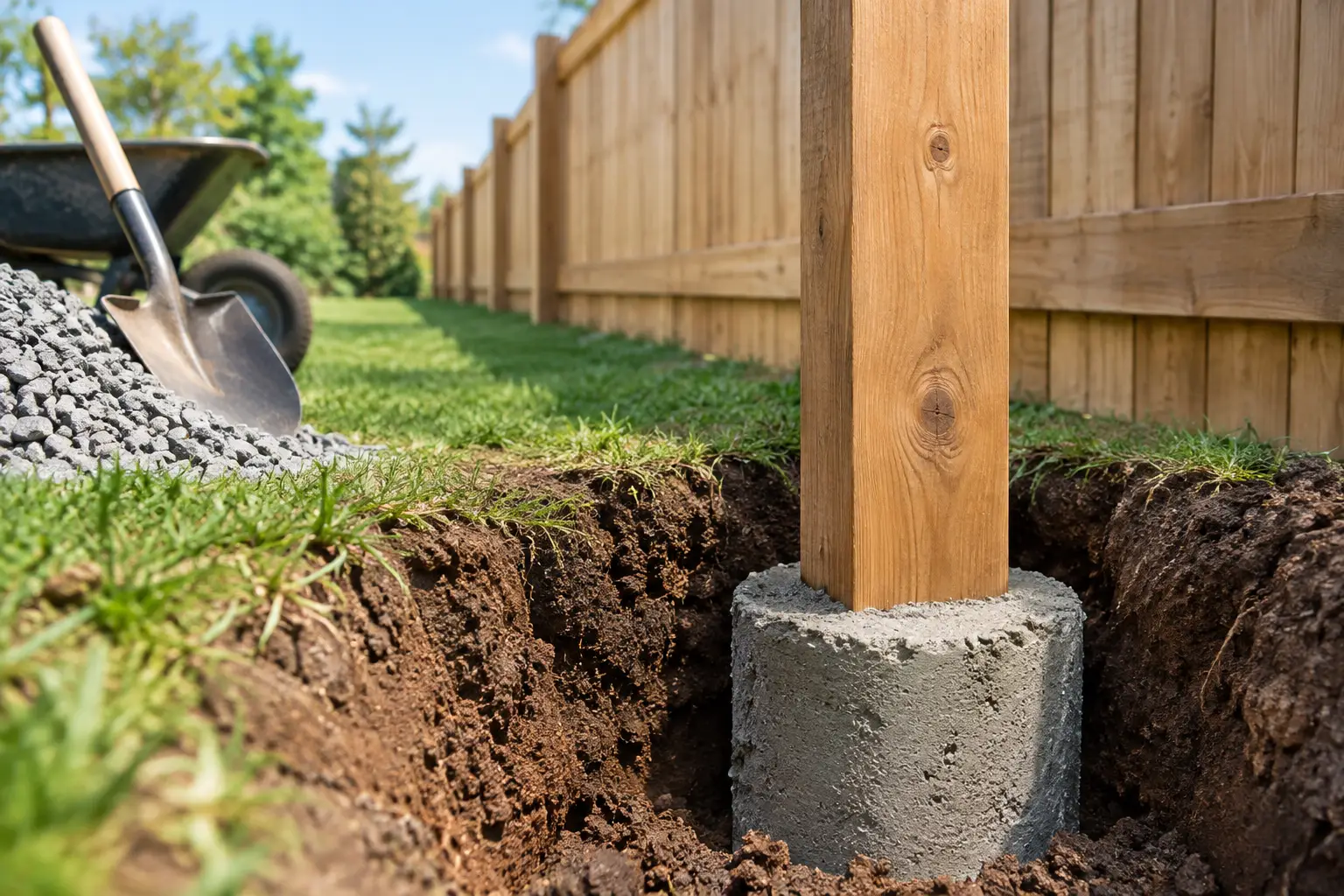
Concrete is widely used because it creates a firm footing and is especially useful for steel posts, terminal posts, corner posts, and gates. The concrete should be placed with the post held plumb and aligned with the string line. The top of the concrete should be shaped to shed water away from the post rather than left flat or dished inward.
For wood fence posts, drainage deserves special attention. Pressure-treated wood is built for ground contact, but it is not immune to moisture-related deterioration over time. A layer of compacted gravel at the bottom of the hole can help water drain below the post. Whether concrete is appropriate around a wood post depends on the post type, local ground conditions, drainage, and installation method.
Compacted native soil or aggregate backfill can be effective in the right conditions, particularly where drainage is good and the fence design does not place heavy loads on each post. It must be compacted in lifts around the post. Simply shoveling loose dirt into a hole leaves voids that will settle later.
The main objective is not to use the most concrete on every project. It is to create a foundation that matches the fence system and the property. A heavy gate assembly may need substantial concrete, while a lighter fence section may perform well with a more drainage-conscious approach.
A Practical Installation Sequence
A reliable installation follows a controlled sequence. First, establish the property line and fence layout. Then set corner, end, and gate posts before filling in line posts. These critical posts establish the direction, height, and tension for the rest of the fence.
Each hole should be excavated to its planned depth, with loose soil removed from the bottom. Add drainage material where appropriate, set the post to the correct elevation, and brace it so it remains plumb. Concrete or backfill should be placed and compacted without moving the post out of alignment.
Checking alignment during this stage prevents a common mistake: trying to correct a crooked fence with rails, panels, or fabric after the foundations have cured. Once the post foundations are stable, the rest of the system can be installed with far better consistency.
For chain link fencing, terminal and corner posts must be set and allowed to develop sufficient strength before fabric is stretched. For wood, vinyl, composite, and ornamental fencing, careful post spacing is critical because prefabricated panels, rails, and pickets depend on predictable measurements.
Problems That Usually Start Below Ground
Most fence failures are not caused by the visible fence material. They begin with a foundation that did not account for the site or the load. Watch for shallow posts, undersized gate footings, concrete that holds water against wood, unbraced posts during curing, and loose soil backfill that was never compacted.
Another frequent issue is installing a fence without accounting for drainage. Water flowing along a fence line can erode soil around posts, collect at gate openings, or cause wood sections near grade to stay wet. Small grading changes, drainage gravel, or an adjustment to the fence layout can prevent years of trouble.
A fence also needs reasonable clearance from soil and vegetation. Keeping wood components out of constant ground contact and trimming plants away from the fence improves airflow and makes early maintenance issues easier to spot.
When Professional Planning Is Worth It
A straightforward backyard fence may appear simple, but the foundation becomes more complicated when the project includes elevation changes, rocky ground, water crossings, access control, or large gates. Commercial and industrial projects often add requirements for security, vehicle access, clearances, code compliance, and long-term operating reliability.
An experienced fencing contractor can evaluate the site, recommend the appropriate materials, and plan post foundations around the complete fence and gate system. Ace Fence Company Inc. has worked with residential, commercial, and specialty perimeter projects across the Fort Smith area, Northwest Arkansas, and the River Valley since 1963.
A well-built fence starts where no one sees it. Before selecting panels, pickets, or gate hardware, make sure the post foundation plan fits the property, the material, and the job the fence needs to do.
Ready to Talk to a Real Fence Professional?
Free on-site estimates from the River Valley's most trusted fence company since 1963.