Custom Gate Fabrication for Secure Property
Custom gate fabrication creates dependable entry control for Arkansas homes, businesses, and industrial sites, built for daily use and real security needs.
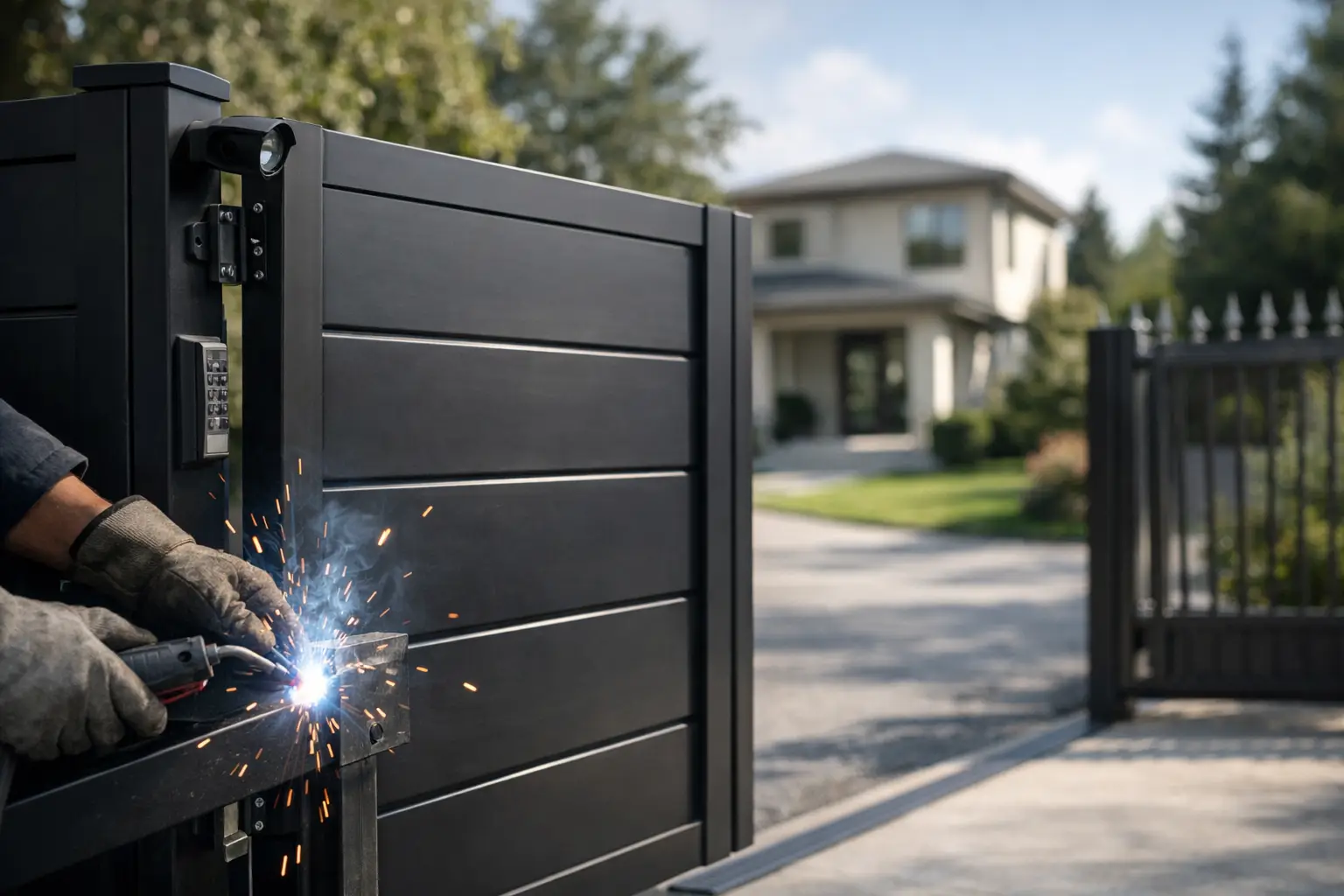
A gate is often the busiest part of a fence line. It is opened by family members, delivery drivers, employees, tenants, service crews, and visitors. When it sags, drags, will not latch, or cannot support an operator, the entire perimeter system becomes less useful. Custom gate fabrication gives property owners a gate built around the actual opening, traffic pattern, fence material, and security requirement instead of forcing a standard-size product into a job where it does not fit.
For homeowners, that may mean a clean, dependable driveway gate that matches ornamental or wood fencing. For a commercial yard, it may mean a cantilever slide gate designed for frequent vehicle traffic and access control. The right answer depends on the site, but the goal is the same: controlled entry that works reliably day after day.
Why Custom Gate Fabrication Matters
A gate has to do more than fill an opening. It must carry its own weight, withstand wind, align with the fence, clear the driveway or roadway, and operate safely. If it is automated, it also has to work with the selected operator, safety devices, controls, and power source.
Off-the-shelf gates can work well for simple, light-duty applications. They are not always the best choice for a wide driveway, an uneven grade, a heavy ornamental frame, a commercial entrance, or a property where vehicles need consistent access. Custom fabrication allows the gate frame, posts, hinges, rollers, track, bracing, latch hardware, and infill to be selected as a complete system.
That planning prevents common problems. A gate that is too light for its width can twist or sag. A swing gate can be a poor fit where a driveway slopes upward or where there is limited room behind the gate. A slide gate may need a longer run of clear fence line than the property provides. Addressing those details before installation costs less than correcting a poorly matched gate later.
Start With the Way the Property Is Used
The best gate design begins with practical questions, not just appearance. Who enters the property, how often do they enter, and what kind of vehicles need clearance? A homeowner may want secure access without getting out of the vehicle in rain or after dark. A contractor yard may need room for trailers, delivery trucks, and employee traffic. An industrial site may require controlled entry around the clock.
Traffic frequency matters. A gate opened a few times a day has different demands than one used by dozens of employees, residents, or service vehicles. Commercial properties often benefit from heavier frames, larger posts, commercial-grade hardware, and operators rated for the expected number of cycles. Choosing a light residential operator for a busy business entrance can lead to unnecessary downtime and repair costs.
Security expectations should be clear from the beginning as well. Some properties need a visible boundary and a dependable latch. Others need keypad entry, remote controls, card readers, telephone entry systems, loops, safety sensors, or integration with existing access-control equipment. The gate itself and the entry system should be planned together rather than treated as separate projects.
Choosing the Right Gate Style
There is no single gate style that suits every property. Site conditions usually determine whether a swing, sliding, cantilever, or specialty gate is the better long-term choice.
Swing Gates
Swing gates are a familiar choice for residential driveways and lower-traffic entrances. They can be built as a single leaf or a double-drive gate and finished to complement wood, ornamental, vinyl, chain link, or composite fencing. They work best when there is enough level space for the gate to swing freely without blocking vehicles or crossing a steep grade.
A properly fabricated swing gate needs strong hinge posts and adequate bracing. Wider gates place more load on posts and hinges, especially during high winds. Automation can add convenience, but it also requires thoughtful placement of the operator and safety equipment.
Sliding and Cantilever Gates
Sliding gates are often a practical option for commercial, industrial, and high-traffic sites. They move parallel to the fence line, so they do not require clear swing space inside or outside the entrance. A traditional slide gate runs on wheels and track. A cantilever gate is supported above the ground and typically avoids the track across the driveway.
Cantilever systems are especially useful where gravel, debris, standing water, ice, or frequent truck traffic could interfere with a ground track. They do require additional room along the fence line because the counterbalance section extends beyond the opening. That trade-off is worth considering early, particularly on tight sites.
Pivot Lift and Specialty Gates
Some entrances call for a more specialized solution. Pivot lift gates can provide fast operation and useful clearance where conventional swinging or sliding designs are not ideal. Water gates, livestock access points, temporary construction entrances, and unusual terrain may also require a custom approach.
The value of fabrication is the ability to build for the actual conditions instead of making the property conform to a standard gate. That is especially relevant for developments, industrial yards, agricultural land, utility areas, and facilities with nonstandard openings.
Materials Should Match the Fence and the Job
A gate should look appropriate with the surrounding fence, but appearance is only one part of the decision. Material selection affects weight, maintenance, privacy, security, and the hardware needed to support the gate.
Chain link gates are a practical choice for many commercial and utility applications. They offer visibility, durability, and compatibility with access-control systems. Ornamental steel or aluminum gates provide a more finished look for homes, offices, neighborhoods, and entry features while still delivering a defined security boundary. Wood and composite gates can complement privacy fencing, though their added weight and exposure to weather must be considered in the frame and hinge design.
Vinyl gates can provide a clean residential appearance, but their internal reinforcement and hardware need to be appropriate for the opening size and use. For every material, the frame and support structure matter as much as the visible finish. A well-built frame is what keeps the gate operating correctly over time.
Automation Requires More Than an Operator
An automatic gate is not simply a manual gate with a motor attached. It is a coordinated system that needs the correct gate type, operator capacity, safety features, controls, and installation layout.
A dependable automated entry may include keypad access, remote transmitters, exit loops, photo eyes, edge sensors, manual release hardware, and warning devices. The right combination depends on whether the entrance serves a home, apartment community, office, warehouse, construction site, or industrial facility. Local conditions such as available power, trenching needs, vehicle approach distance, and fire or emergency access also affect the final design.
Safety should never be treated as an add-on. Gates move heavy materials through areas used by people and vehicles. Proper sensors, placement, clearances, controls, and maintenance help reduce hazards and keep the system working as intended. Commercial operators and access equipment should be selected for the actual duty cycle, not just the lowest initial price.
Build for Serviceability, Not Just Installation Day
Every gate system needs occasional attention. Hinges may need adjustment, rollers may wear, latches may need alignment, and operators need periodic service. Selecting quality hardware and leaving reasonable access for maintenance can make a significant difference over the life of the installation.
Property owners should also consider who will use the gate when power is out or equipment needs service. A manual release, clearly understood operating procedure, and accessible service points are practical details that are easy to overlook until they are needed. For commercial properties, a gate that cannot be opened quickly can interrupt deliveries, employee access, and daily operations.
Ace Fence Company Inc. approaches gate work with the broader perimeter in mind. The gate, fence, posts, access controls, and site conditions all need to work together. That experience is valuable whether the job involves a straightforward residential entry or a more demanding commercial security system.
Plan the Gate Before the Fence Is Finished
Gate locations should be established early in the project. Moving a driveway entrance, increasing the opening width, adding operator pads, or extending a cantilever run after the fence is installed can add cost and delay. A site review before construction helps identify grade changes, drainage concerns, utilities, turning space, post requirements, and the best path for electrical service.
Bring practical information to the estimate discussion: the opening width, the largest vehicle expected to use the entrance, desired access method, fencing material, and whether the gate will be manual or automatic. Photos and a simple description of daily use can also help shape a more accurate recommendation.
A well-planned gate should feel straightforward to use, even when the system behind it is complex. The right fabrication and installation choices give your property a dependable entrance that supports security, traffic flow, and the way you use the space.
Ready to Talk to a Real Fence Professional?
Free on-site estimates from the River Valley's most trusted fence company since 1963.