Custom Driveway Gate Installation That Lasts
Custom driveway gate installation starts with the right layout, materials, and operator. Plan a secure, durable entry built for Arkansas weather daily.
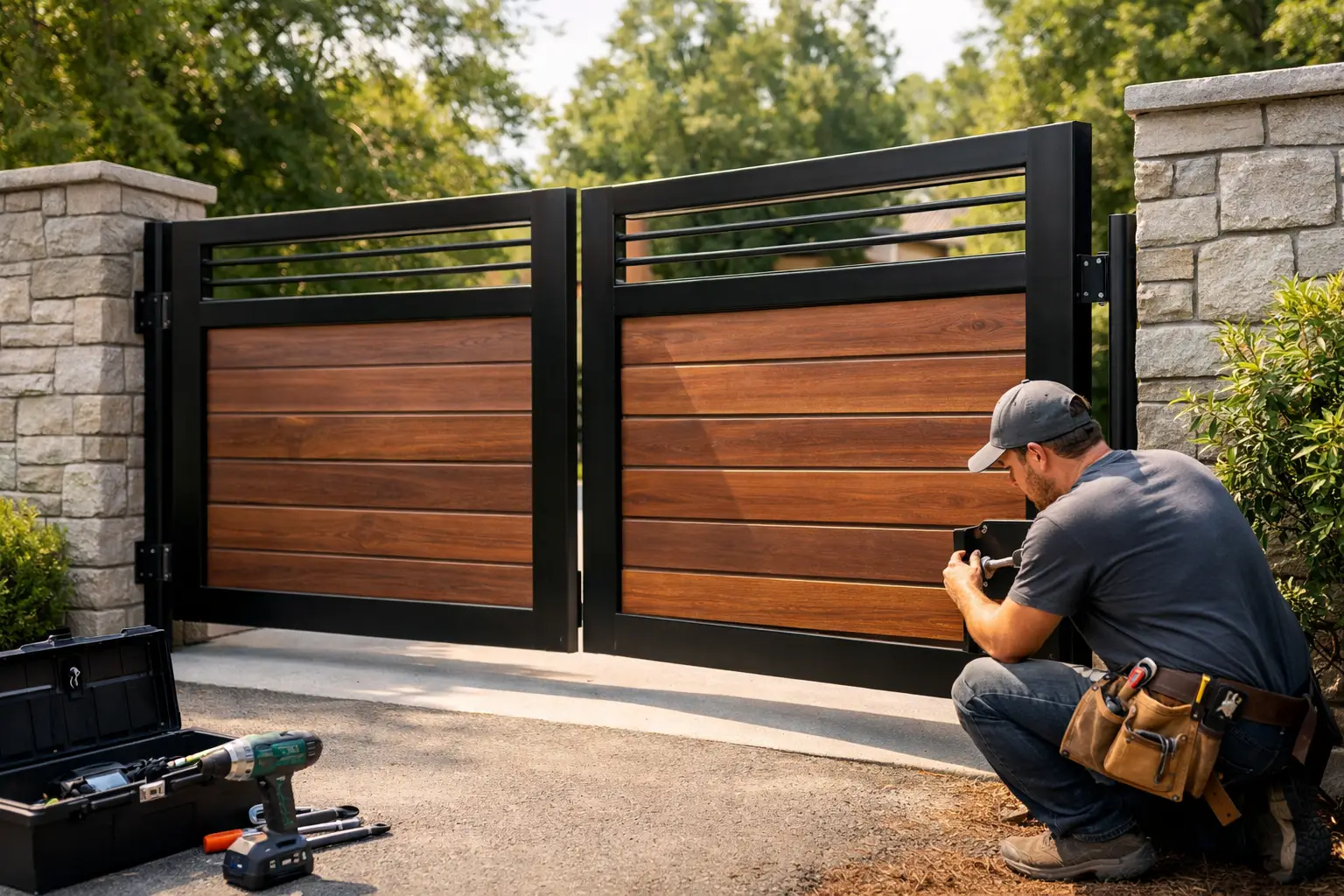
A driveway gate has to do more than look good at the entrance to a property. It has to open reliably, fit the driveway, handle daily traffic, and provide the level of security the property actually needs. A custom driveway gate installation gives homeowners and business owners a system designed around those real conditions instead of forcing a standard gate into a space where it does not belong.
For properties across Fort Smith, Northwest Arkansas, and the River Valley, the right answer may be a decorative swing gate at a residence, a heavy-duty slide gate at a shop yard, or an automated access point for a commercial facility. The best choice depends on the driveway layout, available space, grade, traffic patterns, and how the gate will be used over time.
Start With How the Gate Will Be Used
The first question is not usually, “What style gate do I want?” It is, “What needs to pass through this opening, and how often?” A residential driveway gate that opens a few times each day has different demands than an entry point serving delivery trucks, employees, customers, or construction equipment.
Homeowners may want privacy, curb appeal, and a safer boundary for children or pets. A business owner may need to limit after-hours entry, protect equipment, or control access to an industrial yard. Developers and property managers may need a dependable gate system that can stand up to frequent operation without becoming a daily maintenance issue.
Traffic matters because it affects gate size, operator selection, hardware, and access-control options. A gate that is too narrow can make turning difficult for trailers, service vehicles, and emergency responders. A gate that opens too slowly can create backups near a public road. Planning for the property’s actual use avoids expensive changes after installation.
Choosing the Right Custom Driveway Gate Installation
Most driveway gates fall into a few main operating styles. Each has practical advantages, and each requires the right site conditions.
A swing gate opens inward or outward on hinges. It is often a strong choice for homes with level approaches and enough room for the gate leaves to move freely. Single swing gates work well for smaller openings, while double swing gates can cover wider driveways. They can be built in wood, ornamental steel, aluminum, vinyl, or a combination of materials to match the surrounding fence and the look of the property.
Sliding gates move parallel to the fence line instead of swinging into the driveway. They are useful where a sloped driveway, limited clearance, or nearby parking makes a swing gate impractical. A track slide gate can be a workable option on stable, level surfaces, while a cantilever gate carries the opening without a ground track. Cantilever systems are often preferred for commercial and industrial properties because there is no track across the driveway to collect gravel, mud, or debris.
For specialty access needs, pivot lift gates and other commercial-grade gate systems may be the better fit. These systems are designed for situations where security, traffic flow, clearance, or challenging site conditions rule out a standard gate design.
A contractor should evaluate the full opening rather than only the driveway width. The needed gate opening, space for travel or swing, fence transitions, post locations, drainage, and access for maintenance all belong in the plan.
Material Should Match the Job
The material affects appearance, weight, maintenance, and long-term performance. Ornamental steel or aluminum gates are popular for properties that need a clean, open appearance with lasting strength. They work well alongside ornamental fencing and can be fabricated with custom details.
Wood can provide privacy and a traditional look, especially when paired with a wood fence. It does require careful construction and ongoing attention because wood gates are exposed to moisture, sun, and seasonal movement. Larger wood gates also need properly sized posts, hinges, and support framing to prevent sagging.
Vinyl and composite materials can be good choices where low maintenance and privacy are priorities. Chain link gates remain a practical solution for many commercial, agricultural, industrial, and utility applications. They are economical, adaptable, and available with privacy screening or security upgrades when needed.
The right material is not always the most decorative option. A gate at the entrance to a commercial equipment yard may need to prioritize strength, visibility, and access control. A gate at a residence may balance security with the architecture of the home and the style of the fence.
Automation Changes the Way a Gate Performs
An automatic gate operator adds convenience, but it also adds planning requirements. The operator must be matched to the gate’s weight, length, operating style, and expected number of cycles per day. An undersized operator may work at first but wear prematurely under regular use.
Access can be managed with remote controls, keypads, telephone entry systems, card or fob readers, vehicle detection loops, and other controls. The best setup depends on who needs entry and how much control the owner wants. A homeowner may need remotes and a keypad for family and trusted visitors. A business may need different credentials for employees, vendors, and management.
Power is another early consideration. Some operators require nearby electrical service, while solar-powered systems can be useful where trenching power is difficult or costly. Solar can be a practical option, but performance depends on the site’s sun exposure, the operator’s use level, and the system’s battery capacity. Heavy daily traffic may call for conventional power rather than relying solely on solar.
Safety devices are not optional details. Automated gates need properly installed photo eyes, entrapment protection, controls, warning devices, and emergency release provisions. These components help the gate respond appropriately when a vehicle, person, or object is in its path. A professional installation should also account for safe placement of controls so users are not stopping in an unsafe location while entering the property.
Site Conditions Can Make or Break the Project
A well-built gate cannot perform as intended if the site has not been evaluated correctly. Driveway slope is one of the most common challenges. A swing gate may scrape the drive or leave too much gap below the gate if the grade changes across the opening. A sliding or cantilever system may solve that problem, but it needs adequate room along the fence line.
Soil conditions also matter. Gate posts carry more force than standard fence posts, especially with wide, heavy gates or automated systems. Proper post depth, concrete footings, bracing, and framing help prevent movement that can throw the gate out of alignment. In Arkansas, rain, drainage, and soil movement should be considered before excavation begins.
The gate should be placed far enough inside the property to allow a vehicle to pull off the road before stopping. This is especially important on busy roads, narrow drives, and commercial entrances. For commercial properties, the approach may also need enough room for trucks to turn, wait, and clear the entry without blocking traffic.
Utilities should be identified before digging, particularly when power, communication wiring, irrigation, or existing drainage runs near the entrance. Planning those details upfront is less expensive than repairing a line after work has started.
Installation Is More Than Setting Posts and Hanging a Gate
Custom fabrication and installation require accurate measurements. The opening must account for the finished grade, hardware clearances, operator mounting, latch positions, and the gate’s movement. The gate and the fence need to work together as one system, not as separate pieces installed at different times.
For automated gates, the work also includes mounting the operator, routing power or solar components, installing access controls, connecting safety devices, and testing the system through its full cycle. Gates should open, close, stop, reverse when required, and latch or secure correctly. The system should be adjusted after installation so it operates consistently rather than straining against misaligned hardware.
Ace Fence Company Inc. brings together fence installation, custom gate fabrication, automated operators, and commercial access solutions for projects that require more than a basic entrance gate. That broader capability matters when the project includes fencing, access controls, specialty gate designs, or a combination of residential and security-focused needs.
Plan for Maintenance Before Problems Start
Even a quality gate needs periodic attention. Hinges, rollers, chains, latches, and operator components should be inspected for wear, looseness, and alignment. Vegetation, gravel, mud, and debris should be kept away from moving parts and photo eyes. Property owners should also watch for signs that a gate is dragging, moving more slowly than usual, making unusual noise, or failing to close consistently.
Weather can affect both manual and automated systems. Wind places added stress on solid privacy gates. Heavy rain can expose drainage problems around tracks and posts. Freezing conditions, though less frequent in this part of Arkansas, can interfere with moving components or ground tracks. Regular service is usually simpler and less costly than waiting for a gate to fail when access is needed.
A custom gate should fit the way the property operates on an ordinary day, not just make a strong first impression from the road. When the layout, materials, operator, and safety equipment are planned together, the result is an entrance that provides dependable access and protection for years to come.
Ready to Talk to a Real Fence Professional?
Free on-site estimates from the River Valley's most trusted fence company since 1963.