Construction Site Fencing That Keeps Jobs Moving
Construction site fencing protects crews, assets, and schedules. Learn how to choose temporary perimeter fencing, gates, and access controls for jobsite.
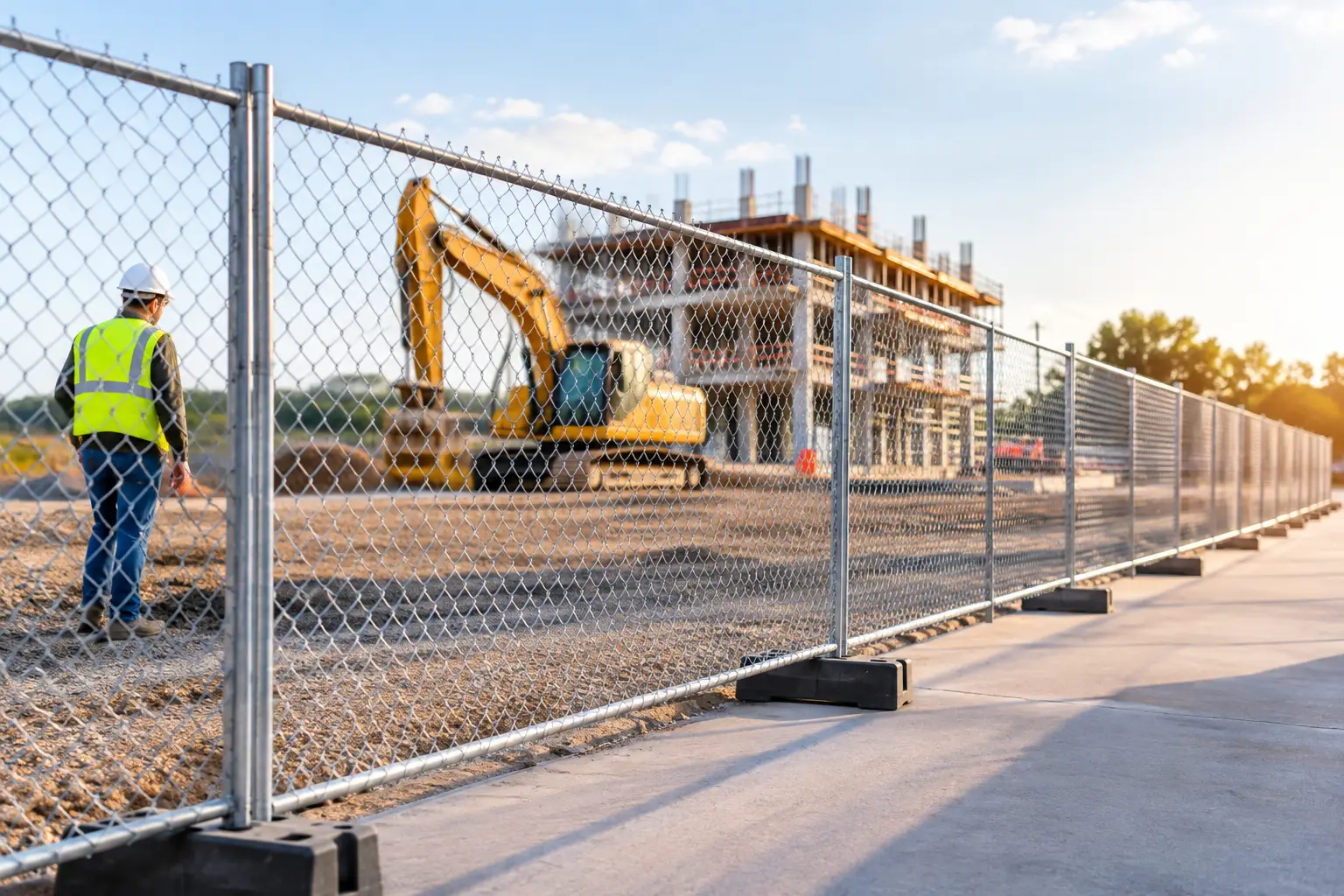
A jobsite can change quickly. One week it is an open lot with stored materials; the next, it has excavation, equipment, subcontractors, delivery traffic, and valuable tools on site. Construction site fencing creates a clear boundary around that activity. It helps control who enters, protects equipment and materials after hours, and gives the project a more organized, professional appearance from day one.
For contractors, developers, property managers, and business owners across Fort Smith, Northwest Arkansas, and the River Valley, the right fence is not simply a temporary barrier. It is part of the site plan. The best approach depends on the project duration, site layout, public exposure, traffic patterns, security risks, and the type of access needed throughout construction.
Start With the Jobsite, Not the Fence
Before choosing a fence style, look at how the site will operate. A small renovation project with limited equipment has different needs than a multi-phase commercial build, industrial expansion, utility project, or new residential development.
The fence needs to establish a visible perimeter without getting in the way of work. That means accounting for equipment staging areas, material deliveries, employee parking, emergency access, utility connections, and future phases of construction. A fence installed without a clear access plan can create delays when trucks cannot make a turn, crews have to move panels repeatedly, or a gate is too narrow for the equipment that must pass through it.
Site conditions matter as well. Uneven ground, drainage paths, pavement, soft soil, and close property lines all affect how temporary fencing should be installed. In some situations, a driven-post system may provide the stability needed for a longer project. In others, freestanding temporary panels may be the practical choice because they can be moved as the work changes or because the surface cannot be disturbed.
Choosing Construction Site Fencing for the Work Ahead
Chain link is often the most practical material for construction site fencing. It is durable, visible, and suited to a wide range of project sizes. Temporary chain link panels can be installed quickly and reconfigured as needed, while driven-post chain link fencing offers a more fixed perimeter for projects expected to last months or longer.
The right choice usually comes down to duration and security. Freestanding panels work well when the site layout will change regularly or when a short-term enclosure is needed. They can be removed and reset as phases are completed. A more permanent temporary installation can make sense for a long project, a remote site, or a location where theft and unauthorized entry are greater concerns.
Privacy screening can also be worth considering. Screen fabric attached to chain link helps limit visibility into the site, reduce wind-blown debris, and improve the appearance of a project near homes, businesses, or busy roads. It is not a substitute for a properly planned security system, but it can make tools, materials, and equipment less visible from the street.
Fence height is another practical decision. A low barrier may define a work area, but it does little to discourage entry. Taller fencing provides a stronger visual and physical boundary, particularly around sites with stored materials or public foot traffic nearby. Local requirements, project specifications, and the level of risk should guide the final height and layout.
Gates Are Where a Fence Either Works or Creates Problems
A construction fence is only as functional as its entry points. Gates need to handle the daily rhythm of the jobsite: workers arriving in the morning, delivery trucks entering during the day, equipment moving between work zones, and the site being secured at night.
A pedestrian gate may be enough for a small project, but larger sites usually need vehicle access. Swing gates are a common solution where there is room for the gate leaves to open safely. Sliding and cantilever gates can be a better fit when a wide opening is needed and the available space does not allow for swinging gates. For projects with high traffic or tighter security requirements, a gate operator and access-control system may be justified.
Do not size a gate around the smallest vehicle expected on site. Consider concrete trucks, material trailers, forklifts, boom lifts, and service vehicles. A gate that is adequate for a pickup truck can become a daily bottleneck when larger equipment arrives. It is also smart to plan a separate pedestrian entrance when possible. Keeping foot traffic away from active vehicle gates can improve site control and reduce unnecessary gate movement.
Access Control Should Match the Site’s Risk
Not every project needs automated access, but every project needs a clear method for controlling entry. A simple lockable gate may be sufficient for a short-duration site with limited traffic. A larger commercial or industrial jobsite may require coded access, keypads, card readers, remote controls, or scheduled gate operation.
The goal is not to make entry difficult for authorized crews. The goal is to make it clear who is authorized and when. Access control also helps prevent a common problem on active sites: gates left open after a delivery or after-hours work. When equipment, materials, or unfinished structures are exposed, a single unsecured gate can undo the value of the rest of the perimeter.
Plan for Safety, Public Exposure, and Liability
Construction fencing helps separate the public from hazards that may not be obvious from the street. Open trenches, stored materials, uneven terrain, demolition debris, machinery, and partially completed structures all create risks. A well-defined perimeter tells visitors, neighbors, and passersby where the construction zone begins.
That boundary should remain secure as the project develops. Panels that have been shifted by wind, damaged by equipment, or loosened by repeated gate use need prompt attention. Temporary fencing is not a set-it-and-forget-it item. A quick check after storms, major deliveries, excavation work, or schedule changes can prevent gaps that invite trespassing or create safety concerns.
Clear signage also supports the fence plan. Posted notices can identify authorized entrances, direct deliveries, warn against trespassing, and communicate required personal protective equipment. Signs do not replace physical security, but they make the site easier to navigate and help establish that entry is controlled.
Avoid Common Temporary Fence Mistakes
The most common issue is treating fencing as an item to handle after everything else is underway. By that point, equipment may already be on site, material deliveries may be scheduled, and access paths may be harder to establish. Planning the perimeter early gives the project team time to coordinate gate locations, staging areas, and any required access controls.
Another mistake is choosing the lowest-cost option without considering the full project timeline. A lightweight setup may be appropriate for a brief, low-risk job. It may not hold up as well on a long project with frequent traffic, exposed weather conditions, or a high volume of valuable materials. The right fence should fit the actual conditions, not just the first day of the project.
It is also easy to overlook the need for adjustments. Construction sites are active environments. A new building phase, a change in traffic flow, or a shift in material storage may require panels to move or gates to be repositioned. Working with a fencing contractor that can respond to those changes can save time and avoid improvised fixes.
Work With a Contractor Who Understands Perimeter Systems
Temporary fencing may look straightforward, but the details affect security, access, and daily productivity. A capable contractor can help evaluate fence type, height, bracing, gate width, access needs, screening, and the conditions of the ground where the system will be installed.
Ace Fence Company Inc. brings long-standing local installation experience to temporary fencing and perimeter projects throughout the River Valley and Northwest Arkansas. For sites that need more than basic panels, the same planning can extend to custom gates, operators, and commercial-grade access solutions.
The best time to address the perimeter is before the first delivery arrives. A clear fence line and properly planned gates give crews room to work, help protect the investment on site, and keep the project moving with fewer avoidable interruptions.
Ready to Talk to a Real Fence Professional?
Free on-site estimates from the River Valley's most trusted fence company since 1963.