
Commercial Property Fencing Guide
Our commercial property fencing guide covers materials, security, gates, layout, and budgeting for Arkansas sites and business needs.
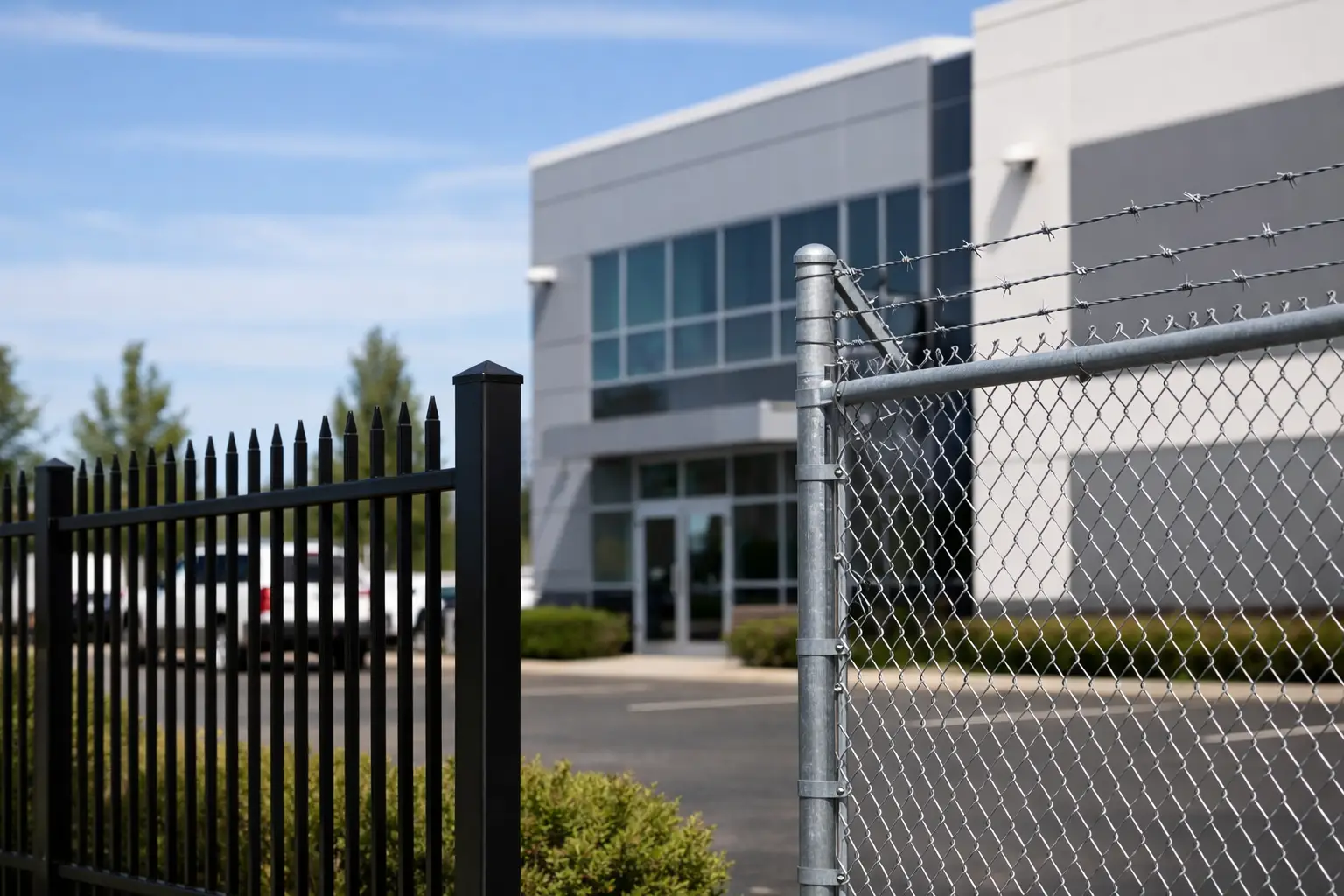
A fence around a commercial site has to do more than mark a line on a survey. It has to control access, hold up to daily use, fit the property’s purpose, and make sense for the budget. That is why a solid commercial property fencing guide starts with the job the fence needs to do, not just the material you prefer.
For some properties, the main goal is basic enclosure. For others, it is theft deterrence, traffic control, code compliance, or a cleaner appearance along a public-facing frontage. A warehouse, apartment complex, utility site, school, office park, and retail center may all need fencing, but they should not all be fenced the same way.
What a commercial property fencing guide should help you decide
The first decision is not chain link versus ornamental or wood versus vinyl. It is function. If you are trying to prevent after-hours access, protect inventory, direct vehicles to one entry point, or separate public areas from restricted areas, the fence and gate system need to be planned together.
That planning stage is where many property owners either save money or create future problems. A fence that is too light-duty for the site can mean repairs, sagging gates, and repeated service calls. A fence that is overbuilt for the real need can push the budget higher than necessary. The right answer usually sits in the middle - strong enough for the site, practical to maintain, and matched to how the property operates every day.
Start with the property type and risk level
A commercial fence should fit the site, the traffic, and the exposure. A small office building usually has different needs than a contractor yard or manufacturing facility. The more valuable the equipment, inventory, or vehicles inside the perimeter, the more attention should go to fence height, climb resistance, gate control, and visibility.
Properties with frequent deliveries need a layout that supports truck movement without turning the gate area into a bottleneck. Multi-tenant properties often need to separate common access from private service areas. Industrial and utility sites may need a stronger focus on perimeter security and controlled entry than on appearance alone.
Local conditions matter too. In Arkansas, weather, soil conditions, drainage, and long-term wear can affect what performs well over time. A fence that looks fine on paper still needs proper post setting, spacing, and installation details to hold up in the field.
Choosing the right fence material
Chain link remains one of the most common commercial options because it is practical, cost-effective, and adaptable. It works well for warehouses, equipment yards, schools, back-lot security, and general perimeter enclosure. It also pairs well with commercial gate systems, including swing, slide, and cantilever gates. If visibility matters for security patrols or camera coverage, chain link is often a strong fit.
Ornamental metal fencing is a better choice when curb appeal and a more finished appearance matter. Office properties, community entrances, churches, and some retail sites often choose ornamental fencing because it offers a cleaner look without giving up strength. The trade-off is cost. It usually comes at a higher price point than chain link, especially when paired with custom gate work.
Wood fencing can work for commercial applications where privacy is the main goal, such as screening dumpsters, service areas, or apartment property boundaries. But wood is not always the best fit for every commercial perimeter. It can require more upkeep over time, and in high-security settings it may not offer the visibility or durability some owners need.
Vinyl and composite can be useful for select commercial settings where appearance and low maintenance are priorities. These materials are often considered for properties that want a clean finished look with less ongoing painting or staining. Still, they are not the default answer for every site. Heavy-use commercial environments may call for steel, chain link, or specialty systems instead.
Gates are not an add-on
One of the most common mistakes in commercial fencing is treating the gates like an afterthought. In practice, the gate system often determines how well the whole perimeter works. If employees, tenants, vendors, or service vehicles cannot move efficiently through the property, the fence becomes a problem instead of a solution.
Swing gates can work well where there is room for the gate leaf to open and close without interfering with traffic. Sliding and cantilever gates are often better for tighter spaces or sites with heavier vehicle use. Cantilever systems are especially useful where ground conditions or frequent movement make a tracked slide gate less practical.
If the site needs a higher level of access control, gate operators, keypad entry, card readers, phone entry systems, and safety devices may need to be part of the design from the start. That affects power needs, layout, safety clearances, and the kind of hardware the gate requires. A fence contractor that understands both perimeter construction and access systems can help avoid conflicts between the fence line, the gate opening, and the day-to-day use of the property.
Layout matters as much as material
Even a high-quality fence can underperform if the layout is wrong. The fence line should work with the property’s traffic flow, drainage patterns, grade changes, and building access points. It should also account for future needs, not just what the site looks like today.
If a business expects fleet growth, trailer storage, or expansion of outdoor inventory, the fence should leave room for those changes. The same goes for emergency access. Some sites need wide gate openings or separate service entries to support fire lanes, large deliveries, or maintenance equipment.
This is where an on-site evaluation matters. Existing pavement, retaining walls, utility runs, and elevation changes can all affect installation methods and gate performance. A straightforward estimate over the phone rarely catches the issues that matter most on commercial work.
Security needs can change the recommendation
Not every commercial fence is a security fence, but every commercial property should think about security. A basic enclosure may be enough for one site, while another may need anti-climb features, taller fence heights, controlled entry points, and fewer vulnerable areas along the perimeter.
Visibility is part of that conversation. A solid privacy fence hides the inside of a site, which can be useful in some settings, but it also limits line of sight. In other cases, an open-style fence helps staff, cameras, and passersby see unusual activity. There is no single correct answer. It depends on whether privacy or visibility does more for the property.
Sites with valuable equipment, regulated access, or repeated after-hours traffic may also need specialty gates, reinforced hardware, or a more integrated access-control approach. That is one reason many commercial owners prefer working with a contractor that can handle both standard fence installation and more complex gate systems.
Budgeting for commercial fencing without cutting the wrong corners
Commercial owners usually want two things at once: a competitive price and a fence that lasts. Those goals can work together, but only if the estimate reflects the site’s real demands. The lowest bid is not always the lowest long-term cost.
Fence height, material, gauge, post size, coatings, gate type, access controls, site conditions, and demolition of old fencing all affect price. So does the installation environment. A flat open lot is very different from a developed site with utilities, pavement tie-ins, and traffic management concerns.
The better approach is to budget based on use and lifespan. If the fence is expected to handle daily gate cycles, vehicle traffic, or higher security demands, that should be built into the system from day one. Paying for the right posts, hardware, and gate design upfront often prevents service issues later.
Why contractor experience matters on commercial projects
Commercial fencing has more moving parts than most residential work. There may be site supervisors, property managers, tenants, delivery schedules, safety requirements, and access restrictions to work around. That takes coordination, not just installation labor.
It also takes range. Some projects need simple chain link perimeter fencing. Others need ornamental frontage, screened service areas, temporary fencing during construction, custom gate fabrication, handrails, or automated entry systems as part of one scope. A contractor with broader capability can usually solve more of the project without pushing you to juggle multiple vendors.
That is one reason property owners across Fort Smith, Northwest Arkansas, and the River Valley often look for a company with a long track record and real commercial experience. At Ace Fence Company Inc., that practical approach has shaped projects since 1963.
A better way to plan your next fence project
The best commercial fence is not the one with the most features. It is the one that fits the property, supports the way the site operates, and holds up under real use. That takes a clear look at access, security, appearance, maintenance, and cost before the first post goes in.
If you are planning a new perimeter, replacing outdated fencing, or adding controlled entry to an active property, start with the questions that affect long-term performance. A good fence should make the site easier to manage, not harder. That is usually where the right project begins.
Ready to Talk to a Real Fence Professional?
Free on-site estimates from the River Valley's most trusted fence company since 1963.