Commercial Chain Link Fence Installation
Commercial chain link fence installation for Arkansas sites with durable materials, secure gates, and practical planning for long-term performance.
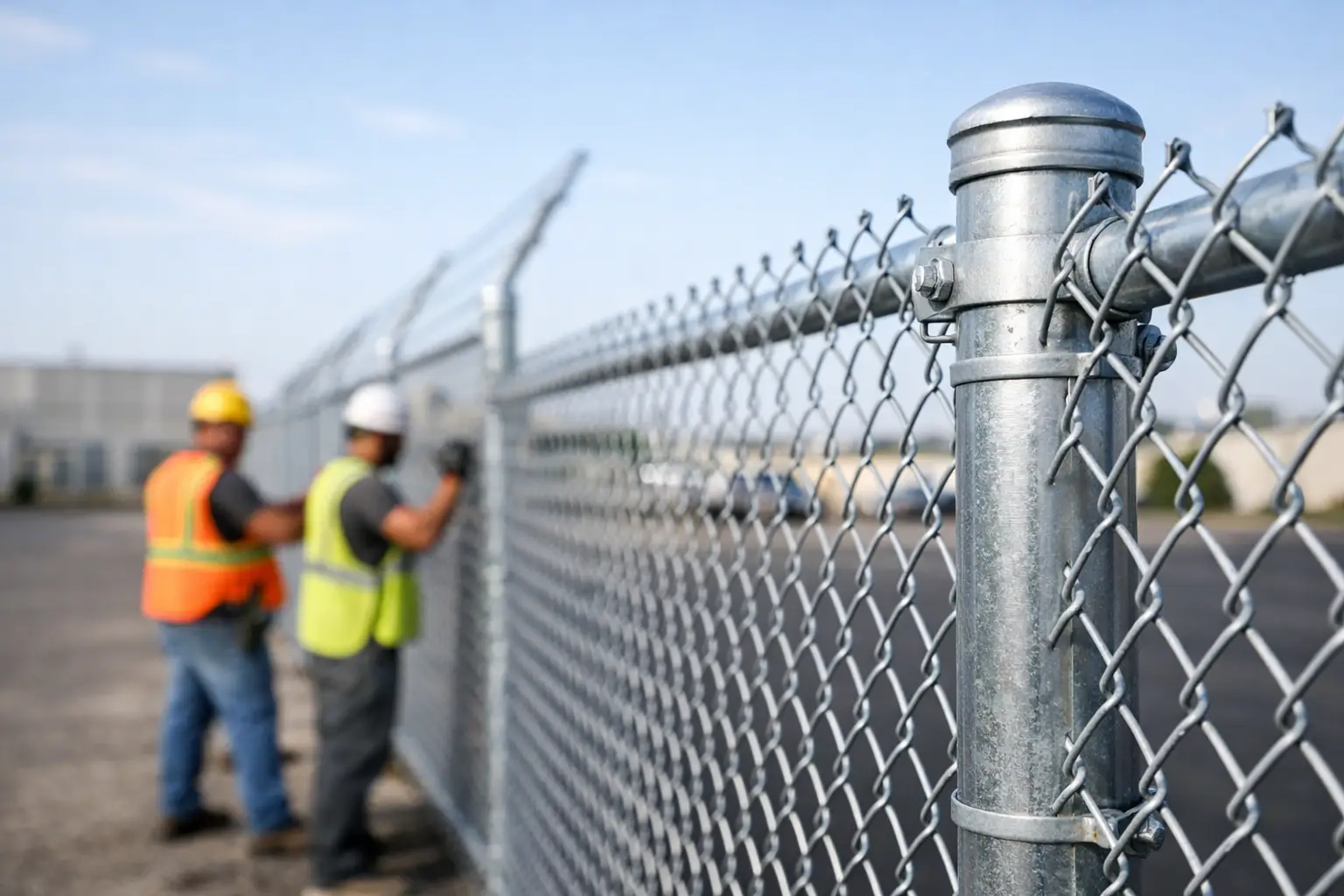
A commercial site usually tells you what kind of fence it needs before anyone says a word. A warehouse may need controlled access for trucks. A school may need clear boundaries and reliable gates. A contractor yard may need basic perimeter security now, with room to add screening or automation later. That is why commercial chain link fence installation is rarely just about putting up fence fabric. It is about matching the fence system to the way the property actually works.
Chain link remains one of the most practical choices for commercial and industrial properties because it covers a lot of ground efficiently, holds up well, and adapts to different security needs. It can be simple and functional, or it can be built into a more advanced perimeter with barbed wire, privacy screening, cantilever gates, access controls, and custom entry points. The right installation depends on the site, the traffic pattern, and the level of protection the property owner needs.
Why commercial chain link fence installation still makes sense
For many commercial properties, chain link is the most cost-effective way to secure a perimeter without sacrificing durability. It gives you visibility through the fence, which matters for monitoring activity and discouraging hiding spots along the boundary. It also works well across large runs, uneven terrain, and sites where access points need to be built around daily operations.
That said, chain link is not a one-size-fits-all product. A light commercial enclosure around a small business lot is different from a heavy-duty industrial perimeter around equipment storage or a utility site. Fence height, wire gauge, post size, footing depth, and gate type all need to be selected with the real use of the property in mind.
A dependable contractor will talk through those variables early. That planning helps avoid a common problem in commercial work - installing a fence that technically encloses the property but creates issues for deliveries, maintenance access, visibility, or future expansion.
What goes into a commercial chain link fence installation
A quality installation starts long before the first post hole is dug. Site conditions matter. Soil conditions matter. Grade changes matter. Local code requirements matter. If the property includes vehicle traffic, equipment access, or employee entry points, those details shape the layout from the beginning.
Layout and site planning
The fence line has to make sense for the property. That means identifying corners, utility conflicts, gate openings, and any places where the terrain may require stepping or contouring. On a commercial site, layout is also about function. You may need separate access for staff, service vehicles, and deliveries. You may need room for gate swing, or enough setback for a sliding gate to operate correctly.
This is also the stage where future needs should be considered. A property owner may only need a basic perimeter today, but if access control, additional gate automation, or screening may be added later, the system should be planned with that in mind.
Posts, framework, and fabric
The strength of a chain link fence comes from the full system, not just the mesh. Line posts, terminal posts, rails, fittings, and footings all work together. On a commercial project, undersizing any one of those components can shorten the life of the fence or create problems at gates and corners where the system takes more stress.
Commercial-grade installations typically call for heavier posts and stronger framework than residential chain link. Larger gates, higher fence runs, and increased wind load all put more demand on the structure. If privacy slats or windscreens are added, that changes the load even more. What works on a small enclosure may not hold up on a broad exposed site.
Gates and access points
For many properties, the gate system is the part that affects daily operations the most. A fence can be built well, but if the gates are too narrow, poorly placed, or not designed for the traffic they handle, the job will not perform the way it should.
Pedestrian gates, double swing gates, rolling gates, cantilever gates, and custom commercial gate systems each have their place. A small service area may do fine with a manual swing gate. A busy facility with frequent vehicle entry may be better served by a cantilever or automated gate system designed for repeated use. The right answer depends on clearance, traffic volume, security expectations, and how much maintenance the owner wants to manage over time.
Choosing the right fence specifications
When people ask about commercial chain link fence installation, they often start with height, and that is reasonable. Height matters. But it is only one part of the decision.
A lower fence may be enough for boundary definition and basic deterrence. A taller fence may be better for storage yards, industrial sites, or facilities with stronger security concerns. Wire gauge affects strength. Coating options affect lifespan and appearance. Framework sizing affects structural performance. Tension wire, top rail, and terminal bracing all play a role in how the fence handles use and weather.
Security additions may also be part of the specification. Barbed wire is common on certain commercial and industrial applications. Privacy slats or screening can reduce visibility into the site, though they also increase wind load and should be planned accordingly. If there is a chance the property will later need keypad entry, card readers, or automated operators, those components should be part of the early conversation rather than an afterthought.
Where installation quality shows up over time
A commercial fence often looks fine on day one even when corners were cut. The difference shows up later. Posts start leaning. Gates drag. Fabric loosens. Hardware wears out faster than expected. Those problems usually trace back to the installation process, not the idea of chain link itself.
Proper post setting is a major factor. Depth, spacing, concrete work, and alignment all matter. Gate posts in particular need to be set for the weight and movement they will handle. Commercial gates put ongoing stress on hinge posts, rollers, and latch assemblies. If those supports are not built correctly, repairs start early.
Tensioning is another detail that matters more than many property owners realize. Fabric that is stretched and secured correctly performs better and looks better. The same goes for clean terminations, proper bracing, and hardware that fits the duty level of the job.
An experienced contractor also knows when the site calls for more than a standard approach. Some properties need custom fabrication. Some need specialty gates. Some need a fence and access-control system that work together from the start. That is where working with a company that understands both perimeter fencing and commercial gate systems can save time and prevent rework later.
It depends on the site, not just the budget
Budget matters on every project, but the cheapest option is not always the most economical over the life of the fence. A lighter system may reduce upfront cost, but if it does not fit the use of the property, it can create maintenance issues, security gaps, or the need for early replacement.
On the other hand, not every site needs a high-security build. Some commercial properties simply need a durable, straightforward enclosure with a few well-placed gates and dependable materials. Others need stronger perimeter control, custom access points, or automation to support daily operations. The right scope depends on what the site is protecting and how the space is used every day.
That practical approach is especially important for owners and managers balancing multiple priorities at once. They are not buying fence as a standalone product. They are solving for liability, security, traffic flow, maintenance, and long-term property use.
Working with a local contractor matters
Commercial jobs move better when the contractor understands local conditions, local expectations, and the kinds of properties common across Arkansas. Soil, grade, weather exposure, and site use all shape the installation. So does communication. Property owners and managers need clear timelines, straightforward estimates, and a contractor who can address both standard fencing and more complex gate needs when a project calls for it.
That is one reason many businesses look for an established local company rather than a crew that only handles basic fence runs. Ace Fence Company Inc. has been serving Fort Smith, Northwest Arkansas, and the River Valley since 1963, and that kind of experience matters when a project includes commercial fencing, custom gates, or security-focused access solutions that have to work in the real world.
Planning your next commercial chain link fence installation
If you are planning a new perimeter, replacing failing fence, or expanding an existing commercial site, the best place to start is with the actual use of the property. Think about where people enter, where vehicles move, what needs to stay secure, and whether the site may need added access control later. Those answers will shape the fence more than any catalog description ever will.
A good commercial fence should do its job every day without getting in the way of yours. When the layout is thought through, the materials fit the site, and the installation is done correctly, chain link is still one of the most dependable perimeter solutions you can put around a commercial property. If you are weighing options, start with the practical questions first. The right system usually becomes clear from there.
Ready to Talk to a Real Fence Professional?
Free on-site estimates from the River Valley's most trusted fence company since 1963.