Choosing Security Gate Systems That Fit
Learn how security gate systems work, which types fit residential or commercial sites, and what to consider before installation.
A gate that looks good on paper can turn into a daily headache once it meets real traffic, real weather, and real security needs. That is why security gate systems should be chosen around how a property actually works, not just how the entrance looks from the road.
For some owners, the main goal is keeping unauthorized vehicles out. For others, it is controlling employee access, protecting equipment, or adding convenience at a busy residential entrance. The right system depends on traffic patterns, site layout, level ground clearance, available run space, and whether the gate needs to work with keypads, card readers, remotes, or phone-based entry.
What security gate systems are meant to do
At the most basic level, security gate systems create controlled access at an entry point. That sounds simple, but there is a big difference between a gate that closes off a driveway and one that supports day-to-day security for a home, business, apartment property, industrial yard, or institutional site.
A well-planned system does more than swing or slide open. It should match the pace of the property, hold up under repeated use, and work with the kind of access control the site requires. On a residential property, that may mean reliable entry for family members and service vehicles without making the driveway harder to use. On a commercial site, it often means managing higher traffic volume, reducing unauthorized entry, and standing up to heavier cycles throughout the day.
That is where planning matters. The gate, operator, controls, and surrounding fence line all have to function together as one system.
Common types of security gate systems
Not every property can use every gate style. The best choice usually comes down to available space, grade conditions, and the kind of traffic moving through the opening.
Swing gates
Swing gates are a common option for residential properties and some light commercial applications. They can be single leaf or double leaf, and they work well when there is enough room for the gate to open inward or outward safely.
The trade-off is space. If the entrance slopes too much or the driveway does not allow the leaf to move freely, a swing gate may create problems. It can still be a strong and attractive choice when the site is level and the traffic demand is moderate.
Slide gates
Slide gates move horizontally along the fence line, which makes them useful where a swing gate would interfere with traffic or terrain. They are often used for commercial and industrial properties because they can secure wider openings and handle frequent use.
This design does require lateral space beside the opening. If there is no room for the gate to travel, another style may be a better fit.
Cantilever gates
Cantilever gates are a type of sliding gate that does not ride on a track across the driveway opening. Instead, the gate is supported by rollers on one side. This makes it a practical choice for sites where debris, mud, gravel, or uneven conditions would interfere with a ground track.
For many commercial yards and industrial properties, cantilever systems make sense because they stay functional in tougher conditions. The trade-off is that they require more counterbalance length than some owners expect, so space planning is critical.
Pivot lift gates and specialty systems
Some properties need something beyond a standard swing or slide design. A pivot lift gate or another specialty gate system may be the better answer when drainage, elevation, clearance, or traffic demands make conventional options less reliable.
These systems are usually chosen for specific site conditions rather than appearance alone. They can solve difficult access problems, but they also require experienced design and installation so the system performs as intended.
Matching the gate to the property
This is where many projects either go right or go wrong. A gate should fit the property first, then the budget, not the other way around.
For a homeowner, that may mean balancing privacy, curb appeal, and convenience. A decorative gate with automatic access can improve security, but it still has to open reliably, fit the driveway, and coordinate with the fencing around it. If the entrance is narrow or sloped, the most attractive option may not be the most practical one.
For a commercial or industrial property, the conversation usually gets more technical. Vehicle type matters. Delivery trucks, employee traffic, service access, and after-hours entry all affect the design. If a site has frequent traffic, a light-duty operator may wear out faster than expected. If the opening is wide or the gate is heavy, the hardware and operator have to be sized correctly from the start.
Properties with stricter security needs may also need more than one layer of control. A gate can limit access, but the fence line, operator, credentials, and safety devices all contribute to how secure the entrance really is.
Access control matters as much as the gate
A strong gate is only part of the system. The access control side determines who gets in, when they get in, and how easily the property owner can manage entry.
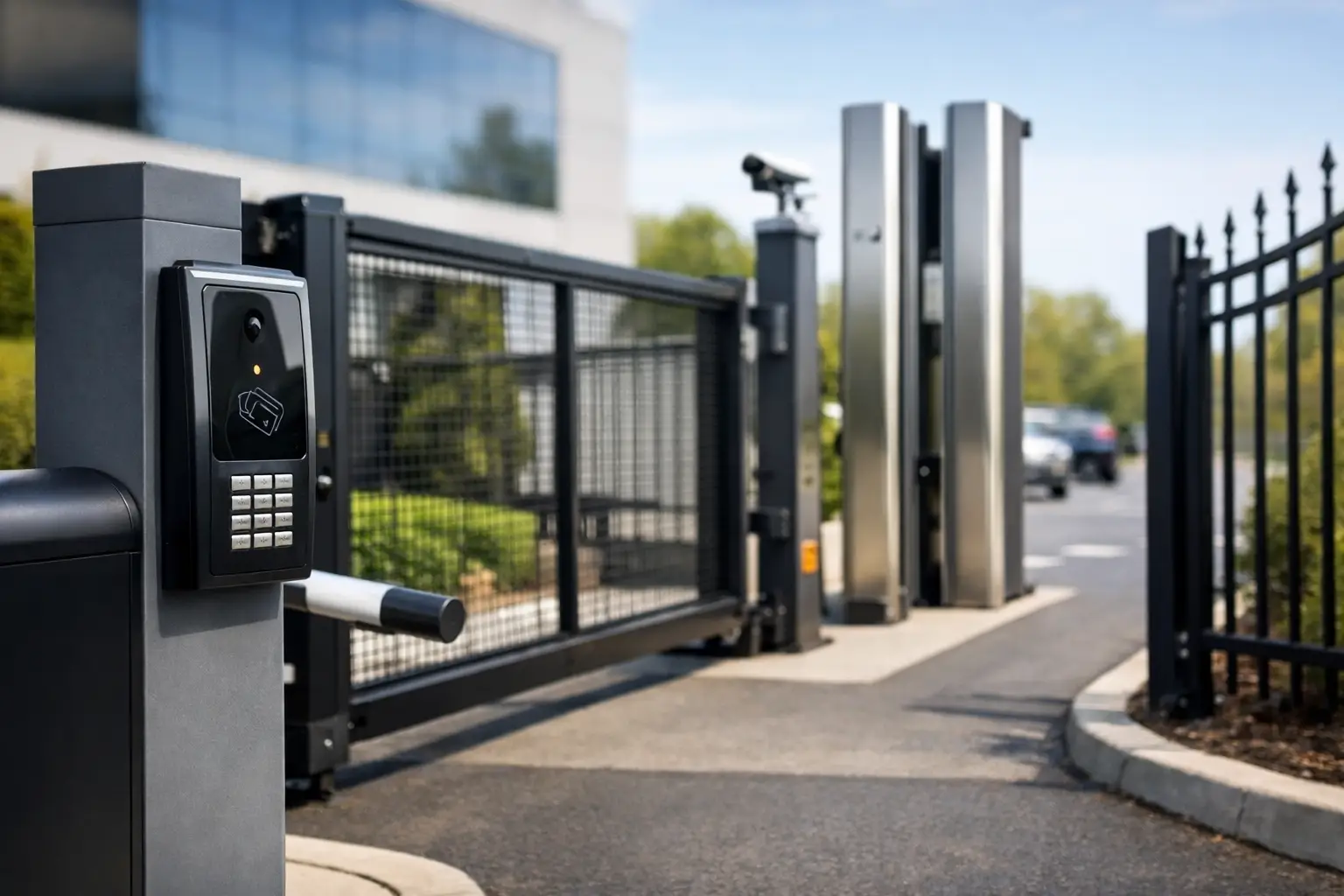
Some sites need basic keypad access. Others may need card readers, telephone entry, remotes, or integration with broader site controls. A private residence may want convenience for family members and guests. A business may need a better way to manage vendors, employees, and deliveries without leaving the entrance open.
There is no one-size-fits-all setup here. A simple keypad may be enough for one property and completely inadequate for another. The more users, traffic, and security concerns involved, the more important it becomes to build the right system from the beginning.
Safety, code, and long-term reliability
Security is the reason most people ask about a gate, but safety should never be treated as a side issue. Automated gates involve moving parts, operators, detection devices, and control systems that need to be installed correctly.
That is especially true on commercial sites, multifamily properties, schools, storage facilities, and locations with frequent vehicle activity. Proper installation helps reduce risk, supports reliable operation, and protects the investment over time.
Long-term reliability also comes down to material selection and build quality. A gate opening several times a day has different demands than one cycling dozens or hundreds of times. The frame, rollers, hinges, track system, operator, and controls all need to be chosen with actual use in mind. Going too light on the system may save money up front, but it often leads to service issues, premature wear, and frustration later.
Why custom planning makes a difference
Security gate systems are rarely plug-and-play on real properties. Existing fence lines, utility locations, driveway width, slope, drainage, and power access all affect what can be built and how well it will work.
That is one reason experienced perimeter contractors approach gates as part of the full site, not as a standalone product. The entrance has to connect with the fence, suit the traffic pattern, and support the owner's daily use. A gate that is technically functional but poorly matched to the site will not feel like a good solution for long.
In Arkansas, weather and ground conditions can also influence design decisions. Mud, runoff, grade changes, and wear from repeated use are real factors. A property owner may start by asking for an automatic gate, but the better question is usually what kind of gate system will stay dependable under that property's actual conditions.
That practical approach is where a contractor with broad fence and gate experience can add real value. A company such as Ace Fence Company Inc. can look at the whole perimeter, the material options, and the access demands together rather than treating the gate as an afterthought.
When to upgrade an older gate system
Sometimes the issue is not whether a property needs a gate. It is whether the current one is still doing its job. If a gate drags, sticks, lacks dependable access control, or no longer matches the property's traffic needs, it may be time to look at an upgrade.
Older systems often fall short in a few predictable ways. The operator may be underpowered. The gate style may not fit current traffic. The controls may be outdated or inconvenient. In some cases, the surrounding fence and entry layout may also need adjustment so the entire entrance works better.
An upgrade does not always mean starting from scratch, but it does mean taking an honest look at what is causing the problem. If the property has changed, the gate system may need to change with it.
The best security gate systems do not just block access. They make daily entry more controlled, more dependable, and better suited to the property they protect. If you are planning a new installation or replacing an older setup, it helps to start with the real conditions on site and build from there.
Ready to Talk to a Real Fence Professional?
Free on-site estimates from the River Valley's most trusted fence company since 1963.