Choosing Commercial Security Gate Systems
Learn how commercial security gate systems improve access control, safety, and site security for Arkansas businesses, facilities, and properties.
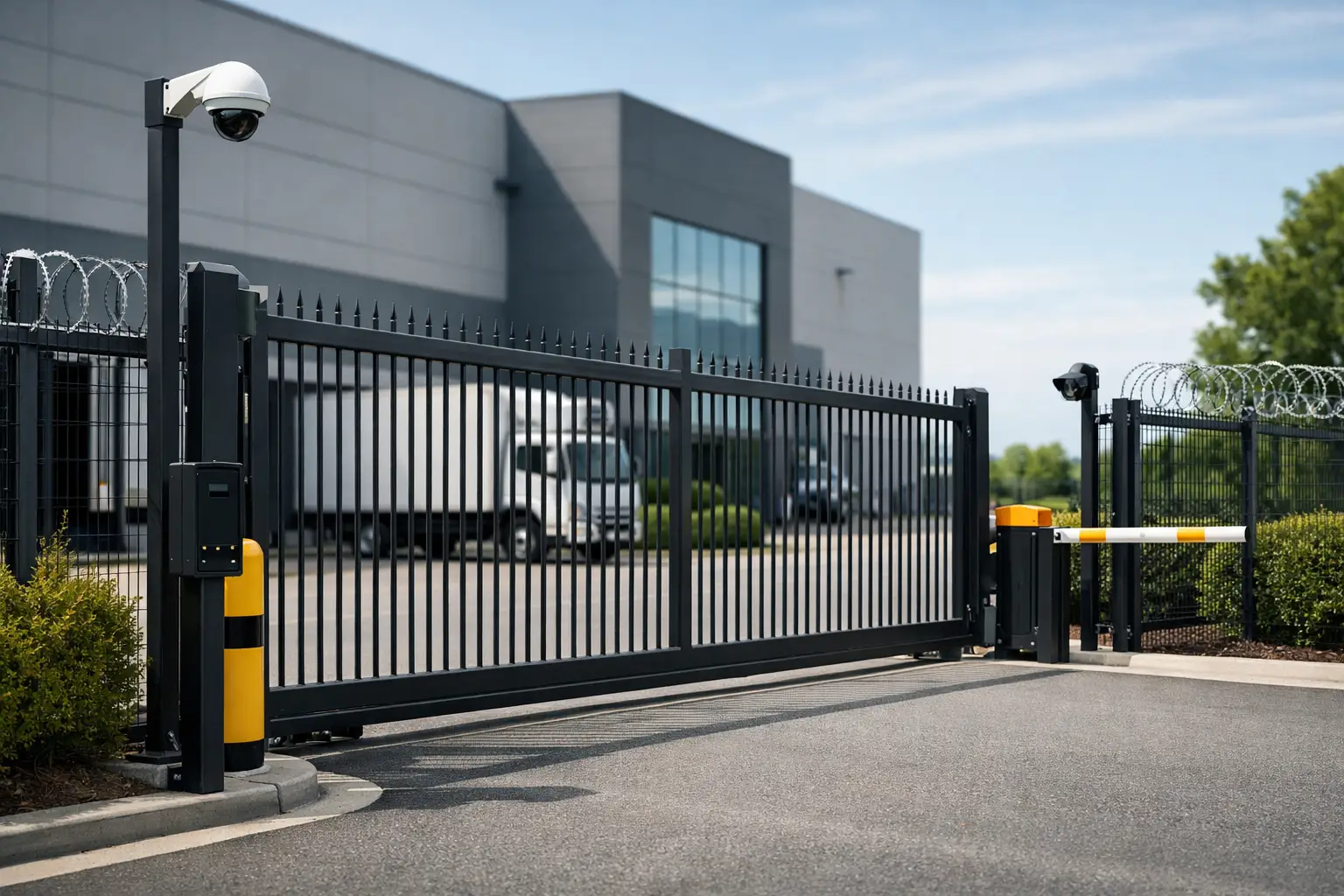
A gate that stays open when it should be closed, or slows down traffic when it should keep things moving, becomes a problem fast. Commercial security gate systems are not just about putting a barrier at the entrance. They are about controlling who gets in, who stays out, and how your property operates day to day without creating headaches for staff, tenants, vendors, or visitors.
For commercial properties, industrial yards, multi-tenant developments, and institutional sites, the right gate system has to do more than look secure. It needs to match traffic volume, site layout, vehicle types, safety requirements, and the level of access control you actually need. A small office lot and a busy distribution yard may both need controlled entry, but the right setup for each one will be very different.
What commercial security gate systems need to accomplish
At the most basic level, a commercial gate system creates a controlled point of entry. That sounds simple, but in practice it usually means balancing security, speed, durability, and ease of use. If the gate is too restrictive, it slows operations and frustrates people. If it is too loose, it stops doing its job.
A well-planned system should support the way the property works. That may mean allowing employees in with a keypad, card reader, or remote access control while restricting public access. It may mean separating delivery traffic from staff parking. It may also mean protecting equipment yards, storage areas, utility sites, or private roads where unauthorized entry creates real liability.
This is why the gate itself is only one part of the conversation. Operator strength, cycle demand, access devices, safety features, and fence integration all matter. When those parts are matched correctly, the system feels dependable. When they are not, owners usually notice it in the form of downtime, repairs, and daily frustration.
Common types of commercial security gate systems
Different sites call for different gate styles. The best choice often comes down to available space, security goals, and how often the gate will open and close.
Sliding and cantilever gates
Sliding gates are a practical choice when there is enough horizontal room for the gate to travel. In many commercial applications, cantilever gates are especially useful because they do not require a track across the driveway opening. That matters on sites where mud, gravel, snow, debris, or heavy truck traffic can create maintenance issues.
Cantilever systems are common for industrial facilities, storage properties, equipment yards, and commercial entrances where durability matters more than appearance alone. They handle wider openings well and are often a strong fit for higher-security settings.
Swing gates
Swing gates can work well for commercial properties with adequate clearance and lighter traffic patterns. They are often used at office properties, private entrances, or decorative commercial settings where appearance carries more weight. The trade-off is that swing gates need room to move, and that can become a limitation on tighter sites or sloped entries.
Vertical pivot lift gates
When a site has limited side room, a vertical pivot lift gate can be a smart solution. Instead of sliding across the fence line, the gate lifts upward. These systems are often used where security is a priority and footprint is limited, such as industrial yards, utility areas, and locations with constrained layouts.
They are not the right fit for every property, and they typically involve more specialized design and installation. But in the right setting, they solve access problems that standard gate types cannot.
The access-control side matters just as much
A gate without the right access method is only doing part of the job. Commercial security gate systems usually need to support a predictable mix of employees, vendors, service crews, residents, tenants, or visitors. That means deciding how users will gain entry and how the system will be managed over time.
For some properties, a keypad is enough. For others, card readers, telephone entry systems, remote transmitters, or integrated access-control hardware make more sense. The right option depends on how many users you have, how often credentials change, and how much oversight the property requires.
A busy commercial site may need more than one method. Employees may use cards or fobs, while delivery drivers use a call box and after-hours vendors receive temporary access credentials. The more active the property, the more important it becomes to think through daily use before installation starts.
How to choose the right system for your property
The fastest way to end up with the wrong gate is to choose by appearance alone. Commercial buyers usually get better results by starting with site function.
Look at traffic flow first
Count how vehicles move through the property during a normal day. Are there peak periods at opening, shift change, or closing time? Do large trucks need to enter regularly? Will vehicles stack near the road if the gate opens too slowly? These questions affect gate width, operator speed, and access-control design.
Consider the site layout
A narrow entrance, uneven grade, limited side clearance, or heavy-use drive all influence what type of gate will work. A system that looks fine on paper may perform poorly if the site does not support it. This is one reason custom planning matters on commercial work.
Match the gate to the level of security needed
Not every property needs the same level of control. A small business parking area may mainly need after-hours restriction. A contractor yard storing equipment may need stronger perimeter security and controlled vendor access. A facility with compliance requirements may need a more structured access setup with reliable tracking and restricted entry points.
Plan for wear and service
A commercial gate is a working system. The more cycles it handles, the more important it is to choose commercial-grade components that are built for that workload. Saving money on a lighter-duty setup often costs more later in repairs, interruptions, and early replacement.
Installation details that affect long-term performance
The quality of the installation has a direct impact on how well the system holds up. Posts, footings, gate frame construction, hardware, operator placement, and alignment all matter. So does the relationship between the gate and the surrounding fence.
Poor alignment can lead to premature wear. Inadequate support can create sagging or operator strain. If the gate opening is not planned around actual vehicle movement, drivers may clip posts, drag trailers, or struggle with turning clearance. These are field issues, not brochure issues, and they make a big difference once the gate is in service.
Safety devices are another area that should not be treated as optional. Depending on the system, that may include photo eyes, edge devices, loops, warning hardware, and properly configured controls. A commercial gate has to secure the property, but it also has to operate safely for the people using it.
Why one-contractor coordination helps
Commercial gate projects usually go more smoothly when the same contractor understands both the perimeter fence and the gate system. The gate is not separate from the fence line, access point, or traffic plan. It is part of the whole perimeter solution.
That matters when you are coordinating custom openings, tying into chain link or ornamental fencing, adding controlled access, or building around the specific needs of a business or facility. It also helps when the job calls for more than a standard entrance, such as equipment yard security, temporary construction access, or a specialty gate design. Companies like Ace Fence Company Inc. often bring more value here because they handle both traditional fence construction and commercial-grade gate solutions instead of treating the gate as an add-on.
When it pays to upgrade an existing gate
Not every project starts from scratch. Many property owners already have a gate, but it no longer fits the site. Sometimes the operator is outdated. Sometimes traffic has increased. Sometimes the original gate was never designed for the actual level of use.
If your current system sticks, drags, fails to close consistently, or causes backups at the entrance, it may be time to evaluate whether repair is enough or whether a better configuration is needed. In some cases, upgrading access control or replacing a worn operator solves the issue. In others, the gate type itself is wrong for the property and should be reconsidered.
The best commercial security gate systems are the ones that make the property easier to manage while improving protection where it counts. If you are planning a new site or reworking an entrance that no longer performs the way it should, start with the way the property operates every day, then build the gate system around that reality.
Ready to Talk to a Real Fence Professional?
Free on-site estimates from the River Valley's most trusted fence company since 1963.