Cantilever Gate Installation Done Right
Cantilever gate installation requires proper layout, footing, and hardware selection for smooth, secure access on residential and commercial sites.
A gate that drags, racks, or quits working after a season usually did not start with the operator. It started with layout, footing depth, grade conditions, or hardware that did not match the opening. That is why cantilever gate installation needs to be treated like a system, not just a gate panel set in place.
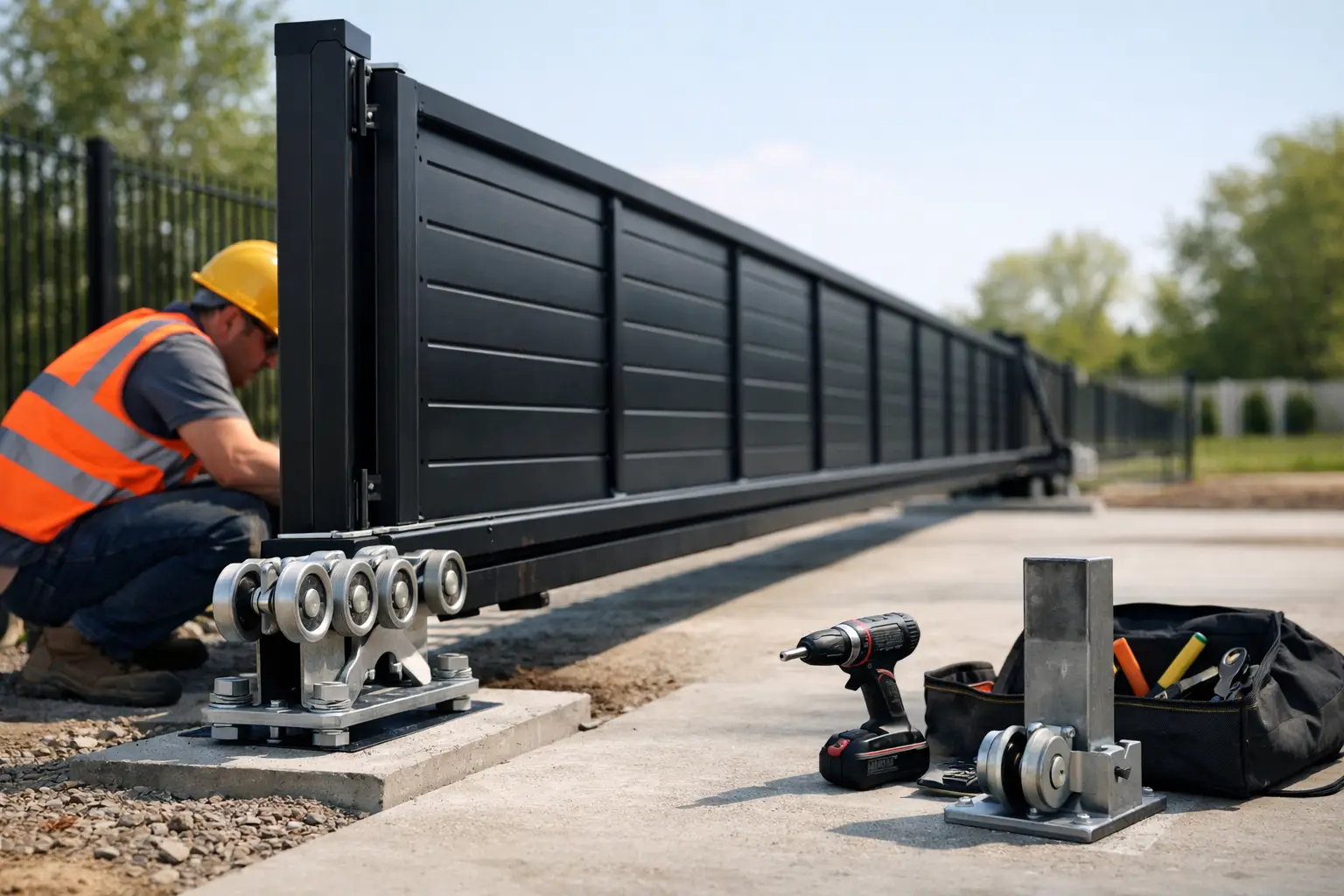
Cantilever gates are a practical choice when you need a sliding gate but cannot rely on a track across the driveway. In Arkansas, that matters more than people think. Gravel approaches, uneven pavement, mud, storm runoff, and heavy site traffic can all make a ground track a maintenance problem. A cantilever design avoids that issue by suspending the gate above grade and supporting it with rollers mounted on large posts beside the opening.
What makes a cantilever gate different
Unlike a swing gate, a cantilever gate does not need room to arc inward or outward. Unlike a rolling gate on a track, it does not depend on wheels running across the driveway surface. The gate slides horizontally and stays supported by its framework and roller assemblies.
That design is especially useful for commercial yards, industrial sites, storage properties, multifamily developments, and residential properties with limited clearance. If the entrance slopes, gets debris buildup, or sees frequent traffic, a cantilever gate often gives you a more dependable long-term setup.
There is a trade-off. A cantilever gate needs extra room to the side of the opening because part of the gate acts as a counterbalance. The total gate frame is longer than the clear opening, which means the site has to support that added length. If the opening is 20 feet wide, the full gate may need to be closer to 30 feet. That side room is one of the first things to confirm before a project moves forward.
Cantilever gate installation starts with site planning
The installation process is only as good as the early measurements. The opening width matters, but it is not the only dimension that drives the build. The fence line, stacking area, grade changes, utilities, drainage paths, and expected vehicle use all affect the final design.
For residential properties, the conversation often centers on driveway width, appearance, privacy, and automation options. For commercial and industrial sites, the priorities usually shift toward access control, delivery traffic, security expectations, and cycle frequency. A gate that opens a few times a day is a different job than one handling repeated entry throughout business hours.
Post placement is critical. Cantilever systems put a lot of load on the support posts because the gate is suspended as it moves. That means the footings have to be sized for the gate length, weight, wind exposure, and site conditions. Soft ground, poor drainage, or fill material can all change what is required below grade.
This is also where experienced fabrication and installation matter. A gate can look fine on paper and still perform poorly if the frame is underbuilt, the rollers are undersized, or the posts are not set for the actual load. On larger openings, small mistakes show up fast.
Key parts of a cantilever gate system
A cantilever gate works because several components are sized and aligned to work together. The gate frame carries the structure. The cantilever rollers support and guide the gate. The posts anchor the system. The receiver post catches and stabilizes the leading edge when the gate closes. Guide hardware keeps movement controlled, and if the gate is automated, the operator, controls, and safety devices become part of the same system.
The frame material depends on the application. Chain link cantilever gates are common for commercial and industrial use because they are durable and practical. Ornamental options can be a better fit where appearance matters more. Privacy infill can also be part of the design, but added weight and wind load have to be accounted for.
Hardware quality matters just as much as the gate panel itself. A low-grade roller assembly or mismatched latch arrangement can shorten service life and create recurring issues. On automated gates, that same problem tends to show up as operator strain, inconsistent travel, or premature wear.
The step-by-step side of cantilever gate installation
A typical cantilever gate installation begins with layout and verification. The opening is measured, post locations are marked, and the travel path is checked for obstructions. Installers also confirm the required backroom for the counterbalance section and make sure the finished gate will clear the surface consistently from one end of travel to the other.
Next comes excavation and footing work. The support posts and receiving post need solid foundations, and those foundations must match the size and load of the gate. This is not the place to guess. Footing depth, diameter, and concrete volume should reflect the actual demands of the system and local site conditions.
Once posts are set and cured, the gate frame and roller assemblies can be installed. Alignment at this stage is precise work. The gate must travel level, maintain proper clearance, and meet the receiver cleanly at the closed position. If the frame is out of square or the rollers are set incorrectly, the gate may still move, but it will not move well for long.
If automation is part of the project, the operator is then mounted and adjusted. Power supply, control wiring, access devices, and safety equipment are installed based on the use case. A residential keypad setup is different from a commercial entry system tied to cards, loops, telephone entry, or monitored access control. The gate should then be tested repeatedly through full cycles, not just opened once and called finished.
Where installation problems usually happen
Most cantilever gate failures are not mysterious. They usually trace back to poor planning, undersized hardware, inadequate post foundations, or automation added as an afterthought.
One common issue is not allowing enough room for gate travel. Property owners sometimes focus only on the clear opening and forget that the gate needs extra frame length to cantilever properly. Another issue is building the gate too heavy for the hardware or operator. That can lead to rough movement and extra stress on the entire system.
Grade can also create trouble. Even though a cantilever gate does not ride on a ground track, grade changes still matter because the gate has to maintain proper bottom clearance and move without interference. Drainage is another factor. Standing water near footings or the operator area can shorten the life of the installation if the site is not handled correctly.
On automated systems, safety device placement is a serious part of the job. Photo eyes, edges, loop detectors, and control logic all need to be considered based on the gate type and how the entrance is used. The operator should never be treated as a simple add-on.
Residential and commercial needs are not the same
A homeowner may want a cantilever gate for privacy, security, or convenience at the end of a driveway. In that setting, appearance and quiet operation often matter just as much as function. The right installation balances those goals without overbuilding the project beyond what the property actually needs.
A commercial property owner usually has a different checklist. They may need wider access for trucks, frequent cycling, stronger perimeter control, and dependable integration with access systems. In those cases, durability, serviceability, and gate operator performance tend to carry more weight than decorative features.
That is one reason it helps to work with a contractor that handles both fence construction and gate systems. The gate should fit the fence line, the site, and the expected use pattern. A standalone gate decision without that broader view can lead to mismatched materials, awkward layouts, or access issues later.
Choosing the right contractor for cantilever gate installation
Not every fence installer is equipped for cantilever gate work, especially on larger or automated systems. The right contractor should understand structural layout, fabrication requirements, hardware selection, operator compatibility, and how the whole entrance will function after install day.
Ask practical questions. How will the footings be sized for the opening? What gate material is best for the site? How much side room is required? Will the gate be manual or automated? How will service access be handled if an operator is involved? Straight answers to those questions usually tell you a lot.
For property owners in Fort Smith, Northwest Arkansas, and the River Valley, Ace Fence Company Inc. works on the kind of projects where those details matter. From standard enclosures to more specialized access points, the goal is the same - build a gate system that fits the property and keeps working the way it should.
A cantilever gate is not the right answer for every entrance, but when the site calls for one, proper installation makes all the difference. If you are planning a new gate or replacing one that has become a constant problem, the best next step is a site-specific estimate based on how the entrance is actually used.
Ready to Talk to a Real Fence Professional?
Free on-site estimates from the River Valley's most trusted fence company since 1963.