Best Gates for Warehouse Security That Work
Compare the best gates for warehouse security, from cantilever sliders to pivot lift systems, and choose access control that fits your site and operations.
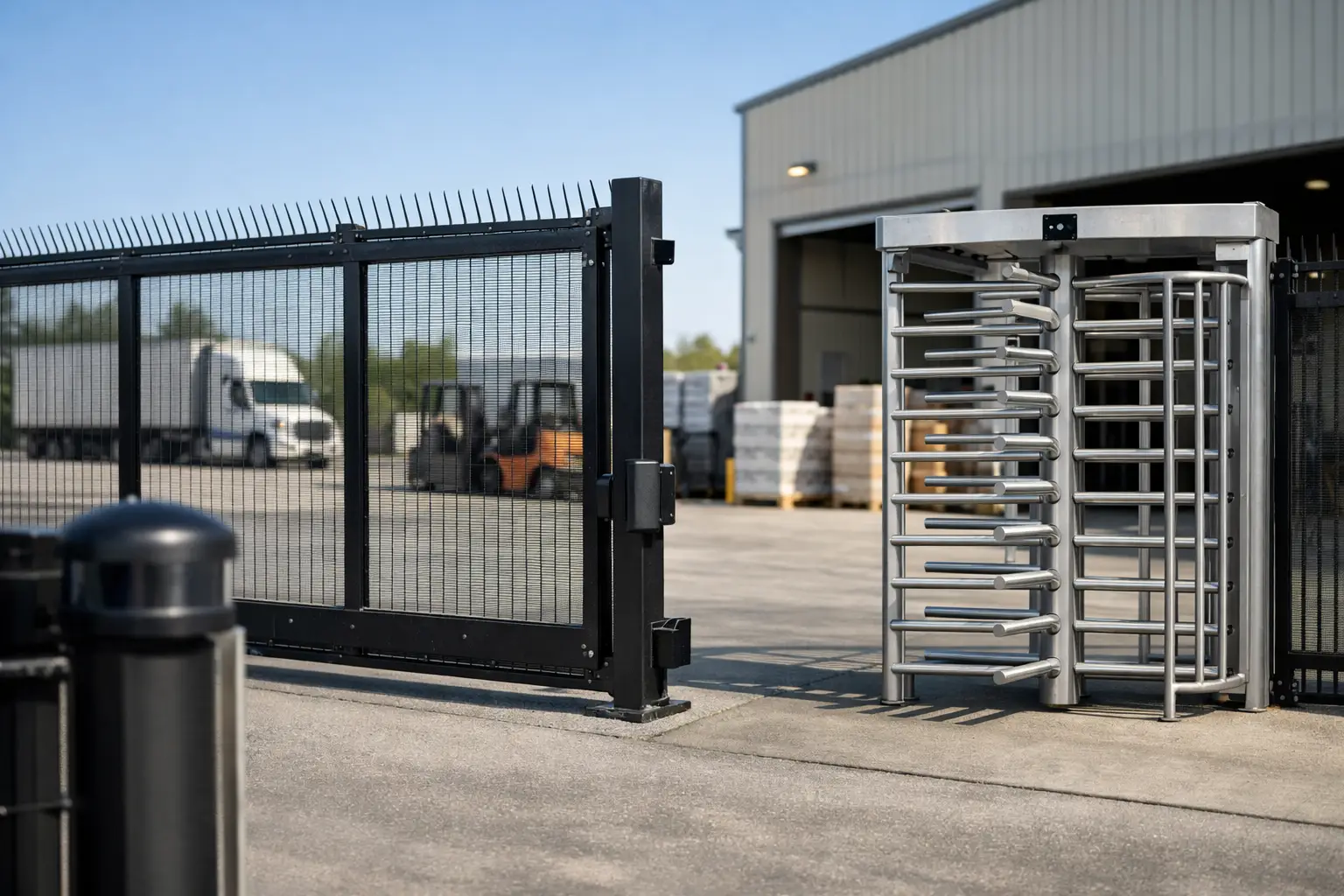
A warehouse gate has to do more than close an opening after business hours. It must control truck traffic, resist forced entry, keep employees safe, and operate reliably through repeated daily cycles. The best gates for warehouse security are the ones matched to the site layout, traffic pattern, security risks, and operating schedule - not simply the heaviest gate on the market.
For warehouses across the River Valley and Northwest Arkansas, that usually means looking beyond a basic swing gate. A well-planned commercial gate system combines a durable gate style, appropriate fencing, a dependable operator, and access controls that fit how people and vehicles actually move through the property.
Start With the Warehouse Security Problem
Before choosing a gate, identify what the entry point needs to prevent and what it needs to allow. A distribution facility with steady tractor-trailer traffic has different needs than a small storage warehouse with a few employee vehicles. A gate that slows down every delivery may create an operational problem, while a gate that opens freely to anyone with a clicker may leave the facility exposed.
Look at the width of the driveway, the grade, available space beside the opening, truck turning paths, drainage, and the amount of daily traffic. Also consider whether the gate is securing the full property, a loading yard, a vehicle lot, an equipment area, or a secondary employee entrance. These details often determine the right design before material or operator features are even discussed.
Security also depends on the rest of the perimeter. A commercial-grade gate attached to light residential fencing creates a weak point. Chain link fencing with the appropriate fabric, framework, height, and security additions is a common choice for industrial sites, while ornamental steel fencing may suit front-facing areas where appearance matters alongside controlled access.
Best Gate Types for Warehouse Security
Cantilever Slide Gates
Cantilever slide gates are often one of the best choices for warehouse entrances. Rather than rolling on a wheel across the driveway, the gate is supported by rollers mounted on posts and slides horizontally above the ground. This design avoids problems caused by gravel, mud, ice, leaves, and debris in the gate path.
For busy facilities, cantilever gates offer a clear advantage: they can cover wide openings without swinging into truck lanes or requiring a large swing area. They also work well on uneven or sloped drive approaches where a swing gate may bind or scrape the pavement.
The trade-off is space. A cantilever gate needs room along the fence line for the gate to travel when open. In many cases, the required runback space is longer than the driveway opening. A site with limited side clearance may need a different solution, or a custom configuration designed around the available footprint.
Roll Gates
A rolling slide gate can be a practical option for secure warehouse yards with level, well-maintained drive surfaces. These gates travel on wheels and use a ground track or similar guide system. They can provide a straightforward, economical sliding option for some commercial applications.
However, warehouses with frequent truck traffic, loose stone, drainage issues, or winter debris may experience more maintenance with a track-mounted system. If reliability in rough conditions is the priority, a cantilever system is usually the stronger long-term choice.
Swing Gates
Swing gates remain a good fit for lower-traffic warehouse entrances, employee lots, and secondary access points. A single swing gate is simple and can work well for narrower openings. Double swing gates can cover wider driveways and may be used where there is no room for a sliding gate to travel beside the fence.
The key consideration is clearance. Gates need adequate room to swing inward or outward without blocking vehicles, conflicting with public right-of-way requirements, or creating a hazard near loading areas. Large swing leaves also catch wind, which affects hinge selection, post design, operator sizing, and overall performance.
For facilities that close once per day and receive limited vehicle traffic, a properly built swing gate can be an efficient answer. For a busy shipping entrance, it may be slower and less convenient than a commercial sliding or lift system.
Pivot Lift Gates
Pivot lift gates are designed for sites that need fast, controlled access and have limited room for a sliding gate. Instead of traveling along the fence line, the gate pivots upward and out of the driveway path. This makes them useful for high-traffic entrances, constrained sites, and locations where speed matters.
A pivot lift gate can open more quickly than many traditional gate types and can reduce the amount of space needed at the side of an entrance. It is also a strong option where the driveway surface or grade makes a ground-traveling gate impractical.
Because these are specialized commercial systems, installation must account for structural support, vehicle clearance, safety devices, operator controls, and the facility's operating needs. They are not necessary for every warehouse, but they can solve difficult access issues that conventional gates cannot.
Choose an Operator Built for the Traffic Load
A gate is only as dependable as the operator moving it. Commercial warehouse gates should be paired with an operator rated for the gate weight, gate length, wind exposure, and expected number of cycles per day. Under-sizing an operator may reduce upfront cost, but it commonly leads to slow operation, premature wear, and service interruptions.
Consider how the gate will be used during a typical day. A gate opening for a handful of employees each morning has a much lighter duty cycle than a gate serving delivery trucks, contractors, shift changes, and outbound shipments from dawn through evening. High-use entrances generally require commercial-duty equipment designed for repeated operation.
Power planning matters as well. Some locations have convenient access to electrical service, while remote lots may need solar power or a different access arrangement. Battery backup is worth discussing for facilities that cannot afford to leave a key entrance unsecured during a power outage.
Access Control Should Match the People Using the Gate
The best gates for warehouse security need more than a remote control in every vehicle. A practical access-control plan gives authorized people a reliable way in while maintaining a record or level of control appropriate for the site.
Keypads are useful for employees, vendors, and service personnel, especially when codes can be changed as staffing changes. Card readers, key fobs, and mobile credentials can offer tighter control for facilities with more employees or multiple access points. Telephone entry systems work well when visitors need approval from an office before entering.
For truck entrances, consider the arrival process. Drivers may need a call box, intercom, keypad, or staffed check-in procedure. Vehicle loops, exit devices, and safety photo eyes should be selected and placed carefully so vehicles can exit without creating an easy route for unauthorized entry behind them.
A gate should also be easy for authorized users to operate safely. If employees regularly bypass a gate because the access process is frustrating or unreliable, the security plan is not doing its job.
Do Not Overlook Safety and Site Conditions
Commercial automatic gates require safety features that protect vehicles, pedestrians, and property. Depending on the system, this may include photo eyes, monitored edge sensors, vehicle detection loops, warning signs, emergency release provisions, and properly positioned controls. Gate safety is not an optional add-on, particularly at facilities with employees, visitors, and regular truck movement.
Drainage, pavement condition, wind, and fence-line grade also affect gate performance. A gate installation should be planned around the site rather than forced into a standard layout. For example, a sliding gate may need modified grading or additional length to clear an uneven approach, while a swing gate may require stronger posts and hardware in an exposed, windy location.
Material selection matters, but construction details matter just as much. Proper post depth, footing design, framework, bracing, hardware, and gate alignment are what keep a commercial gate operating correctly year after year.
Build a System, Not Just a Gate
Warehouse security works best when the gate, fencing, operator, and access controls are planned as one perimeter system. A wide opening may call for a cantilever slide gate, commercial operator, keypad or credentialed access, monitored safety devices, and chain link fencing sized for the facility's security needs. A smaller employee lot may be better served by a secure swing gate with controlled entry.
Ace Fence Company Inc. helps commercial property owners evaluate these site-specific factors and install gate systems built for real operating conditions. From standard commercial fencing to custom sliding, cantilever, and pivot lift gate applications, the goal is a dependable entrance that supports daily work without leaving assets exposed.
The right gate should make the warehouse easier to manage at 6 a.m., during a delivery rush, and after the last truck leaves. A site review and a clear understanding of traffic patterns will lead to a gate system that protects the property without getting in the way of the work happening inside it.
Ready to Talk to a Real Fence Professional?
Free on-site estimates from the River Valley's most trusted fence company since 1963.