
Best Fence for Noise Reduction That Works
Find the best fence for noise reduction with practical guidance on height, materials, gaps, placement, and installation for a quieter Arkansas property.
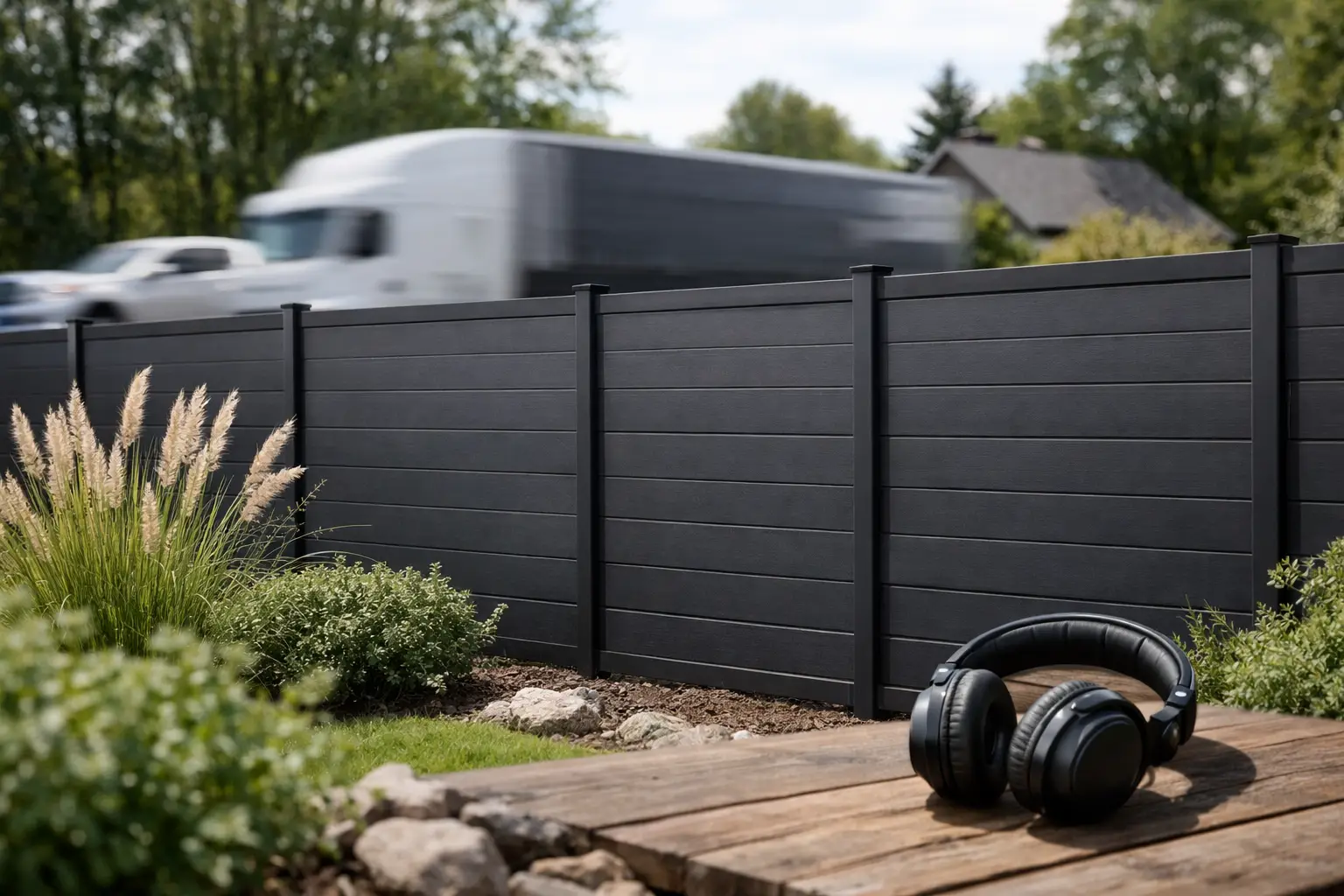
Road traffic, neighboring equipment, barking dogs, and active commercial sites can make a yard or facility harder to use. The best fence for noise reduction is not simply the tallest fence available. It is a solid, well-built barrier with enough height, mass, and coverage to block the direct path between the noise source and the people affected by it.
For most residential properties, a properly installed solid wood, composite, or vinyl privacy fence is the practical starting point. For commercial and industrial sites, the right solution may involve a taller engineered barrier, a solid enclosure around equipment, or a fence system designed around gates, access requirements, and local code. The details matter because even a well-chosen material will underperform if there are gaps under the fence, open spaces between boards, or a gate that does not close tightly.
What Makes a Fence Reduce Noise?
A fence does not eliminate sound. It reduces noise by interrupting the line of sight between the source and the listening area. If you can see the road, compressor, loading area, or neighboring activity over or through the fence, sound has a more direct path to travel as well.
A useful sound barrier needs three things: it must be solid, tall enough to block the direct path of sound, and sealed close to the ground. Weight also helps. Dense materials generally stop more sound energy than thin, lightweight materials.
The difference between a decorative fence and a noise-reducing fence often comes down to construction. A short picket fence may define a boundary, but it will not make a meaningful difference against steady traffic noise. A solid privacy fence with tightly fitted boards or panels can provide noticeably better results, particularly when it is placed close to the noise source or close to the area being protected.
Best Fence Materials for Noise Reduction
Solid Wood Privacy Fencing
Wood is often one of the best all-around choices for residential noise reduction. A properly built wood privacy fence is dense, versatile, and available in configurations that eliminate open gaps between boards. Board-on-board construction is especially useful because overlapping boards cover the seams that can remain with a standard side-by-side privacy fence.
Wood also works well on lots with changing grades because it can be customized more easily around slopes, corners, and established landscaping. The trade-off is maintenance. Wood requires periodic inspection, staining or sealing when appropriate, and repairs over time as boards weather in Arkansas heat, moisture, and storms.
For better sound control, use substantial boards, solid framing, and a design that leaves no visible openings. The fence should extend close to the ground without creating conditions that trap standing water or cause premature decay.
Composite Fencing
Composite fencing can be a strong choice when a property owner wants a solid privacy barrier with lower routine maintenance than wood. Many composite systems use interlocking boards or panels that create a continuous surface, which is beneficial for reducing sound transmission.
Its consistent appearance and resistance to rot and insect damage make composite appealing for long-term residential projects, multifamily properties, and commercial areas where appearance matters. Not every composite system has the same thickness or panel design, so the specific product should be evaluated for solid coverage rather than selected on appearance alone.
Composite may cost more upfront than a basic wood fence. Still, the durability and reduced maintenance can make sense for owners planning to stay in the property or managing a site with ongoing upkeep concerns.
Vinyl Privacy Fencing
Vinyl privacy fencing can reduce noise when it is built with solid, tightly connected panels. It provides a clean, uniform appearance and does not require painting, staining, or sealing. For neighborhoods, pool areas, and commercial properties with a polished exterior standard, vinyl can be a practical option.
The limitation is that hollow vinyl panels generally have less mass than a thick wood or composite barrier. A quality vinyl privacy system can still help block direct sound, but it may not perform as well as denser construction against heavy truck traffic, industrial equipment, or other persistent low-frequency noise.
Chain Link and Ornamental Fencing
Standard chain link and ornamental fencing are excellent for visibility, security, pet containment, and boundary definition, but they are not effective noise barriers by themselves. Their open construction allows sound to pass through freely.
On commercial projects, chain link may still be part of the overall solution. A property may need secure perimeter fencing around most of the site while using a separate solid barrier near generators, loading areas, mechanical equipment, or a neighboring residence. Screening materials can add privacy to chain link, but they should not be mistaken for a true sound-control wall.
Height and Placement Matter as Much as Material
For a typical backyard, a six-foot solid privacy fence can improve comfort by blocking ground-level activity and some nearby traffic noise. An eight-foot fence may provide better results where allowed, especially when the noise source is elevated, such as traffic on a raised roadway or activity on a neighboring deck.
Before selecting height, check local zoning rules, subdivision restrictions, utility easements, and visibility requirements near driveways and intersections. Commercial sites may have additional code, security, and access considerations. A fence that is tall enough to help with noise but incorrectly located can create avoidable problems during permitting or inspection.
Placement is equally important. A barrier works best when it sits close to the source of the noise or close to the protected area. For example, placing a solid fence near a busy street can block sound before it spreads across the yard. On a larger commercial property, enclosing a loud piece of equipment can be more effective than trying to shield the entire property line.
A fence cannot always be moved to the ideal location because of property boundaries, drainage, utilities, or access needs. In those cases, the fence design may need to work harder through added height, improved sealing, or a targeted equipment enclosure.
Gaps, Gates, and Grade Can Undercut Performance
Sound will find openings. A small gap below a fence may not seem significant, but a continuous opening along a long property line can reduce the barrier's effectiveness. The same is true for spaces between boards, large knot holes, damaged panels, and poorly fitted gate sections.
On sloped ground, stepped fence sections can leave triangular openings at the bottom. Racked fencing or carefully planned grade transitions may provide better coverage, depending on the fence type and the slope. Drainage still needs to be considered. The goal is to keep the barrier low to the ground without blocking the natural movement of water across the property.
Gates deserve special attention. A wide driveway gate, double gate, or pedestrian gate can become the weakest point in a sound barrier if it has large clearance gaps or does not align properly. Commercial gates also need to balance noise control with security, emergency access, daily traffic, and automation requirements. A custom gate layout may be necessary when a property needs controlled entry without leaving a major opening in the perimeter.
Set Realistic Expectations for Different Noise Problems
A fence can make an outdoor living area more comfortable, but it will not turn a property beside a highway into a silent space. Low-frequency sounds from heavy trucks, bass, generators, and industrial machinery are harder to block than higher-pitched conversation or tire noise. Sound can also travel over a fence, around its ends, and through nearby structures.
For difficult locations, a fence is often one part of a broader plan. Landscaping can improve privacy and appearance, but plants alone usually do little to stop sound until they are extremely dense and deep. Combining a solid fence with strategic planting, relocating an outdoor seating area, closing gaps around a mechanical unit, or adding building-side improvements may produce a better overall result.
For businesses, it is also worth identifying whether the problem is traffic noise entering the site or equipment noise leaving it. Those are different challenges. A perimeter fence may help with one, while an enclosure built around a specific noise source may be the better answer for the other.
Choose the Fence Around the Whole Project
The best noise-reduction fence should fit the property, not just the decibel concern. A homeowner may need privacy, pet containment, and a durable boundary along with a quieter patio. A property manager may need a fence that coordinates with pedestrian gates, service access, and a consistent exterior appearance. An industrial operator may need secure fencing, controlled access, and a targeted barrier around noisy equipment.
That is why an on-site evaluation is valuable. Fence height, terrain, drainage, nearby utilities, gate locations, local requirements, and the exact direction of the noise all affect the recommendation. Ace Fence Company Inc. can help property owners across Fort Smith, Northwest Arkansas, and the River Valley plan a solid fence system that addresses the real conditions on the ground.
A quieter property usually starts with a straightforward question: where is the sound coming from, and what direct path is it taking? Once that is clear, the right solid fence design can do more than mark a boundary - it can make the space behind it more usable every day.
Ready to Talk to a Real Fence Professional?
Free on-site estimates from the River Valley's most trusted fence company since 1963.