
Best Commercial Security Fencing Options
Looking for the best commercial security fencing? Compare materials, gate systems, and site needs to choose the right perimeter for your property.
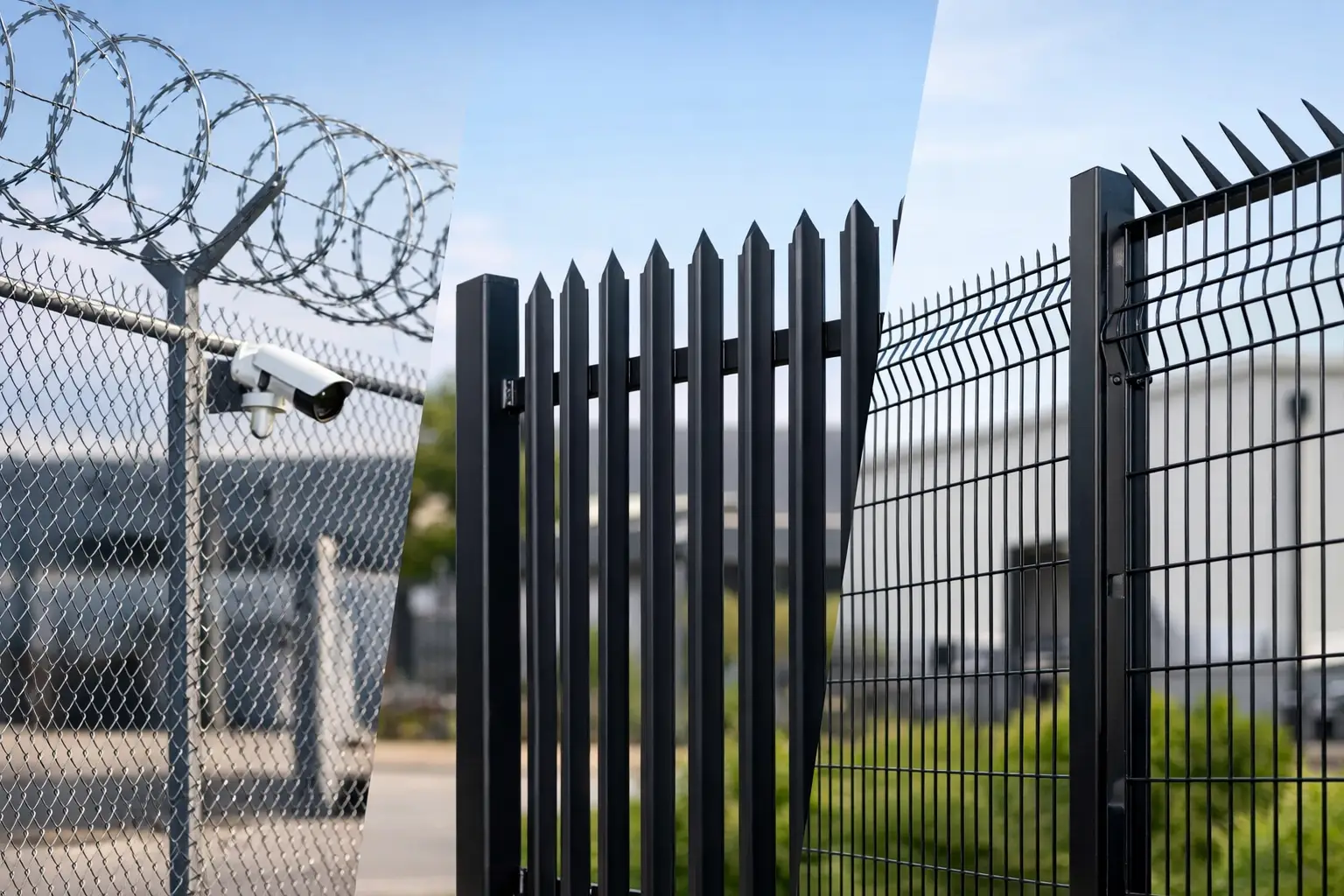
A fence around a commercial property has one job on paper - define the perimeter. In real use, the best commercial security fencing has to do much more. It needs to deter trespassing, control access, hold up to daily wear, and match the risks of the site without creating maintenance problems or operational bottlenecks.
That is why there is no single fence that fits every business. A warehouse yard, school campus, apartment complex, utility site, and contractor laydown yard all need security, but not in the same way. The right choice depends on what you are protecting, how the property operates, and how much control you need at the gate.
What makes the best commercial security fencing?
Security fencing is not just about height or strength. A good commercial perimeter works as a system. The fence fabric or panels matter, but so do the posts, footings, gates, access points, visibility, and how the fence fits the site.
For some properties, visibility is a major advantage. Being able to see through the fence can help staff monitor activity and discourage people from trying to hide along the perimeter. In other settings, privacy matters more because you need to block public view of stored materials, equipment, or restricted operations.
Durability is another big factor. A fence that looks good on day one but bends easily, rusts quickly, or requires constant repair will cost more over time. Commercial buyers usually need a practical balance of security, life span, and serviceability.
Best commercial security fencing by application
Chain link fencing for practical perimeter security
For many commercial and industrial properties, chain link remains one of the best options. It is cost-effective, adaptable, and proven in a wide range of settings. It works well for warehouses, service yards, schools, industrial facilities, back lots, and general business perimeters.
Chain link is often the right answer when a property needs clear boundary definition, good visibility, and dependable security without moving into a much higher price category. It can also be upgraded with heavier framework, tighter mesh, privacy screening, or barbed wire where appropriate and allowed.
Its biggest advantage is versatility. It can cover large areas efficiently and pair well with sliding gates, cantilever gates, and access-control systems. The trade-off is appearance. For businesses that want a more finished architectural look, chain link may not be the preferred front-facing solution.
Ornamental steel or aluminum for security with appearance
If the front of the property matters as much as the perimeter, ornamental fencing is often worth serious consideration. This style is common around office buildings, multifamily properties, churches, schools, municipal sites, and commercial developments where curb appeal and security need to work together.
Ornamental fencing creates a more polished look while still establishing a strong physical barrier. It also keeps sightlines open, which is useful for visibility and monitoring. For many buyers, this is the best commercial security fencing choice when they need the property to look professional from the street.
The trade-off is usually cost. Ornamental systems typically require a higher upfront investment than standard chain link. They also need to be selected carefully for the actual level of risk. A decorative perimeter can be a strong solution, but high-exposure sites may need heavier-duty components and gate systems than a standard ornamental package provides.
Privacy fencing for screened commercial areas
Some commercial sites do not want equipment, inventory, dumpsters, or operational areas visible from the road or neighboring property. In those cases, privacy fencing can make sense. Wood, vinyl, and composite styles may be used in selected commercial applications, especially where appearance and screening are priorities.
This is more common around multifamily enclosures, service areas, and businesses that want to reduce visibility rather than create a high-security industrial perimeter. Privacy fencing can help reduce casual attention from passersby, but it is not always the strongest option for higher-risk commercial sites.
That is where project planning matters. Screening can be useful, but solid fencing also reduces visibility from inside the site. If monitoring and line of sight are critical, a fully screened perimeter may create drawbacks.
Gates matter as much as the fence
A commercial fence is only as secure as its access points. Many security problems happen at the gate, not along the fence line. If the gate is undersized, poorly aligned, easy to bypass, or not suited for traffic volume, the entire system becomes less effective.
Sliding and cantilever gates
For many commercial and industrial sites, sliding or cantilever gates are a strong fit. These systems work well where vehicles need controlled entry and where swing space would interfere with traffic flow. Cantilever gates are especially useful when the opening is wide or when the surface conditions make a traditional tracked system less practical.
These gate types are common for warehouses, fleet yards, distribution facilities, and secured back-of-house operations. They can also be paired with keypad entry, card readers, telephone entry, and automated operators for tighter control.
Swing and pivot lift gates
Some properties are better served by swing gates or specialty systems such as pivot lift gates. It depends on the site layout, grade, traffic pattern, and clearance needs. A good installer will look at how the property actually functions instead of recommending the same gate style for every job.
This is one reason commercial buyers often benefit from working with a contractor that handles both fence installation and gate system planning. The fence and the gate should be designed together, not treated as separate decisions.
How to choose the best commercial security fencing for your property
The best starting point is to define the problem clearly. Are you trying to stop after-hours trespassing, secure expensive equipment, guide vehicle entry, protect tenants, or meet a facility requirement? Different goals call for different fence designs.
If the main concern is general perimeter control, chain link with a properly designed gate system may be the most efficient option. If the property is public-facing and appearance matters, ornamental fencing may be a better fit. If screening is part of the need, privacy materials may be used in selected areas while stronger open fencing handles the higher-security sections.
Site conditions also matter more than many owners expect. Slopes, drainage, traffic volume, turning radius, gate width, and available operating space can all affect what system performs best. A fence that works well on paper can create headaches if it does not match the layout of the site.
Budget should be part of the discussion, but not the only part. The lowest initial price is not always the lowest long-term cost. Repairs, downtime, corrosion, sagging gates, and premature replacement can erase early savings quickly.
Common mistakes when comparing commercial fencing
One common mistake is choosing by material alone. Buyers sometimes ask for chain link, ornamental, or wood without first looking at how the perimeter needs to function. Material matters, but application matters more.
Another mistake is underbuilding the gate area. A strong fence line does not help much if the access point is the weak spot. Commercial gates take repeated use, and they need the right hardware, support, and operator setup for the traffic they will handle.
It is also easy to overlook future needs. A property may start with simple enclosure needs and later add controlled entry, automated access, or expanded storage areas. Planning for those possibilities up front can save money and disruption later.
Why contractor capability matters
Commercial security fencing is not just a materials purchase. It is an installation and design decision. The quality of the layout, post setting, gate fabrication, operator setup, and overall fit to the site has a direct effect on performance.
That is especially true for projects that combine perimeter fencing with access-control features or custom gates. A contractor with broad commercial experience can help property owners avoid mismatched components and costly field changes. In a market like Arkansas, where projects range from straightforward business enclosures to more specialized perimeter systems, that practical experience matters.
At Ace Fence Company Inc., that often means helping customers compare straightforward chain link solutions with more specialized gate and access options based on the property’s actual use, not just a catalog description.
The right fence is the one that fits the site
The best commercial security fencing is not the one with the most features. It is the one that fits the property, the level of risk, the traffic pattern, and the budget in a way that holds up over time. A simple chain link system may be exactly right for one site, while another needs ornamental perimeter fencing with a custom automated gate setup.
If you are planning a commercial fence, start with how the site works day to day. Once that is clear, the right fence system usually becomes a lot easier to identify.
Ready to Talk to a Real Fence Professional?
Free on-site estimates from the River Valley's most trusted fence company since 1963.