Automatic Gates: Choosing the Right System
Automatic gates improve access control and security. Learn how to choose operators, gate styles, safety features, and maintenance for your property needs.
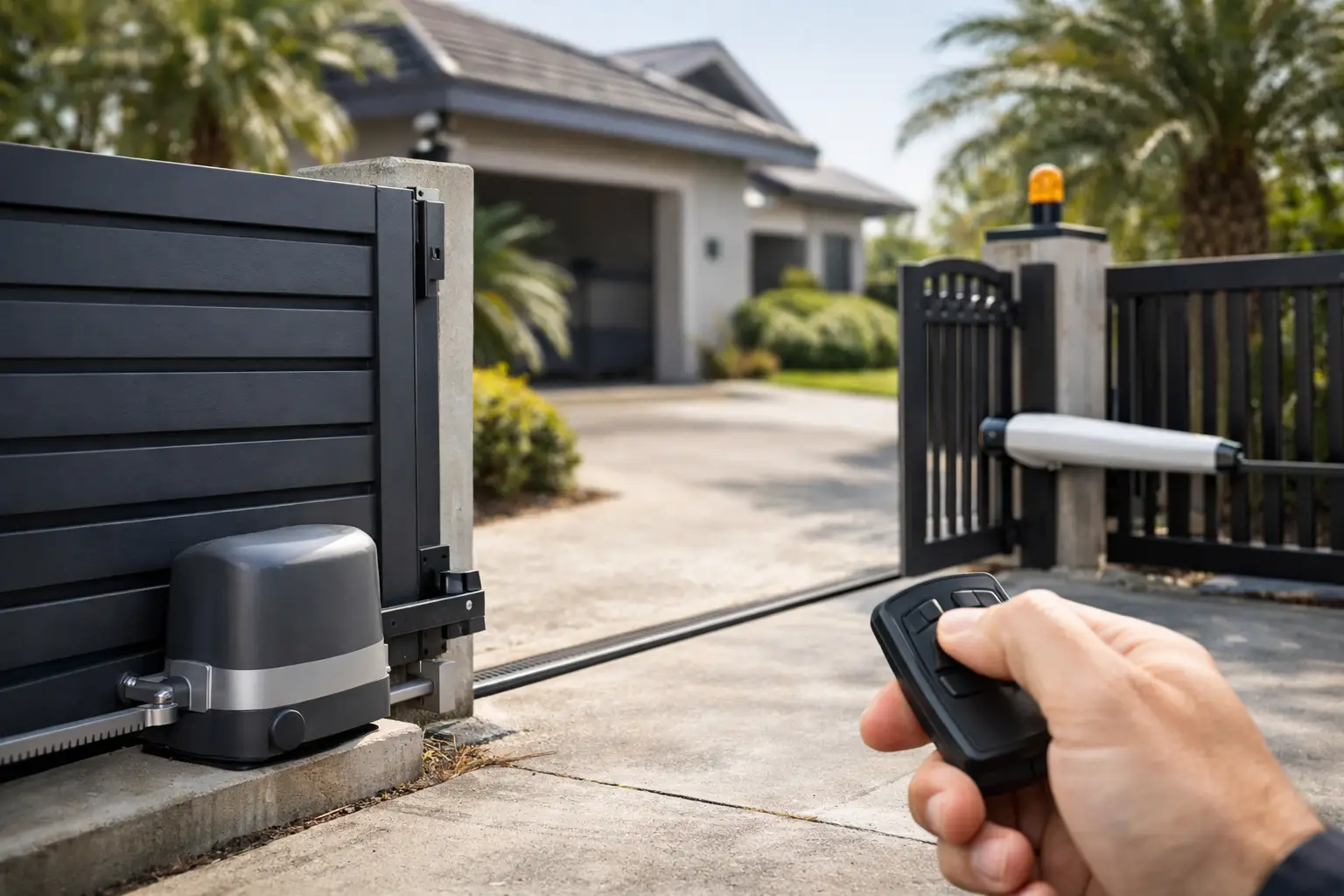
A gate that has to be opened by hand can become a daily frustration, especially at a busy driveway, work yard, apartment property, or secured facility. Automatic gates give property owners control over who enters, when they enter, and how the entrance operates. The right system can add convenience and security, but it has to be matched to the gate, traffic level, site conditions, and the people using it.
For more than a basic remote-controlled entrance, planning matters. An automatic gate is a working access point with moving equipment, safety requirements, power needs, and long-term maintenance considerations. A properly designed system starts with the property itself, not just the operator.
What Automatic Gates Can Do for a Property
Automatic gates are often installed for convenience first. Homeowners may want to enter a driveway without stopping to leave the vehicle. Commercial owners may need to keep public traffic out of employee areas, equipment yards, storage lots, or loading zones. On larger properties, controlled entry can also help manage visitor access and establish a clearer perimeter.
Security is another reason to automate a gate, but the gate should be viewed as one part of the larger perimeter. A dependable operator, quality fence, properly sized gate frame, access-control device, and clear site layout all work together. An automatic gate can discourage unauthorized entry, but it cannot make up for an undersized gate, weak posts, poor drainage, or fencing that does not meet the security needs of the site.
For businesses, access records may also matter. Keypads, card readers, telephone entry systems, and credential-based controls can help identify who has permission to enter. The best option depends on whether the property receives occasional visitors, has regular deliveries, or needs employees and approved vendors to access the site at different times.
Start With the Gate Style
The operator must fit the gate design. Trying to automate a gate that was built only for manual use can lead to premature wear, inconsistent operation, and unnecessary repair costs. Gate weight, length, frame construction, hinges or rollers, wind exposure, and travel path all affect the system that should be installed.
Swing Gates
Swing gates open inward or outward on hinges, much like a door. They are common for residential driveways and certain commercial entries where there is adequate room for the gate leaves to travel. A single swing gate works well in some applications, while a double gate may be used for a wider entrance.
The ground must remain reasonably clear across the swing area. Sloped driveways, tight parking areas, snow and debris, or vehicle traffic close to the opening can make a swing gate less practical. Wind is another consideration. A large solid-panel gate can put significant strain on an operator during strong weather.
Slide and Cantilever Gates
Slide gates move horizontally along the fence line. They are often a practical choice where a driveway slopes or where there is not enough room for gate leaves to swing. A conventional rolling slide gate uses wheels along the ground, while a cantilever gate is supported above the driveway opening and does not require a ground track across the travel area.
Cantilever gates are frequently used for commercial, industrial, and high-traffic locations because they provide a clear opening and can be built for substantial widths. They do require enough room along the fence line for the gate to retract. That space requirement should be measured early, particularly on sites with buildings, utilities, drainage areas, or limited property boundaries.
Specialty Gate Systems
Some sites need more than a standard swing or slide gate. Pivot lift gates, vertical lift gates, and other specialty systems can be useful where space is limited or where traffic needs to move through a controlled opening without a long gate run. These systems are more specialized and should be selected based on the operating environment, clearance needs, traffic patterns, and level of security required.
Choose an Operator for Actual Use, Not Just the Opening Size
Gate operators are rated for specific gate weights, lengths, duty cycles, and operating conditions. A residential operator that works well for a family driveway may not be suitable for a business entrance that opens dozens or hundreds of times each day. Frequent use creates more wear on the operator, rollers, hinges, chains, and electrical components.
A useful planning question is simple: who will use the gate, and how often? A home may only need remote access and occasional visitor entry. A contractor yard may need a keypad for crews, a clicker for management, a way to admit delivery drivers, and an operator built for repeated cycles throughout the workday.
Power is also part of the decision. Some gates can be powered from nearby electrical service, while solar-powered systems may be considered where trenching power to the gate is difficult or expensive. Solar can be a good fit in the right location, but panel exposure, battery capacity, weather, gate usage, and accessory load must be evaluated. A shaded entrance with heavy daily traffic may call for a different approach.
Access Control Should Match the People at the Gate
There is no single best access-control method. The right setup depends on the property and the level of control needed. A homeowner may prefer remotes, keypad entry, or a telephone entry system. A commercial property may need assigned codes, card or fob access, vehicle detection loops, or controlled schedules for different users.
Visitor access deserves attention as well. If guests, customers, delivery drivers, service providers, or tenants arrive regularly, the property needs a clear way to admit authorized people without leaving the gate open all day. A well-planned entry system can reduce calls, delays, and confusion at the driveway.
For higher-security sites, access control may be tied to broader property procedures. That can include restricted entry hours, controlled pedestrian gates, cameras, signage, and fencing designed to limit access around the gate opening. The goal is not to add equipment for its own sake. It is to create an entrance that supports how the property is actually used.
Safety Features Are Part of the Installation
A moving gate has to be treated as equipment, not just a fence section with a motor attached. Entrapment protection and safety devices help the operator detect an obstruction and stop or reverse as designed. Photo eyes, edge sensors, vehicle loops, warning devices, and properly placed controls can all be part of a safe gate system.
The gate area should also be designed to keep pedestrians away from pinch points, moving gate paths, and operator components. This is especially important at apartment communities, schools, commercial locations, and properties where children or the public may be present. Gaps in fencing around the gate, climbable gate frames, or poorly located controls can create avoidable safety concerns.
Professional installation also includes making sure posts, footings, gate hardware, and operator mounts are built to carry the load. A quality operator cannot compensate for a gate that sags, drags, binds, or shifts with the ground. In the River Valley, drainage, soil conditions, and storm exposure should be considered before the system is installed.
Plan for Maintenance Before Problems Start
Automatic gate systems need regular attention. Dirt, leaves, gravel, ice, insects, vegetation, and vehicle damage can all interfere with operation. Mechanical components need inspection, moving parts may need adjustment, and access devices should be checked to make sure they operate as intended.
Property owners should avoid forcing a gate that is not working correctly. If a gate starts moving slowly, making unusual noises, stopping short, or reversing unexpectedly, the issue may involve alignment, hardware, safety devices, power supply, or the operator itself. Continuing to use a malfunctioning gate can turn a smaller repair into a larger one.
A basic maintenance plan should include checking the gate travel path, keeping the area free of debris, testing safety devices, watching for sagging or loose hardware, and having qualified service performed when the system shows signs of trouble. Commercial properties may benefit from scheduled inspections because downtime at a main entrance can interrupt operations quickly.
Work With One Contractor From Perimeter to Entry
An automated entrance performs best when the fence, gate structure, and access equipment are planned together. That is particularly true for commercial sites where chain link, ornamental fencing, privacy fencing, pedestrian access, and vehicle gates may all be part of the same project.
Ace Fence Company Inc. helps property owners across Fort Smith, Northwest Arkansas, and the River Valley evaluate gate styles, perimeter materials, and access-control needs as one complete installation. Whether the need is a residential driveway gate or a commercial cantilever system, the first step is understanding the site and selecting equipment that fits the job.
A well-built automatic gate should make entry easier without creating new problems at the property line. When the gate style, operator, safety equipment, and access controls are selected for the way a property operates, the result is an entrance that is easier to manage every day and better prepared for years of use.
Ready to Talk to a Real Fence Professional?
Free on-site estimates from the River Valley's most trusted fence company since 1963.