
Automatic Gate Planning Guide for Arkansas
Use this automatic gate planning guide to choose the right gate, operator, safety features, access controls, and site preparation for Arkansas properties.
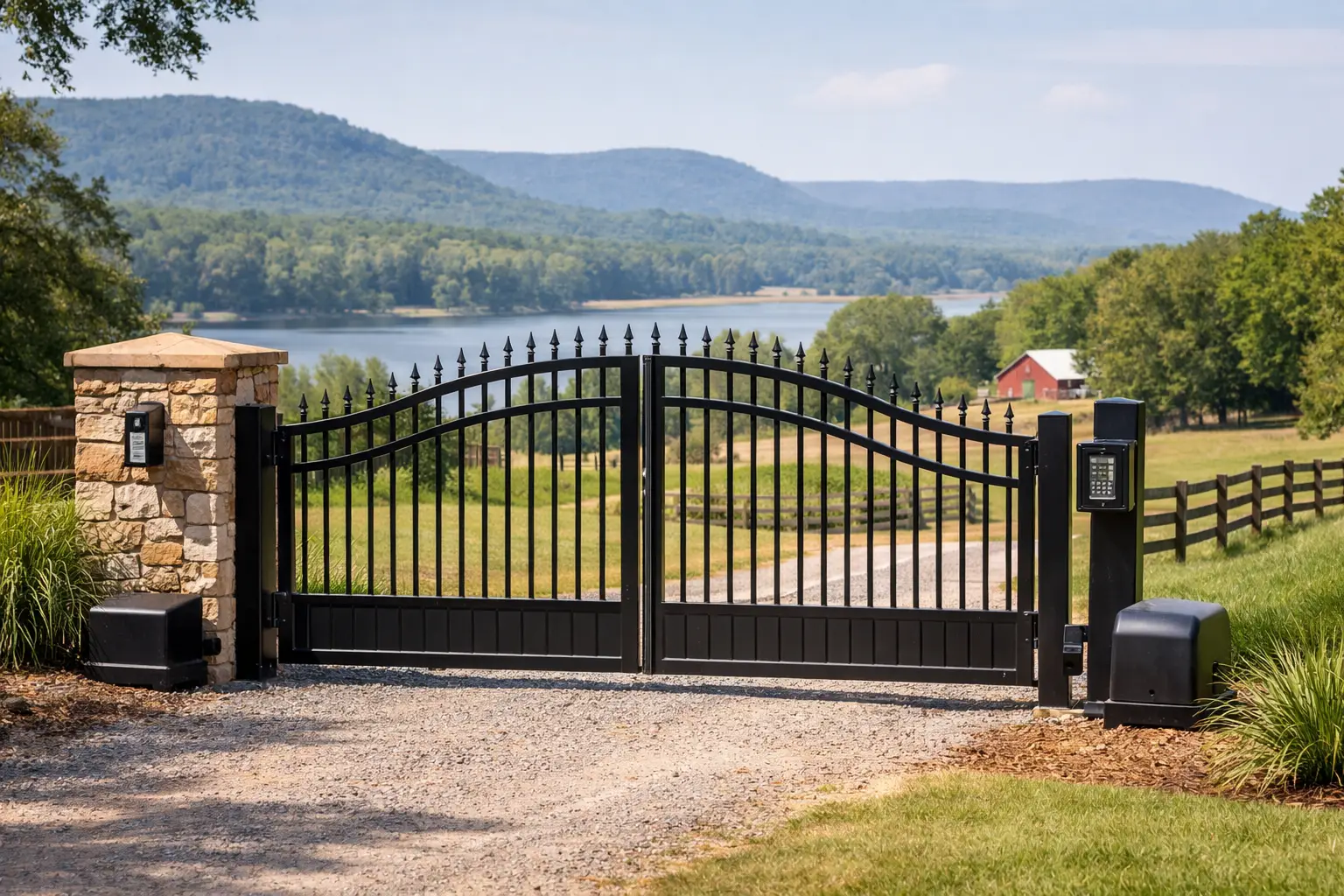
A gate that will not open when a delivery truck arrives, closes too quickly near a vehicle, or drags across a sloped drive is not a security upgrade. It is a daily problem. This automatic gate planning guide covers the decisions that should be made before installation, from gate style and operator selection to safety devices, power, and access control.
Automatic gates can serve very different purposes. A homeowner may want more privacy and controlled entry at the end of a driveway. A contractor may need to secure equipment after hours. A commercial property, industrial site, or managed community may need dependable access for employees, tenants, visitors, and emergency responders. The right system starts with how the entrance actually operates every day.
Start With Traffic, Space, and Security Needs
Before choosing a gate, consider who uses the entrance and how often. A private residence with a few daily cycles has different needs than a business entrance that opens dozens or hundreds of times each day. The gate operator must be rated for the expected duty cycle, gate weight, and gate length. Choosing an undersized operator may reduce the initial cost, but it often leads to slow operation, early wear, and service issues.
Think through the vehicles that need to pass through. Measure the clear opening, not just the driveway width. Passenger vehicles, pickups with trailers, work trucks, waste collection vehicles, and emergency vehicles may all require different clearance. If larger vehicles need regular access, the gate location and opening width should account for turning radius as well as the roadway approach.
Security goals also affect the design. A decorative driveway gate may be intended primarily to define a property and discourage casual entry. A commercial gate may need to control access to stored materials, equipment, or a restricted facility. In those cases, the gate, fence connection, access device, and safety equipment need to work together as one perimeter system.
Choose the Gate Style That Fits the Site
The property layout often determines the best gate style before material or appearance enters the discussion. A gate needs room to travel, stable support, and a clear path free from drainage issues, landscaping, parked vehicles, and snow or debris buildup.
Swing Gates
Swing gates are a familiar choice for residential driveways and some commercial entrances. A single swing gate requires room behind it to open, while a dual swing gate divides the opening into two leaves. They can provide a traditional appearance and work well where the drive is relatively level and there is adequate space inside the property.
The trade-off is that swing gates need a clear swing area. They can be a poor fit for steep driveways, short approaches from a public road, or locations where wind exposure is significant. Large swing leaves also place substantial demands on posts, hinges, and operators.
Sliding and Cantilever Gates
Slide gates move parallel to the fence line rather than into the driveway. They are useful where a swing gate would interfere with traffic or where the entrance slopes. A traditional track slide gate rolls along a ground track, while a cantilever gate is supported above the ground and extends past the opening when fully open.
Cantilever gates are often preferred for commercial and industrial sites because they avoid a ground track that can collect gravel, leaves, mud, or debris. They do require additional room along the fence line for the gate to travel. The space needed is greater than the clear opening, so this must be established during site planning.
Vertical Pivot and Specialty Gates
Some locations have limited side room, uneven terrain, or special operational requirements. Vertical pivot lift gates and other specialty systems can provide controlled access where conventional swing or slide gates are not practical. These systems are commonly considered for commercial, industrial, and high-security applications, where access speed and site constraints matter as much as appearance.
Match the Operator to the Gate, Not the Other Way Around
An automatic operator should be selected after the gate design, weight, travel path, and use level are known. Gate material matters. A lightweight ornamental residential gate does not place the same load on an operator as a long steel cantilever gate or a solid privacy gate exposed to wind.
For each project, consider gate length and weight, expected cycles per day, operating speed, wind load, local weather exposure, and available power. A gate that is properly fabricated and balanced will also operate more reliably than one that depends on an operator to compensate for poor alignment or weak support posts.
Commercial-duty equipment is often appropriate when an entrance receives frequent traffic, even if the gate itself is not exceptionally large. It is usually less expensive to plan for real usage from the beginning than to replace a residential-grade operator after a few years of heavy service.
Plan Power and Access Control Early
Automatic gates require a dependable power plan. Hardwired electrical service is common for permanent installations, especially at busy commercial entrances. Solar power can be a practical option for remote locations or driveways where trenching power is difficult, but it depends on available sunlight, operator demand, battery capacity, and site conditions. Solar is not a one-size-fits-all answer for a shaded entrance or a high-cycle gate.
Access control should be based on the people who need entry. A residence may use a keypad, remote controls, or a video entry system. A business may need key cards, fobs, telephone entry, intercom service, keypad codes for vendors, or scheduled access for employees. Property managers may benefit from systems that allow access credentials to be changed without replacing physical keys.
Do not overlook exit planning. Vehicles leaving the property need a safe and reliable way to trigger the gate. Exit loops, free-exit devices, push-to-exit controls, and other methods should be selected based on traffic flow and site layout. Emergency access should also be addressed during planning rather than after the gate is installed.
Safety Equipment Is Part of the Gate System
An automatic gate is a moving piece of equipment, not simply a fence section with a motor. Proper safety planning protects people, vehicles, and the equipment itself. Current gate systems commonly use photo eyes, monitored sensing edges, vehicle detection loops, warning signs, and controls located outside moving areas.
Photo eyes can detect an obstruction across the opening. Sensing edges can stop or reverse the gate when contact is detected. Vehicle loops can help prevent a gate from closing on a vehicle in the travel area. The exact equipment depends on the gate type and layout, but it should be planned as part of the installation, not treated as an optional add-on.
The gate's surrounding fence matters as well. Openings near the operator, hinges, rollers, and gate frame can create pinch points or allow someone to reach into a moving area. Proper guarding, fencing, and layout help reduce those hazards. Gates should be installed with applicable safety requirements and manufacturer instructions in mind.
Prepare the Site for Long-Term Performance
Many gate problems begin below ground or at the driveway edge. Gate posts and operator pads need stable foundations. Drainage must move water away from the travel area and electrical components. A slide gate path needs to remain clear, and a swing gate needs a reasonably level area where it opens.
The entrance should also be evaluated for visibility. If the gate is close to a public road, drivers need enough space to pull off the road while waiting for it to open. At commercial sites, the entrance may need room for trucks to queue without blocking traffic or neighboring access points.
It is wise to identify utilities, irrigation lines, drainage structures, and grade changes before work begins. Planning these details upfront helps avoid change orders and protects the finished system from preventable damage.
Work With a Contractor Who Can Plan the Full System
A gate project is more than selecting a panel and an operator. It requires coordination between fence construction, custom fabrication, foundations, electrical planning, safety devices, and access controls. For properties in Fort Smith, Northwest Arkansas, and the River Valley, Ace Fence Company Inc. can help evaluate the site and provide an estimate built around the way the entrance needs to perform.
Bring a simple list to the first conversation: who will use the gate, what vehicles need access, when the gate will operate, and what concerns you have about security or privacy. Those answers give the project a solid starting point and help create an entrance that works reliably long after installation day.
Ready to Talk to a Real Fence Professional?
Free on-site estimates from the River Valley's most trusted fence company since 1963.