
Automatic Gate Operator Installation Basics
Learn what automatic gate operator installation involves, how to choose the right system, and what property owners should expect from planning.
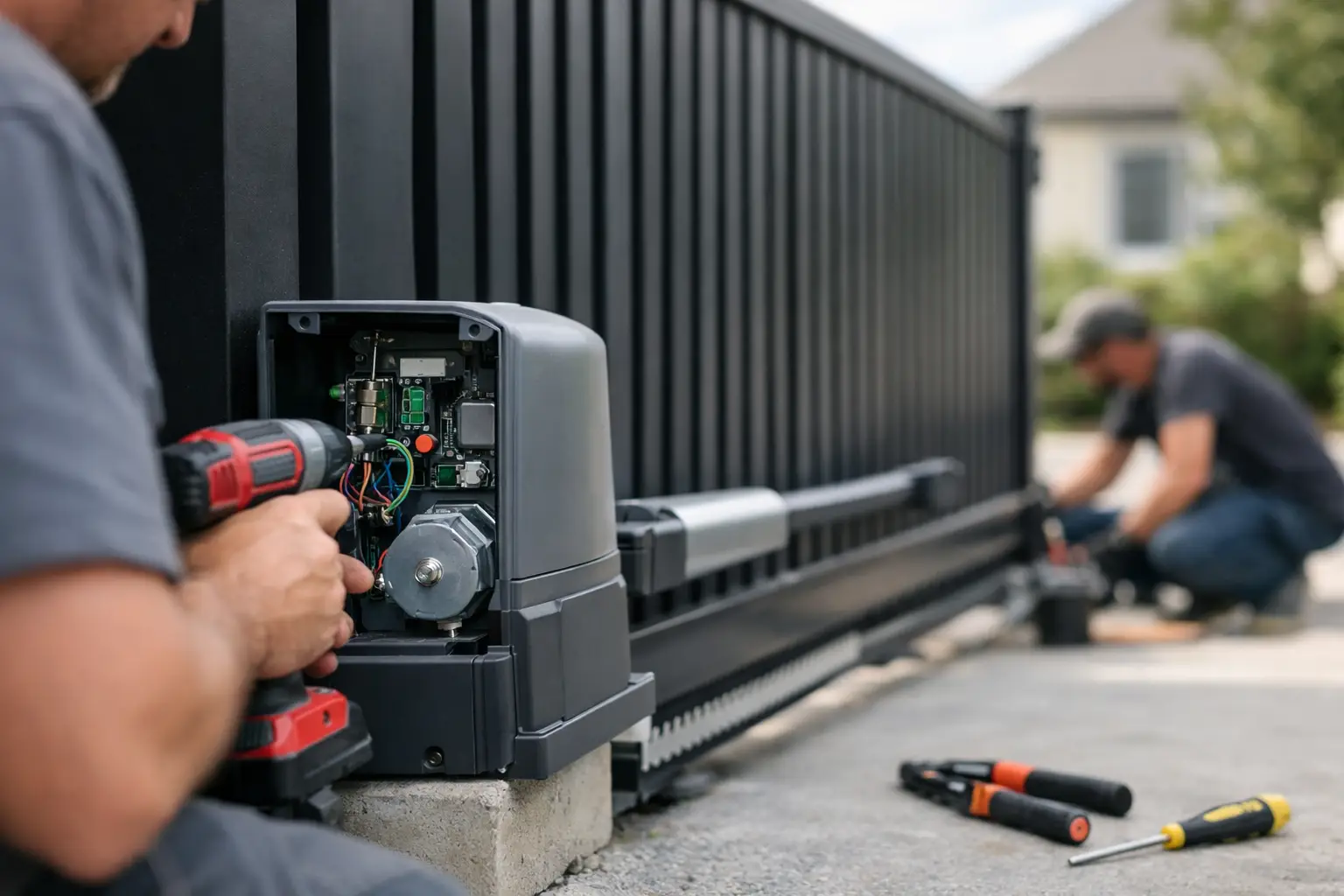
A gate that looks good on paper can become a daily headache once trucks start stacking up, tenants need access after hours, or a homeowner gets tired of opening and closing it by hand. That is where automatic gate operator installation starts to matter. The operator is not just a motor added to a gate. It is part of a working access system that has to match the gate type, the site, the traffic pattern, and the level of security the property actually needs.
For some properties, the right setup is straightforward. For others, it takes more planning because the gate opening is wide, the slope is tricky, wind load is high, or access control needs are more advanced. A good installation accounts for those details up front so the system works reliably instead of becoming a service call waiting to happen.
What automatic gate operator installation really includes
Many people use the term to mean putting in an automated driveway gate. In practice, automatic gate operator installation can involve much more than mounting an operator and connecting power. The full scope often includes the gate itself, support posts, track or cantilever hardware, safety devices, access controls, electrical coordination, and setup of the opening and closing cycle.
That matters because the operator is only one part of the system. If the gate frame is undersized, the rollers are wrong for the load, or the posts are not set for long-term stability, even a quality operator can struggle. The same goes for improper layout. A gate needs room to travel, enough clearance, and the right geometry for the operator style being used.
For homeowners, this usually comes down to dependable entry, convenience, and a finished look that fits the property. For commercial and industrial sites, the conversation often shifts toward cycle volume, controlled entry, delivery traffic, safety requirements, and durability under heavier use.
Choosing the right gate type before operator installation
The first major decision is not always the operator. It is often the gate style. Different gate types work better in different site conditions, and that choice affects everything that follows.
Slide gates
Slide gates are common for commercial and industrial properties because they work well for wider openings and frequent use. They move horizontally along a fence line, which can be a strong fit when there is enough runback space. Standard slide gates use a track, while cantilever gates are suspended and do not rely on a ground track across the opening.
A cantilever setup costs more in many cases, but it can be the better answer where mud, gravel, debris, or drainage would make a track system harder to maintain. On Arkansas sites with uneven conditions or heavy vehicle traffic, that trade-off can make sense.
Swing gates
Swing gates are common on residential properties and some light commercial sites. They can provide a clean, traditional appearance, and in the right setting they operate smoothly and quietly. The catch is space. A swing gate needs a clear arc to open, and slope can become a problem quickly.
If the driveway rises sharply or traffic flow leaves little room for the leaf to open safely, a swing system may not be the best choice. Single swing and dual swing layouts also need to be sized properly so the operator is not overworked.
Specialty and high-security gates
Some properties need more than a standard driveway setup. Distribution yards, industrial facilities, municipalities, and controlled sites may need cantilever systems, custom fabricated gates, or specialized openings designed for larger vehicles and more frequent cycling. In those cases, operator selection is tied closely to security goals and site use, not just appearance.
Matching the operator to the gate and the site
Once the gate style is set, the operator has to be matched to the real conditions on the ground. Weight, length, duty cycle, wind exposure, and frequency of use all matter. A system that works fine for a private residence may not hold up well at a busy commercial entrance.
This is where experience matters. An operator should not be selected by gate length alone. A solid-panel gate catches more wind than an open ornamental design. A long decorative residential gate has different demands than a chain link cantilever gate at a commercial yard. If the operator is undersized, wear tends to show up early. If it is oversized without proper setup, performance can still suffer.
Power supply also needs to be addressed early. Some sites are well suited for hardwired service. Others may consider solar, but that depends on sunlight exposure, cycle demand, battery backup expectations, and the overall location. Solar can be a practical option in the right conditions, but it is not a one-size-fits-all answer.
Safety is not optional
A properly installed automated gate system needs built-in safety measures. That includes the equipment that helps detect obstruction and protect vehicles, pedestrians, and property during operation. The exact devices depend on the gate type and how the entry is used, but safety planning should be part of the installation from the beginning, not added as an afterthought.
On residential properties, this helps reduce risk around family members, guests, and daily vehicle use. On commercial sites, it becomes even more important because traffic patterns are less predictable and gate cycles may be far more frequent. Delivery drivers, employees, service contractors, and visitors may all be using the same entry point.
This is also where code awareness matters. Gate systems need to be installed with attention to current safety standards and practical site conditions. A dependable contractor will walk through those requirements during planning instead of leaving the owner to sort them out later.
Access control should fit the way the property operates
Automatic gate operator installation often includes decisions about how people get in and out. That may sound simple, but it affects daily convenience as much as security.
A homeowner may want keypad access, transmitters, or a phone-based entry system for family and trusted visitors. A business may need card readers, telephone entry, timed access schedules, or integration with a broader access-control plan. A property manager may need a balance between controlled access and easy entry for vendors, tenants, and emergency services.
The best setup depends on who uses the gate, when they use it, and how much control the owner wants. More features are not always better. In some cases, a simpler system is easier to manage and more reliable over time. In others, additional controls are worth it because they improve accountability and reduce unauthorized entry.
Why site prep and fabrication matter
A gate operator can only perform as well as the gate system it is driving. That is why professional installation usually starts well before the operator itself is mounted. Post footings, gate construction, hardware selection, clearances, and alignment all affect long-term performance.
Custom fabrication is often part of the answer when a standard gate will not fit the opening, the use case, or the desired appearance. Commercial properties may need wider spans, stronger framing, or designs that coordinate with existing perimeter fencing. Residential owners may want a more decorative look without giving up dependable operation.
This is one area where working with a contractor that handles both fencing and gate systems can save time and avoid finger-pointing. If the gate, operator, and perimeter are treated as one coordinated project, the finished result usually works better.
What property owners should expect during automatic gate operator installation
A professional process should begin with a site review and a conversation about how the gate will actually be used. That includes measuring the opening, evaluating grade, looking at traffic flow, identifying power options, and discussing security goals.
From there, the installation plan should reflect the property instead of forcing the property to fit a standard package. A residential driveway with moderate use will have different needs than an apartment entrance, a storage facility, or an industrial yard. That is why estimates can vary. Materials, operator class, access controls, fabrication needs, and site conditions all play a role.
Owners should also expect some discussion about future maintenance. Automated gates have moving parts, and regular service helps protect the investment. That does not mean the system should be high maintenance. It means realistic planning should account for wear items, adjustments, and periodic inspection.
For property owners in Arkansas looking at automatic gate operator installation, the right approach is usually the practical one: choose a system built for the gate, the traffic, and the site conditions you actually have. Ace Fence Company Inc. works with homeowners, businesses, and facilities that need that kind of clear planning and capable installation. A well-built automated gate should make access easier, strengthen perimeter control, and keep doing its job long after the install day is over.
Ready to Talk to a Real Fence Professional?
Free on-site estimates from the River Valley's most trusted fence company since 1963.