Access Control for Safer, Smarter Property Entry
Access control helps Arkansas property owners manage entry, protect assets, and choose gates, operators, and credentials built for daily use and traffic.
A gate only does part of the job. It creates a physical boundary, but access control determines who can enter, when they can enter, and how reliably that entry point works on an ordinary workday. For a home, business, construction site, industrial yard, or managed property, the right system turns a fence line into a practical layer of security.
The best setup is rarely just a keypad mounted beside a gate. Gate type, traffic volume, site layout, power availability, safety equipment, and the people using the entrance all affect the right answer. A system that works well for a rural driveway may be a poor fit for a warehouse with delivery traffic and multiple employees.
What Access Control Is Designed to Do
Access control is the combination of gate hardware, operators, credentials, and controls used to manage entry through a secured perimeter. It can be as simple as a residential gate opener with remotes or as detailed as a commercial system using keypads, card readers, telephone entry, vehicle detection, and scheduled permissions.
The goal is not to make every entrance difficult to use. It is to limit unnecessary access while keeping approved traffic moving. That balance matters. A property manager may need delivery drivers to reach a building during set hours, while employees use assigned credentials and residents receive visitors through a call box. An industrial site may need a gate that stays closed between truck arrivals but opens safely for large equipment.
A well-planned system also gives owners more control when circumstances change. Lost remotes, former employees, vendor access, temporary workers, and tenant turnover are easier to manage when entry permissions can be changed without replacing locks or issuing new physical keys.
Start With the Gate and the Property Layout
Before selecting readers or credentials, look at the entrance itself. The gate must be sized, built, and installed for its intended use. An operator cannot compensate for a gate that is too light for the opening, poorly aligned, undersized for vehicle traffic, or positioned where vehicles have no safe place to wait.
Swing gates are common for driveways and smaller entrances where there is sufficient room for the gate leaves to open. They can work well for residential properties, churches, small offices, and facilities with controlled daily traffic. Their main limitation is swing clearance. Slopes, parked vehicles, snow, drainage, and obstructions all need consideration.
Sliding and cantilever gates are often the better choice for wider commercial entrances, industrial yards, storage facilities, and locations with frequent traffic. A cantilever gate does not roll across the driveway surface, which can be helpful where gravel, uneven ground, or debris would interfere with a ground track. These systems require room along the fence line for the gate to travel when open.
Pivot lift gates can be useful where space is limited or where a gate needs to open quickly without extending far along a fence line. Each design has trade-offs. The correct choice depends on available space, required opening width, expected use, and the level of security the property needs.
Traffic flow deserves as much attention as the gate itself. Vehicles should have adequate room to pull off the road while entering a code, presenting a credential, or waiting for a visitor to be approved. A gate placed too close to a public road can create a safety issue and frustrate drivers. On commercial properties, separate inbound and outbound lanes may make sense, especially when trucks, employee vehicles, and visitors share the entrance.
Choosing the Right Access Control Method
The credentials and controls should match the people who use the gate. Convenience matters because a system that is difficult for authorized users will eventually be bypassed or misused.
For many homes and small properties, remote controls are simple and dependable. They allow the owner to operate the gate from a vehicle and are familiar to most users. The downside is that remotes can be lost, shared, or forgotten. They work best when the number of users is limited and the owner can keep track of who has one.
Keypads are a practical option for shared residential entrances, small businesses, and service access. Codes can be changed when needed, and separate codes may be assigned to family members, staff, or vendors. A keypad is not always the strongest standalone option for a busy commercial site because codes can be passed along. It is often most effective when paired with another method.
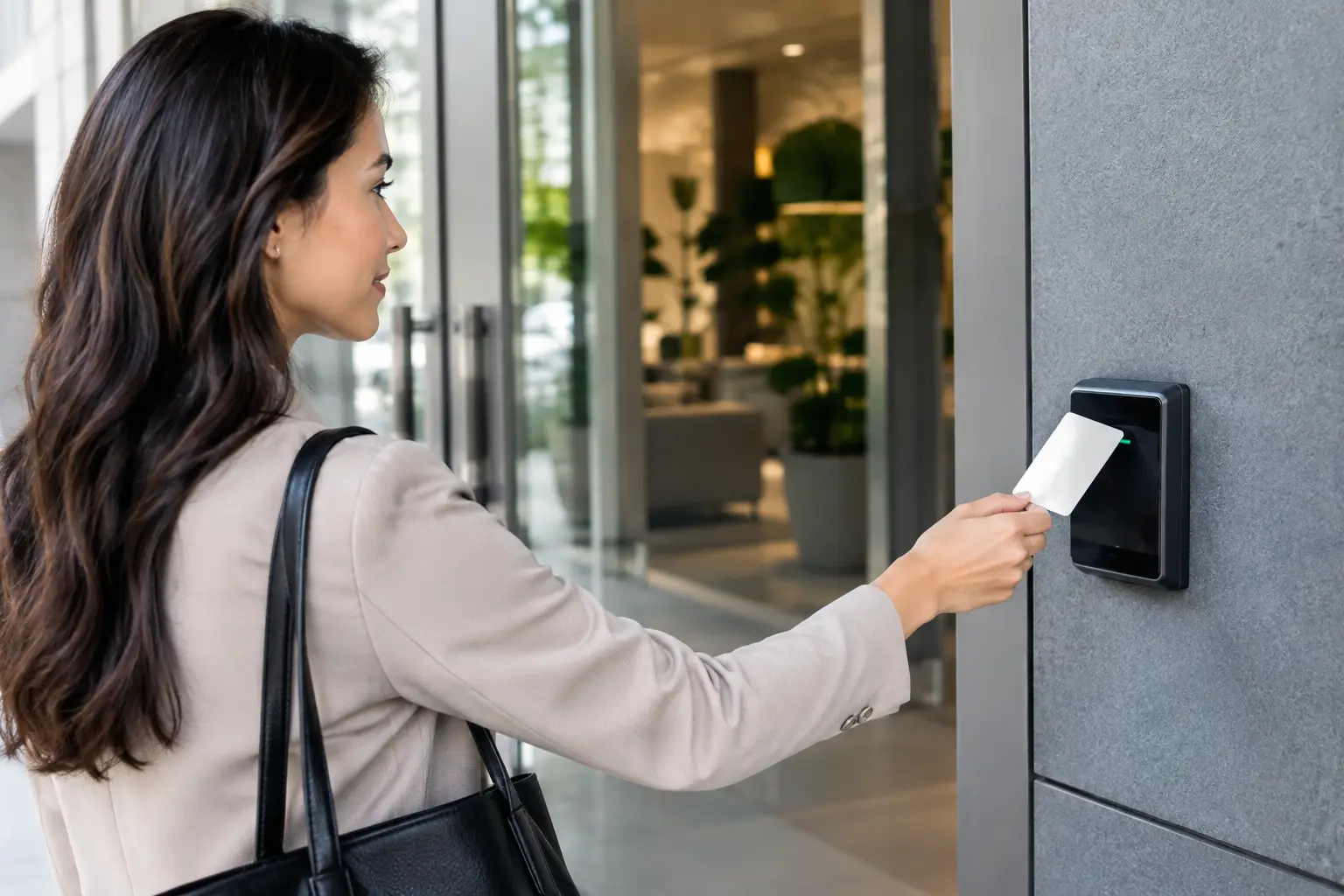
Card readers, fobs, and proximity credentials provide better control for organizations with employees or regular authorized users. A credential can be deactivated when someone leaves, rather than requiring every user to learn a new gate code. These systems are well suited to offices, apartment communities, industrial properties, schools, and facilities that need a clearer record of who has access.
Telephone entry systems and video entry systems allow visitors to contact a resident, office, or designated manager. The authorized person can verify the visitor and release the gate remotely. These systems are useful at multi-tenant properties, gated neighborhoods, offices, and facilities where guests or delivery drivers arrive regularly.
Some sites also benefit from vehicle detection loops, exit wands, or other hands-free exit controls. These allow vehicles to leave without entering a code or using a remote. Exit devices must be selected and placed carefully so the gate does not open for nearby traffic, parked vehicles, or activity outside the intended detection area.
Safety Equipment Is Part of the System
An automated gate is moving equipment, not simply a convenience feature. Proper safety devices are necessary to protect people, vehicles, and the gate system itself. The right installation considers entrapment zones, moving gate paths, pinch points, and the possibility that a child, pedestrian, or vehicle may be near the entrance.
Photo eyes and monitored edge sensors are commonly used to detect an obstruction and stop or reverse gate movement. Vehicle loops can help prevent a gate from closing on a vehicle that has not fully cleared the opening. Warning signs, proper gate spacing, secure hardware, and operator settings also matter.
Do not assume that an existing manual gate can be fitted with an operator without further work. In some cases, the gate frame, hinges, rollers, posts, latches, or clearances need to be corrected first. The operator, controls, and safety equipment should be selected as a complete working system rather than added one piece at a time.
Plan for Power, Communication, and Daily Conditions
Most gate operators need reliable power. If electrical service is nearby, a wired installation may be the most practical choice. At more remote entrances, solar power can be a good option when the site receives enough sunlight and the system is properly sized for gate weight, cycle count, accessories, and seasonal conditions.
Communication is another planning item. Telephone entry, cellular controls, network-connected systems, and remote management features may rely on cellular coverage, internet service, or hardwired connections. Rural properties in the River Valley and Northwest Arkansas can vary widely in signal strength, so a site review is valuable before committing to a particular system.
Weather and surface conditions should not be overlooked. Heavy rain, drainage issues, mud, gravel, wind exposure, and changing temperatures all affect gate operation over time. Commercial equipment costs more upfront than light-duty hardware, but it may be the better value when a gate cycles repeatedly throughout the day or secures valuable equipment after hours.
Match Security to the Actual Risk
Not every property needs the same level of control. A homeowner protecting a driveway may mainly want privacy and a dependable way to let family members in. A contractor yard may need to limit after-hours access, document credentials, and secure tools and material. A distribution site may need wide openings, faster operation, truck access, and controls that do not create backups at shift changes.
The fence around the gate matters as well. Access control is only effective when the perimeter supports it. A high-security gate beside a weak fence section, an open ditch, or an unsecured secondary entrance leaves an obvious gap. Gates, fence material, post depth, terminal hardware, and access points should be considered together.
It is also wise to think about failure modes. Ask what happens during a power outage, equipment malfunction, emergency response, or a damaged credential. Some properties need battery backup, manual release procedures, emergency access provisions, or a clear plan for who can service the system. The answer depends on the property and its operational needs.
Work With an Installer Who Sees the Full Project
A successful gate project requires more than selecting an operator from a catalog. It takes accurate layout, durable gate construction, proper posts and foundations, electrical coordination, safety planning, and controls that fit the people using the property. When those pieces are handled separately, small issues can become expensive changes later.
Ace Fence Company Inc. helps property owners evaluate the whole perimeter, from chain link, ornamental, wood, vinyl, and composite fencing to custom gates, automated operators, and specialty access solutions. Whether the project is a residential driveway or a commercial facility entrance, the first step is understanding how the site works every day.
A good access control system should make the property easier to manage, not add another daily problem. Start with the traffic, the risks, and the people who need entry. From there, a properly built gate and well-matched controls can provide dependable protection for years to come.
Ready to Talk to a Real Fence Professional?
Free on-site estimates from the River Valley's most trusted fence company since 1963.